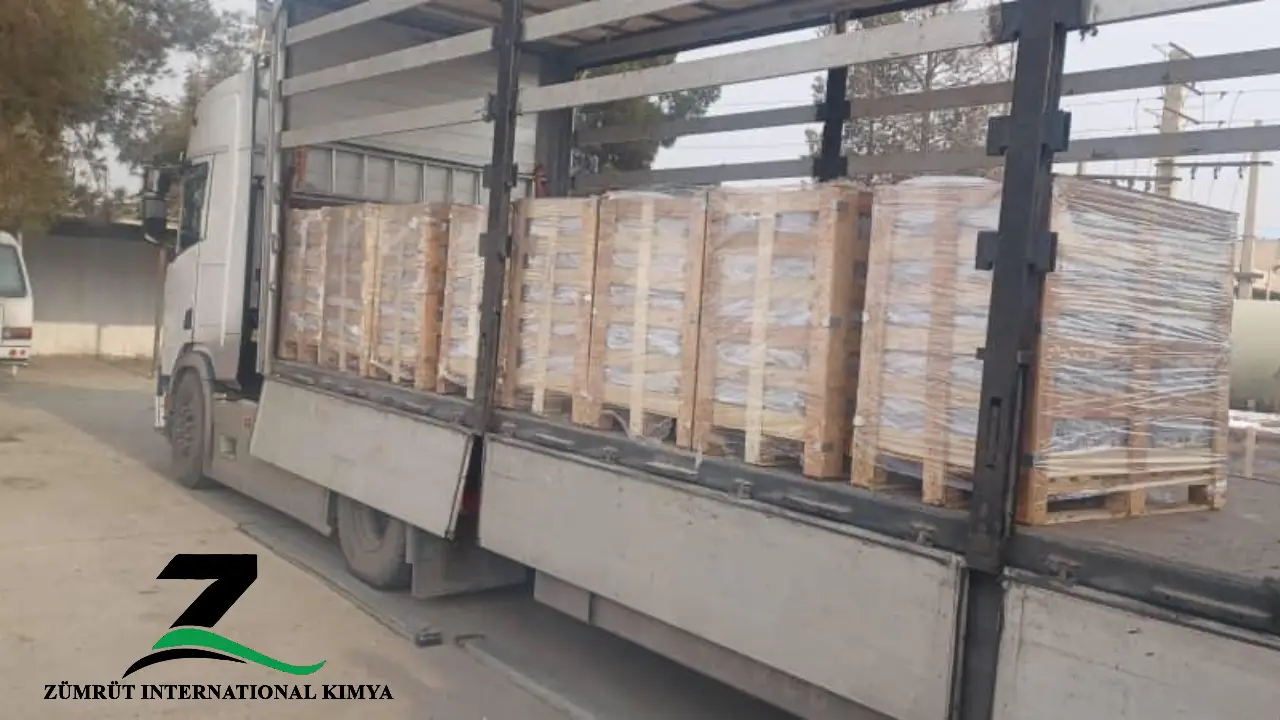
Oxidized Bitumen for Waterproofing: Grade Selection, Technical Specs & Application Guide
Oxidized bitumen — also known as blown bitumen or blown asphalt — is the most widely used binder in industrial waterproofing worldwide. Its chemically modified structure gives it properties that standard penetration-grade bitumen simply cannot match: a higher softening point, lower temperature sensitivity, and superior resistance to water penetration over the long term.
This page covers everything procurement engineers, waterproofing membrane manufacturers, and construction contractors need to know before specifying or purchasing oxidized bitumen for waterproofing applications — from grade selection and technical parameters to application temperatures and packaging.
Why Oxidized Bitumen Is the Standard Choice for Waterproofing
Waterproofing systems face a demanding combination of loads: hydrostatic pressure from below, thermal cycling from above, UV exposure, and long-term aging. Standard paving-grade bitumen (60/70 or 80/100) lacks the structural stability to perform reliably under these conditions over a 20–30 year service life.
Oxidized bitumen is produced by blowing hot air through penetration-grade bitumen at 240°C–300°C. This controlled oxidation reaction increases the asphaltene content, raises the softening point (Ring & Ball), and reduces the penetration value — converting a thermoplastic binder into a harder, more elastic material with a gel-like structure.
The result is a material with a Penetration Index (PI) in the range of +2 to +8, compared to –1 to +1 for road-grade bitumen. This higher PI directly reflects lower temperature sensitivity — meaning the material stays rigid in summer heat and remains flexible enough to resist cracking in cooler temperatures.
Key Performance Advantages for Waterproofing
- High softening point: Prevents membrane sagging, edge-creep, and bleed-through on exposed rooftops and flat surfaces
- Low temperature sensitivity: Maintains consistent performance from –5°C to +80°C surface temperatures
- Excellent water impermeability: Resists hydrostatic pressure and capillary absorption
- Strong adhesion to substrates: Bonds reliably to concrete, metal, fabric carriers, and primer coats
- Chemical stability: Resistant to dilute acids, alkalis, and salts commonly found in soil and groundwater
- Long service life: High asphaltene content slows further oxidative aging in service
Oxidized Bitumen Grades Used in Waterproofing — Full Comparison Table
Oxidized bitumen grades are designated by two numbers representing the midpoint of their softening point (°C) and penetration (0.1 mm) ranges respectively. For example, Oxidized Bitumen 85/25 has a softening point of approximately 85°C and a penetration of approximately 25 × 0.1 mm.
[/fusion_table]
| Grade | Softening Point (°C) | Penetration (0.1mm) | Penetration Index (PI) | Primary Waterproofing Use |
|---|---|---|---|---|
| Oxidized Bitumen 75/25 | 70–80 | 20–30 | +2 to +4 | Cold-climate waterproofing membranes, flexible coatings |
| Oxidized Bitumen 85/25 | 80–90 | 20–30 | +3 to +5 | General-purpose roofing & waterproofing felt |
| Oxidized Bitumen 85/40 | 80–90 | 35–45 | +2 to +4 | Flexible membranes, moderate climates |
| Oxidized Bitumen 90/40 | 85–95 | 35–45 | +3 to +5 | Waterproofing membranes, roof sheeting, pond lining |
| Oxidized Bitumen 90/15 | 85–95 | 10–20 | +5 to +7 | High-temperature industrial waterproofing |
| Oxidized Bitumen 95/25 | 90–100 | 20–30 | +4 to +6 | Hot-climate roofing membranes, exposed applications |
| Oxidized Bitumen 105/15 | 100–110 | 10–20 | +6 to +8 | Below-grade waterproofing, tunnel linings, water tanks |
| Oxidized Bitumen 105/35 | 100–110 | 30–40 | +4 to +6 | Waterproofing compound production, industrial coatings |
| Oxidized Bitumen 115/15 | 110–120 | 10–20 | +7 to +9 | Bathroom/wet area sealing, high-pressure water contact zones |
All grades produced per BS 3690, ASTM D312, and EN 13304. Certificate of Analysis (CoA) and Safety Data Sheet (SDS) available on request.
How to Select the Right Grade for Your Waterproofing Project
Grade selection depends on four variables: ambient climate, application method, substrate type, and service exposure.
1. Climate and Service Temperature
The most critical factor is the maximum surface temperature the waterproofing layer will reach in service — not the ambient air temperature.
- Tropical / Middle East climates (surface up to 90°C in direct sun): use grades 95/25 or 105/15
- Temperate climates (Europe, Northern Asia — surface rarely above 60°C): grades 85/25 or 90/40 are appropriate
- Cold climates with movement-heavy substrates: flexibility is more critical → use 75/25 or 85/40
- Below-grade and buried applications (foundations, tunnels): constant pressure → 105/15 or 115/15 recommended
2. Application Method
| Application Method | Recommended Grade |
|---|---|
| Torch-applied membrane | 85/25, 90/40, 95/25 |
| Mop / hot-pour applied | 85/25, 90/40, 90/15 |
| Factory-made membrane production | 85/25, 90/40, 105/35 |
| Cold-applied compound (dissolved in solvent) | 75/25, 85/25 |
| High-temperature spray systems | 95/25, 105/15 |
| Bathroom and wet area sealing | 115/15 |
3. Substrate Compatibility
- Concrete: All grades bond well. Use Bitumen Primer D41 before hot application.
- Metal decks: Grades with higher penetration (85/40, 90/40) provide better flexibility to accommodate metal movement.
- Fabric carriers (polyester, glass fiber): Use 85/25 or 90/40 for the saturation layer in membrane production.
- Timber and composite substrates: 75/25 or 85/25 preferred for flexibility.
4. International Standards Reference
- BS 3690 Part 2 (UK): Specifies grades 85/25, 90/40, 95/25, and 115/15 for roofing
- ASTM D312 (USA): Types I through IV correspond to increasing hardness
- EN 13304 (Europe): Covers oxidized bitumen for waterproofing applications
- DIN 52011 (Germany): Used in European industrial specifications
Oxidized Bitumen in Waterproofing Membrane Production
Oxidized bitumen is the foundational raw material in the manufacture of bituminous waterproofing membranes — the most widely installed waterproofing system globally. In membrane production, the bitumen is typically processed through five stages:
- Melting in a heated tank to 180–220°C
- Blending with modifiers if required (SBS rubber for elastomeric membranes, APP polymer for plastomeric membranes)
- Applying to a carrier substrate (polyester fleece, glass fiber mat, or combination) using roller or immersion
- Surfacing the top face with mineral granules, fine sand, or aluminum foil for UV protection
- Rolling and cooling for storage and transport
Grades 85/25 and 90/40 are the most commonly used in standard SBS and APP membrane production. For high-softening-point applications, 95/25 or 105/35 may be blended in.
Waterproofing Applications: Where Oxidized Bitumen Is Used
Roof Waterproofing (Flat and Low-Slope Roofs)
The single largest application globally. Used in built-up roofing (BUR) systems and in the production of roll-stock membranes that are torch-applied. Grades 85/25, 90/40, and 95/25 are dominant in this segment.
Foundation and Below-Grade Waterproofing
Applied to foundation walls, basement slabs, and retaining structures to protect against groundwater ingress and hydrostatic pressure. Below-grade applications favor harder grades (105/15, 115/15) because temperature variation is minimal and long-term impermeability is paramount.
Tunnel and Bridge Waterproofing
Infrastructure waterproofing demands high durability under mechanical stress. Oxidized bitumen membranes are applied to tunnel crown linings and bridge decks before asphalt overlay. Grades 90/40 and 95/25 are standard in these applications.
Water Reservoir and Pond Lining
Oxidized bitumen’s impermeability and chemical inertness make it suitable for lining irrigation channels, retention ponds, and industrial lagoons. It is non-toxic to water once fully cured and does not leach hydrocarbons at ambient temperatures.
Bathroom, Kitchen, and Wet Room Waterproofing
Oxidized Bitumen 115/15 is the standard grade for sealing below tiles in wet areas. Its ultra-high softening point prevents softening under steam exposure, and its low penetration ensures it does not migrate under sustained water contact.
Pipeline Trench and Manhole Waterproofing
Used as a jointing compound and coating material around buried pipeline infrastructure. Provides a chemical barrier against soil moisture and corrosive soils.
Technical Specifications: Key Test Methods
The following test methods are used to verify oxidized bitumen quality for waterproofing applications. Zumrut International provides full test reports on request.
| Property | Test Method | Typical Range (Waterproofing Grades) |
|---|---|---|
| Softening Point (Ring & Ball) | ASTM D36 / EN 1427 | 75°C – 120°C depending on grade |
| Penetration at 25°C | ASTM D5 / EN 1426 | 10–45 × 0.1 mm depending on grade |
| Penetration Index (PI) | Calculated from SP and Pen | +2 to +9 |
| Flash Point | ASTM D92 | >230°C (all waterproofing grades) |
| Solubility in Trichloroethylene | ASTM D2042 | >99% |
| Loss on Heating (163°C, 5h) | ASTM D6 | <1% |
| Ductility at 25°C | ASTM D113 | Varies by grade |
| Density at 25°C | ASTM D70 | ~1.01–1.05 g/cm³ |
Application Temperature Guidelines
Incorrect application temperature is the most common cause of waterproofing failures. The following guidelines apply to hot-applied oxidized bitumen:
- Minimum heating temperature: 160°C (material will not flow uniformly below this)
- Recommended application temperature: 200°C–220°C for most grades
- Maximum safe temperature: 230°C (flash point risk above this)
- Do not overheat: Repeated reheating above 240°C permanently reduces the softening point and causes binder degradation
- For mop-applied systems: Maintain 190°C–210°C in the hot kettle throughout the pour
- For torch-applied membranes: Follow the membrane manufacturer’s torching instructions — do not over-torch
Safety note: Oxidized bitumen emits fumes at application temperature. Ensure adequate ventilation on all enclosed or low-ventilation application sites. Refer to the SDS for exposure limits and PPE requirements.
Packaging and Export Options
| Packaging | Weight per Unit | Typical Use |
|---|---|---|
| Steel drum (new) | 180–200 kg | Standard export, easy handling on site |
| Meltable polyamide bag | 25 kg or 50 kg | Europe (environmental compliance), factory use |
| Kraft paper carton | 25 kg | Dry climates, small-batch factory production |
| Bulk (tanker) | On request | Large-scale membrane manufacturers |
A standard 20-foot container holds approximately 18–20 MT of oxidized bitumen in drums. Meltable bag format allows up to 22 MT per 20-foot container due to lower packaging weight.
Shipping terms available: FOB Iskenderun (Turkey), CIF, CFR, EXW. Lead time is typically 7–14 days from order confirmation for standard grades.
Why Source Oxidized Bitumen from Zumrut International?
- All waterproofing grades in stock: 75/25, 85/25, 85/40, 90/40, 90/15, 95/25, 105/15, 105/35, 115/15, and 150/5
- Third-party testing available: SGS, Intertek, or bureau of your choice
- Full documentation: CoA, SDS/MSDS, packing list, and bill of lading per shipment
- Custom grades on request: Non-standard grades can be produced to specification
- Strategic location: Iskenderun port provides competitive freight rates to Africa, the Middle East, South Asia, and Europe
- Dual offices: Ankara, Turkey and Business Bay, Dubai — UAE for regional support
Frequently Asked Questions: Oxidized Bitumen for Waterproofing
What is the difference between oxidized bitumen and modified bitumen for waterproofing?
Oxidized bitumen is produced purely by air-blowing at high temperature. Modified bitumen (SBS or APP) involves adding polymer to either oxidized or base bitumen. In membrane manufacturing, oxidized bitumen is often the base material to which SBS or APP polymers are added. Oxidized bitumen alone is used for built-up roofing, cold-applied coatings, and direct waterproofing applications.
Can oxidized bitumen be used for below-grade waterproofing?
Yes. Grades 105/15 and 115/15 are specifically suited to below-grade applications where the material is in constant contact with groundwater or hydrostatic pressure. Their very high softening point ensures no migration under sustained load.
What grade of oxidized bitumen is used under bathroom tiles?
Oxidized Bitumen 115/15 is the standard choice for bathroom and wet area waterproofing. It is applied as a hot-poured seal below the tile adhesive layer and around all drains and penetrations.
How long does oxidized bitumen waterproofing last?
Service life depends on grade, application quality, and exposure. In built-up roofing systems, a properly installed oxidized bitumen system typically lasts 15–25 years. Below-grade installations, where UV and thermal cycling are absent, can exceed 30 years.
Is oxidized bitumen safe for potable water tanks?
Oxidized bitumen in its fully cured state is chemically inert at ambient temperatures and does not leach detectable hydrocarbons into water. However, for potable water contact applications, always obtain confirmation that the specific product complies with applicable drinking water standards in your jurisdiction.
What is the minimum order quantity (MOQ)?
Zumrut International’s standard MOQ is one 20-foot container (approximately 18–20 MT). For trial or sample orders, contact our sales team to discuss options.
Request a Quote or Technical Consultation
Zumrut International’s technical team can assist with grade selection, specification compliance, and logistics planning for waterproofing projects of any scale.
📧 info@zumrut-int.com
📞 +90 (312) 544 45 81 — Ankara, Turkey
📞 +90 501 003 88 00 — Ankara, Turkey (WhatsApp)
📞 +971 50 334 5424 — Dubai, UAE (WhatsApp)