Bitumen 80/100 Description
Bitumen 80/100 is a standard penetration grade Bitumen usually used as a Paving Grade Bitumen suitable for road construction and for the production of asphalt pavements with superior properties. This grade of Bitumen is mainly used in the manufacture of hot mix asphalt for bases and wearing courses. Penetration Grade Bitumen supplied by ZUMRUT company is petroleum grade bitumen, manufactured from fractional / vacuum distillation of crude oil. The Bitumen supplied by ZUMRUT is produced from the vacuum residue (short residue) feedstock. Penetration Grade bitumens are specified by the penetration and softening point test. The designation is by penetration range only. The penetration grade bitumens have a thermoplastic property which causes the material to soften at high temperatures and to harden at lower temperatures. This unique temperature/ viscosity relationship is important when determining the performance parameters such as the adhesion, rheology, durability, and application temperatures of bitumen.
The Bitumen mode is dependent on temperature. The temperature-vs-stiffness relationship of bitumen is dependent on the type of crude oil and its refining method. Bitumen penetration grade 80/100 is semi-hard penetration grade bitumen used as a paving grade bitumen which is suitable for road construction and repair. It is also used for the production of asphalt pavements with the below technical specification. This grade of bitumen is mainly used in the manufacturing of hot mix asphalt for bases and wearing courses. Bitumen 80/100 is one of the most used bitumen grades and it’s a basic material for all other bituminous products.
Penetration determines the hardness of bitumen by measuring the depth to which a standard loaded the needle will vertically penetrate in 5 seconds, in a sample of bitumen maintained at a temperature of 25 degrees Celsius.
Bitumen 80/100 is a type of bitumen used primarily in road construction and asphalt pavements. The “80/100” designation refers to the bitumen’s penetration value, which measures the hardness or softness of the bitumen. Here’s a detailed description:
Description:
- Penetration Value:
– Range : The penetration value of this grade of bitumen ranges between 80 to 100. This means that under standard test conditions, a needle penetrates the bitumen to a depth of 8 to 10 millimeters.
– Test Conditions : The test is conducted at 25°C (77°F) with a standard load of 100 grams applied for 5 seconds. - Physical Properties :
– Appearance : It is typically black or dark brown in color.
– Consistency : Semi-solid at ambient temperatures, it becomes liquid when heated.
– Viscosity : Suitable for paving applications, providing adequate flow characteristics when heated.
Applications:
- Road Construction : Used for the surface, intermediate, and base layers in pavement structures.
- Asphalt Mixes : Integral in hot mix asphalt (HMA) where it binds aggregate particles together.
- Maintenance : Ideal for patching and maintenance of existing pavements.
Performance Characteristics:
- Durability: Offers good resistance to weathering and aging, maintaining structural integrity under varying climatic conditions.
- Adhesion: Provides excellent bonding with aggregates, which is crucial for the structural performance of the pavement.
- Flexibility: Sufficient flexibility to withstand minor surface movements and traffic loads without cracking.
Key Benefits:
- Versatility : Suitable for a wide range of climatic conditions and various layers of pavement structures.
- Workability : Easy to handle and apply in hot mix processes, ensuring efficient and effective construction.
- Cost-Effectiveness : Offers a balanced performance-to-cost ratio, making it a preferred choice in many road construction projects.
Standards and Specifications:
- Compliance : Meets international standards such as ASTM D946/D946M and AASHTO M 20 for paving grade bitumen.
- Quality Control : Subjected to rigorous testing to ensure consistency and reliability in performance.
Bitumen 80/100 Applications
Bitumen 80/100 is widely used in various applications within the construction and maintenance of road infrastructure. Here are the primary applications:
Applications:
- Road Construction :
– Surface Layer (Wearing Course) : This bitumen grade is used for the top layer of the pavement, providing a smooth and durable surface for vehicles.
– Intermediate Layer (Binder Course) : Used in the middle layer of the pavement structure, providing additional strength and flexibility.
– Base Layer : Applied in the lower layers of the pavement structure, ensuring stability and load distribution. - Asphalt Concrete :
– Hot Mix Asphalt (HMA) : Utilized in the production of HMA, where it binds aggregates together to form a strong, cohesive material.
– Warm Mix Asphalt (WMA) : Can also be used in WMA applications, which are produced at lower temperatures to reduce energy consumption and emissions. - Patching and Maintenance :
– Pothole Repair : Effective for patching and repairing potholes in existing pavements.
– Crack Sealing : Used to seal cracks in pavements, preventing water infiltration and further deterioration.
– Surface Dressing : Applied as a thin layer on the road surface to renew the wearing course and improve skid resistance. - Bituminous Macadam :
– Used in bituminous macadam applications, which involve laying aggregate and bitumen mixtures in layers to form the pavement structure. - Airport Runways and Taxiways :
– Suitable for the construction and maintenance of airport runways and taxiways, providing a durable and stable surface for aircraft operations. - Bridge Decks :
– Used in the construction and resurfacing of bridge decks to ensure a durable and weather-resistant surface. - Rural and Urban Roads :
– Ideal for both rural and urban road construction, providing a reliable and long-lasting pavement solution. - Industrial and Commercial Areas :
– Applied in the construction of pavements in industrial zones, parking lots, and commercial areas where heavy traffic and load-bearing capacity are essential.
Packing of Bitumen Penetration 80/100
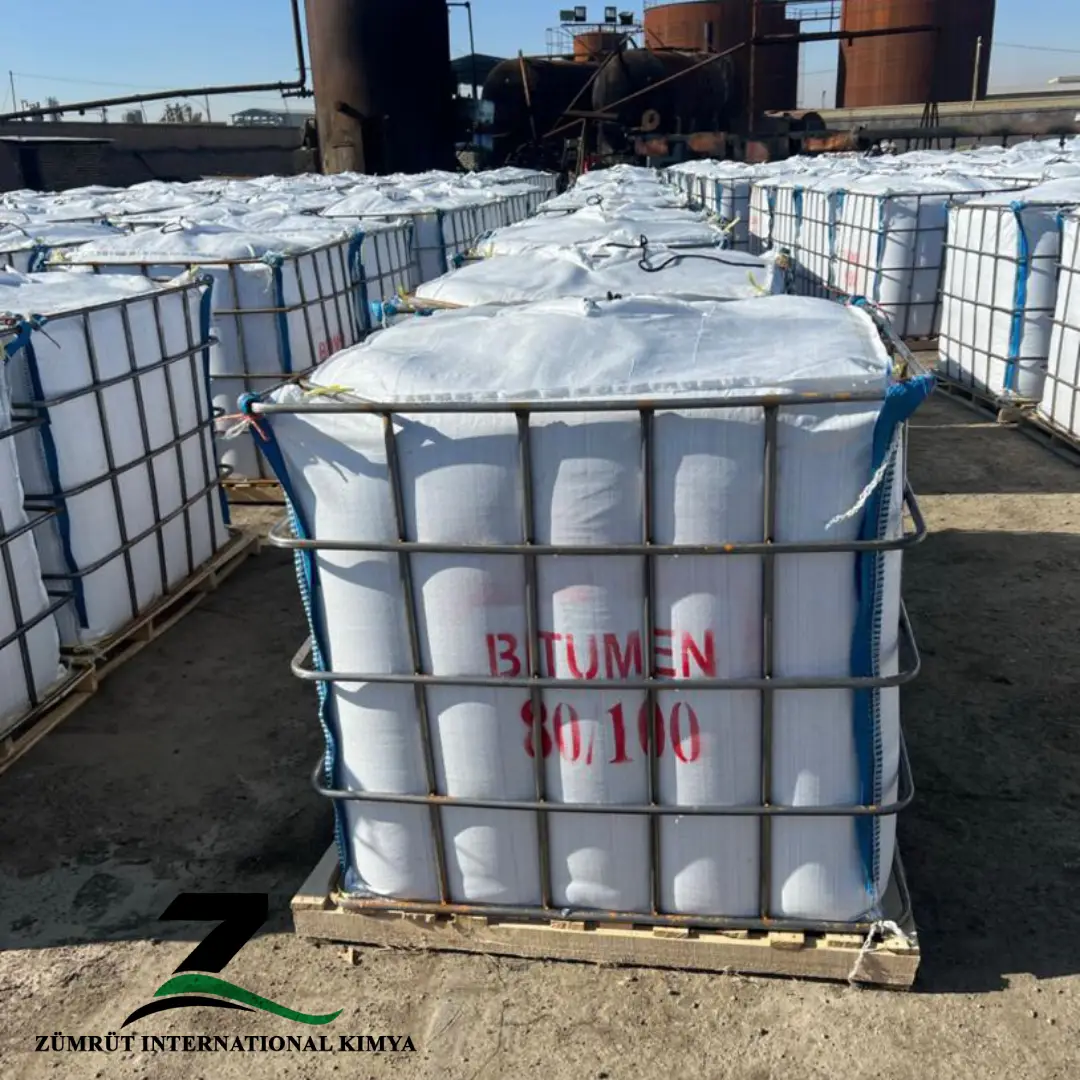
Bitumen 80/100 in 1 MT Jumbo Bag with a steel cage and pallet: Loading 20 MT in 20 ft Container
Bitumen 80/100 in 1 MT Jumbo Bag without cage and pallet: Loading 20 MT in 40 ft Container
Bitumen 80/100 in 1300 Kg Jumbo Bag: Loading 26 MT in 40 ft Container
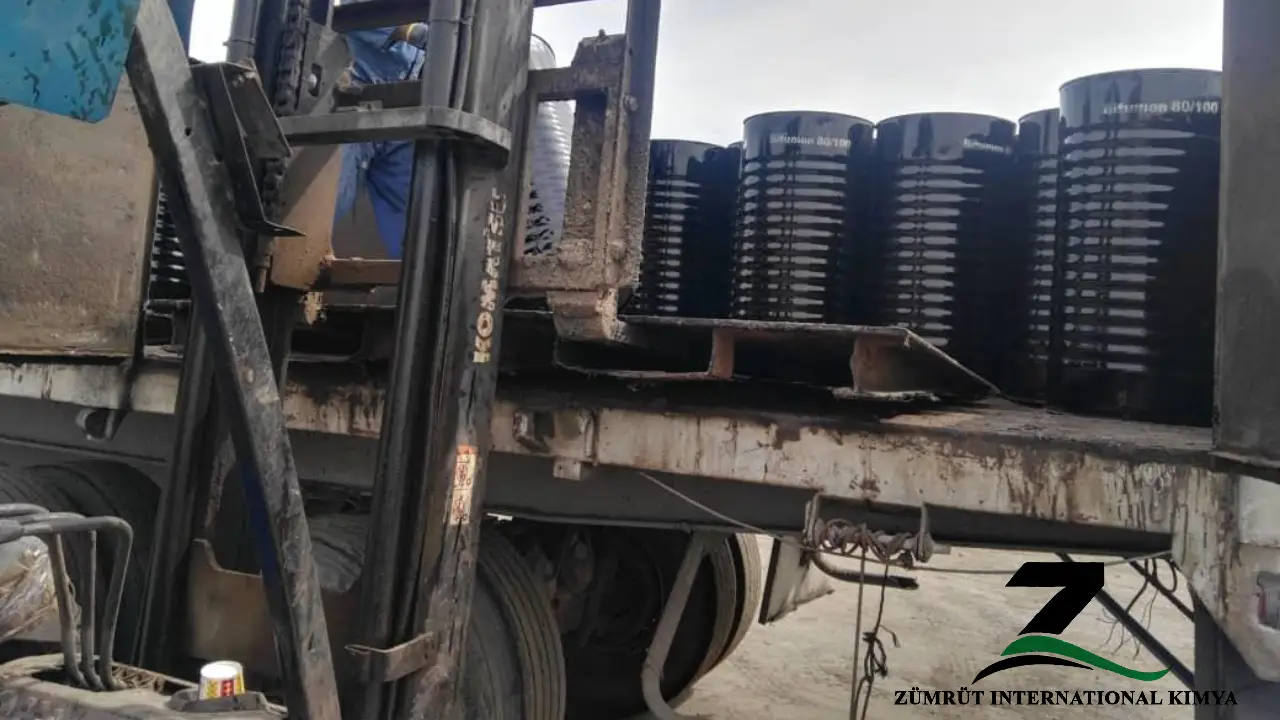
Bitumen 80/100 in 180kg New Steel Drum: Loading 110 Drum in 20 ft
Asphalt 80/100 in 375Kg Bitubag: Loading 24 MT in 20 ft Container
Bulk in vessel: Loading 2000 to 20,000 MT in Bitumen Carrier
Bulk in Flexi Bag: Loading 20 MT in Bitumen Felexi Bag
Bulk in Tunker: Loading 25 MT in Truk Tanker
Guaranty and safety of Asphalt 80/100
Guaranty:
- Quality Assurance :
– Standard Compliance : Bitumen 80/100 is manufactured to comply with international standards such as ASTM D946/D946M and AASHTO M 20, ensuring consistent quality.
– Certification : Often accompanied by quality certificates and test reports that verify its properties and adherence to specified standards.
– Batch Testing : Each batch is typically tested for penetration value, softening point, ductility, and other relevant parameters to ensure consistency and reliability. - Supplier Guarantees :
– Performance Guarantees : Reputable suppliers often provide performance guarantees, ensuring the bitumen will perform as expected in specified applications.
– Replacement and Refund Policies : In case of non-conformance to quality standards, suppliers usually offer replacement or refund policies to guarantee customer satisfaction. - Long-Term Durability :
– Proven Track Record : This grade of bitumen has a proven track record in various climatic conditions and heavy traffic loads, providing assurance of its long-term performance.
– Warranty Periods : Depending on the project and the supplier, there might be warranties offered on the performance of the bitumen in road construction applications.
Safety:
- Handling and Storage :
– Storage : Bitumen should be stored in well-ventilated areas away from sources of heat and flame. Tanks should be properly insulated and equipped with heating systems to maintain the appropriate temperature for handling.
– Protective Equipment : Personnel handling bitumen should wear protective clothing, including gloves, long-sleeved shirts, pants, and face shields or goggles to prevent burns and skin contact. - Health Hazards :
– Inhalation : Fumes generated during heating can be harmful if inhaled. Proper ventilation and the use of respiratory protection are recommended during handling and application.
– Skin Contact : Direct contact with hot bitumen can cause severe burns. Immediate cooling of the affected area with water and medical attention is necessary if contact occurs. - Fire and Explosion Risks :
– Flammability : While bitumen itself is not highly flammable, it can catch fire at high temperatures. It should be kept away from open flames and sparks.
– Fire Safety Measures : Fire extinguishers, sand, and other fire-fighting materials should be readily available in areas where bitumen is stored or handled. - Environmental Considerations :
– Spill Management : In case of spills, bitumen can be contained and removed using appropriate absorbent materials. It should not be allowed to enter waterways or drains.
– Disposal : Waste bitumen and bitumen containers should be disposed of in accordance with local environmental regulations to prevent contamination. - Transportation :
– Safe Transport : Bitumen should be transported in specially designed tankers that are insulated and equipped with heating systems to maintain the bitumen at the correct handling temperature.
– Spill Response : Tankers should carry spill response kits to manage any accidental spills during transportation.
What is the HS code of bitumen 80/100?
Bitumen 80/100(Penetration Grade 80/100) is classified under:
HS Code: 2713.20
Full Classification:
- Chapter 27 – Mineral fuels, mineral oils and products of their distillation
- Heading 2713 – Petroleum coke, petroleum bitumen, and other residues of petroleum oils
- Subheading 2713.20 – Petroleum bitumen
Important Notes:
This HS code applies to petroleum bitumen (asphalt) including penetration grades like:
- 40/50
- 60/70
- 80/100
In some countries, it may extend to:
- 2713.20.00 (8-digit format)
- Or 10-digit national tariff codes depending on customs regulations.
Bitumen Penetration 80/100 Specifications
| Bitumen 80/100 | Test method | Unit | Specification |
| Specific gravity @ 25°c | ASTM D70 | Kg/cm3 | 1.01/1.06 |
| Penetration @ 25°c | ASTM D5 | mm/10 | 80/100 |
| Softening point °c | ASTM D36 | °C | 42/50 |
| Ductility @25 °c | ASTM D113 | cm | 100 min |
| Loss on heating(wt) % | ASTM D6 | wt % | 0.2 max |
| Drop in penetration after heating % | ASTM D5-D6 | % | 20 max |
| Flash point °c | ASTM D92 | °C | 250 min |
| Solubility is CS2(wt) % | ASTM D4 | wt % | 99.5 min |
| Spot test | A.A.S.H.O.T102 | Negative |