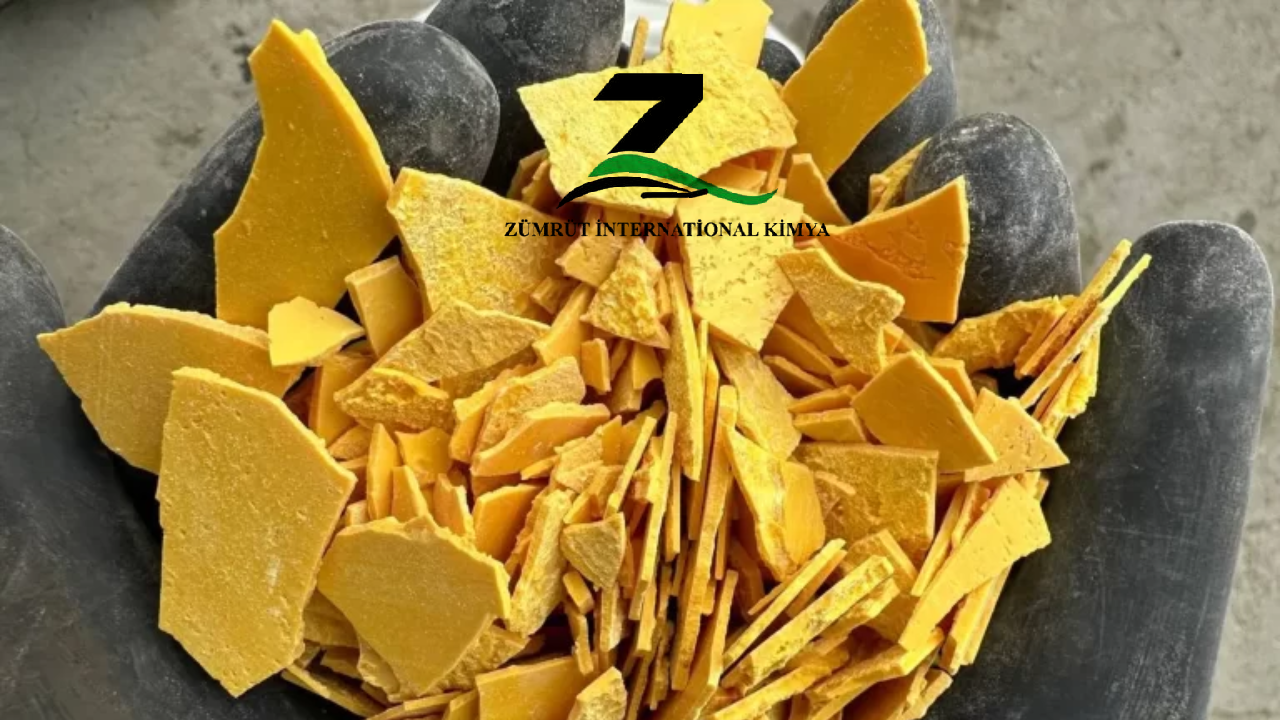
WHAT IS SODIUM SULPHIDE?
SODIUM SULPHIDE is a chemical compound with the formula Na2S and its hydrated form with the formula Na2S.9H2O, both of which are water-soluble salts and produce strong and colorless alkaline solutions. Although sodium sulfide is a yellow solid, its solution is colorless. Sodium sulfide is produced in crystallized, cracked and broken forms and releases hydrogen sulfide gas when exposed to air, which smells like rotten eggs. Sodium sulfur reacts with hydrogen peroxide to produce sodium sulfate.
Sodium sulfide (Na₂S) is an inorganic compound that is commonly used in various industrial processes. Here are the key aspects of sodium sulfide:
Properties:
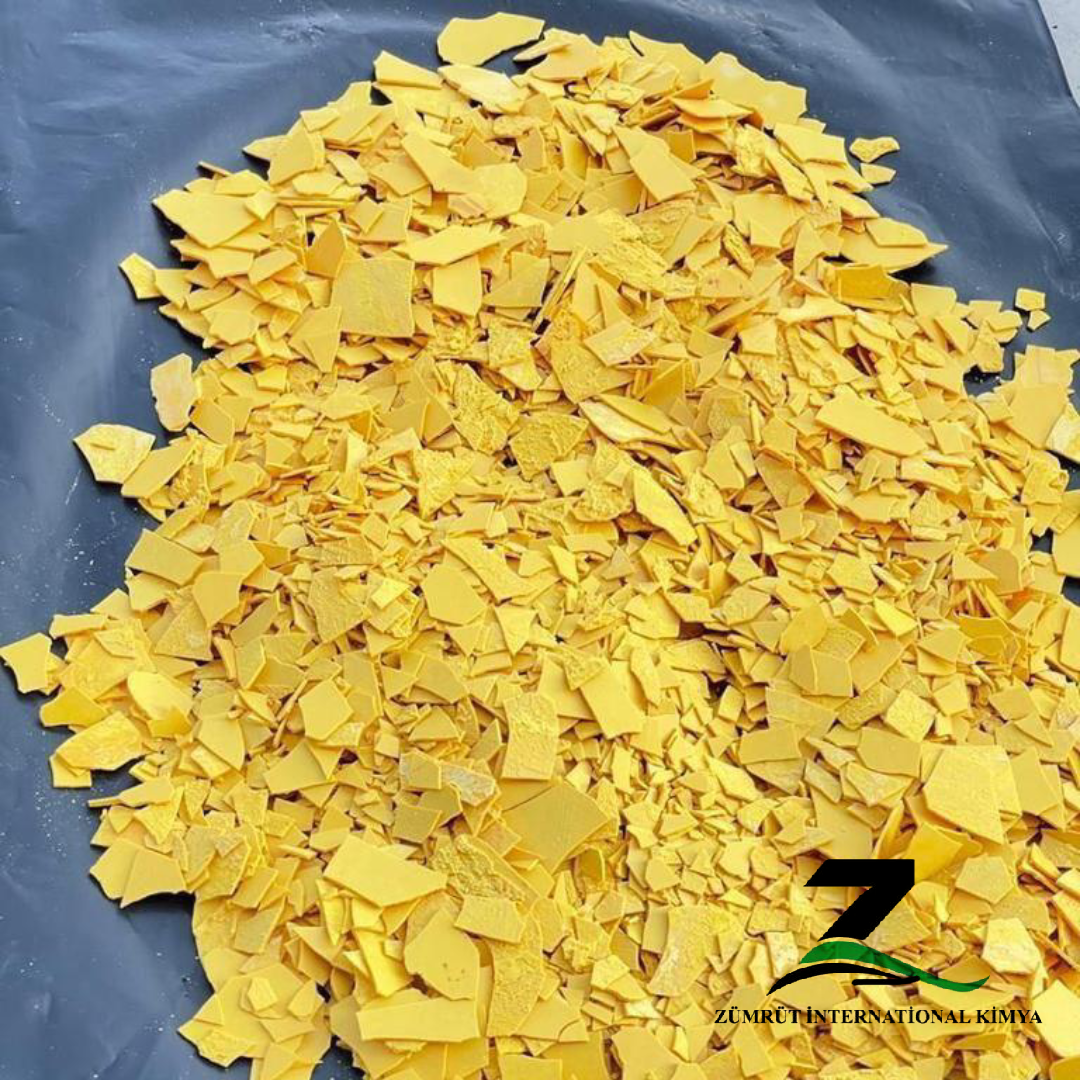
- Appearance : Typically appears as a yellow to red solid, depending on the level of impurities.
- Odor : Characteristic rotten egg smell due to the presence of hydrogen sulfide (H₂S) impurities.
- Molecular Weight : 78.04 g/mol
- Melting Point : Approximately 1,175°C (2,147°F)
- Solubility : Highly soluble in water, forming a strongly alkaline solution.
- Hydrates : Sodium sulfide commonly exists in hydrated forms, such as sodium sulfide nonahydrate (Na₂S·9H₂O), which is more stable and easier to handle.
Chemical Structure Sodium Sulphide
- Molecular Formula : Na₂S
- Ionic Nature : Composed of two sodium (Na⁺) ions and one sulfide (S²⁻) ion.
APPLICATION OF SODIUM SULPHIDE
- Pulp and Paper Industry :
– Kraft Process : Used in the Kraft process for the production of wood pulp. It helps break down the lignin in wood, facilitating the separation of cellulose fibers. - Textile Industry :
– Dyeing : Used in the dyeing process for certain types of fabrics. It serves as a reducing agent to help fix dyes to fabrics.
– Desulfurizing and Dechlorinating : Used to remove sulfur and chlorine compounds from textiles. - Leather Industry :
– Tanning : Used in the leather tanning process to remove hair from hides and to soften leather. - Chemical Industry :
– Production of Sulfur Compounds : Used as a precursor in the production of various sulfur-containing compounds such as sodium thiosulfate and sodium polysulfide.
– Reduction Agent : Acts as a reducing agent in organic and inorganic chemical reactions. - Water Treatment :
– Wastewater Treatment : Used to precipitate heavy metals from industrial wastewater, making them easier to remove. - Mining :
– Ore Flotation : Used in the flotation process to aid in the separation of valuable minerals from ores.
APPLICATIONS OF SODIUM SULPHIDE IN INDUSRIES
APPLICATIONS OF SODIUM SULFUR IN INDUSRIESSodium sulfur (Na₂S) finds applications in several industries due to its unique chemical properties. Here are some key applications:
- Pulp and Paper Industry
– Kraft Process : Used in the Kraft process to break down lignin in wood, aiding in the separation of cellulose fibers for paper production. - Textile Industry
– Dyeing and Bleaching : Acts as a reducing agent to help fix dyes onto fabrics and remove excess dye.
– Desulfurizing and Dechlorinating : Removes sulfur and chlorine compounds from textiles, improving fabric quality. - Leather Industry
– Tanning : Employed to remove hair from hides and soften leather, making it easier to process. - Chemical Industry
– Production of Sulfur Compounds : Serves as a precursor for manufacturing various sulfur-containing compounds like sodium thiosulfate and sodium polysulfide.
– Reducing Agent : Used in organic and inorganic chemical reactions to donate electrons and reduce other substances. - Water Treatment
– Wastewater Treatment : Helps in precipitating heavy metals from industrial wastewater, facilitating their removal and reducing environmental contamination. - Mining Industry
– Ore Flotation : Aids in the flotation process to separate valuable minerals from ores by modifying the surface properties of mineral particles. - Rubber Industry
– Vulcanization : Used as an additive in the vulcanization of rubber, enhancing its elasticity and strength. - Oil and Gas Industry
– Desulfurization : Employed in processes to remove sulfur compounds from oil and gas, improving fuel quality and reducing emissions. - Photographic Industry
– Photographic Processing : Utilized in the development of photographic films and papers, acting as a fixing agent to dissolve unexposed silver halide crystals. - Electronics Industry
– Batteries : Sodium-sulfur (Na-S) batteries use sodium sulfide as an electrolyte. These batteries are known for their high energy density and efficiency. - Agriculture
– Pesticides and Fungicides : Used in some formulations to control pests and fungal infections in crops.
Safety and Handling:
- Toxicity : Sodium sulfide is toxic, and exposure can cause irritation to the skin, eyes, and respiratory tract. It can also release toxic hydrogen sulfide gas, especially in contact with acids.
- Corrosiveness : It is corrosive to metals and can cause damage upon contact.
- Storage : Should be stored in a cool, dry place, away from acids and moisture. Proper ventilation is essential to prevent the accumulation of hydrogen sulfide gas.
Environmental Impact:
- Aquatic Toxicity: Sodium sulfide is harmful to aquatic life. Effluents containing sodium sulfide must be treated to neutralize its effects before being released into the environment.
- Biodegradability : Sodium sulfide can be broken down in the environment, but its presence in high concentrations can cause significant ecological damage.
TECHNICAL DATA SHEET OF SODIUM SULFIDE
| SPECIFICATIONS | RESULTS |
| Appearance | Yellow Flakes |
| Na2S, % | 60 ± 2 |
| Na2SO3, % | < 2 |
| Na2CO3, % | < 0.5 |
| Fe, ppm | < 10 |
| Insoluble Contant, % | < 12 |
| Density, g/ cmᵌ | 1600 |
| Melting Point, ℃ | 92 |