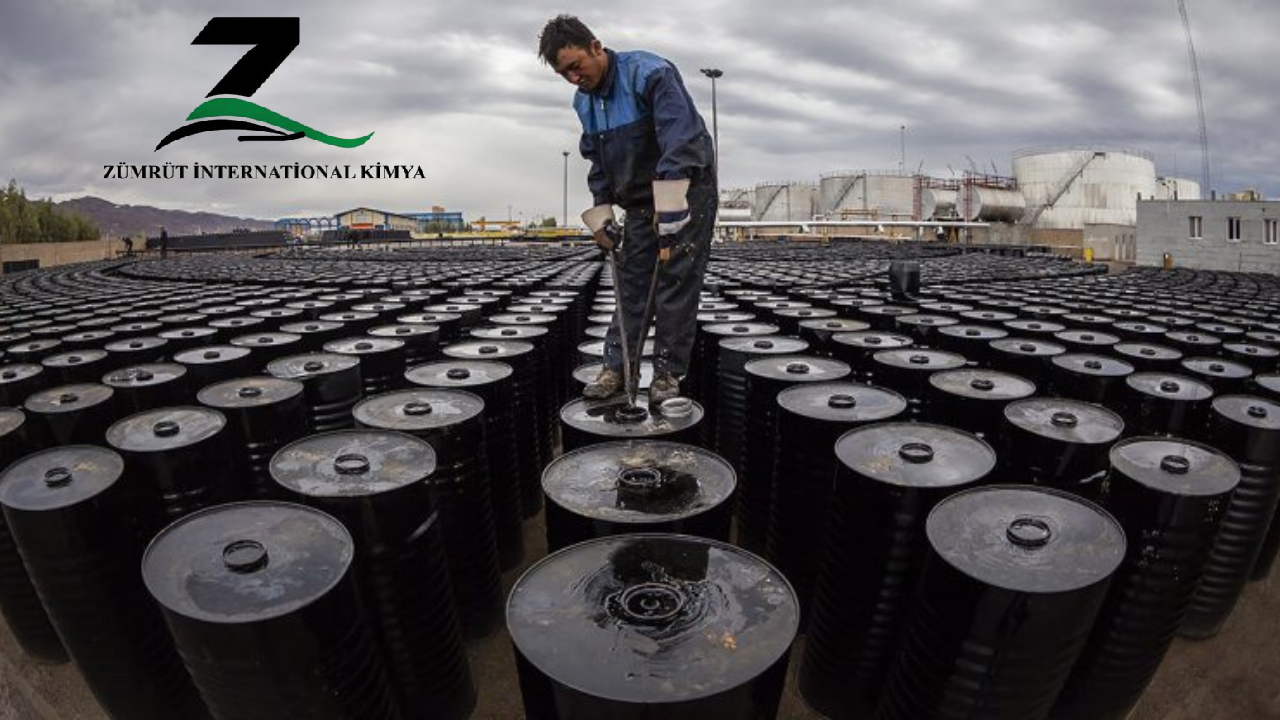
Best Grade Bitumen for Any Applications
Bitumen is a crucial material widely used in various industries, including road construction, waterproofing, and industrial applications. Selecting the right grade of bitumen ensures durability, efficiency, and cost-effectiveness for any project. Understanding the different grades of bitumen and their applications is essential to achieve the best results.
Common Grades of Bitumen and Their Applications
Penetration Grade Bitumen
- Description: This type of bitumen is categorized based on its hardness and penetration depth.
- Applications: Ideal for road construction, paving, and repairs. Common grades include 60/70, 80/100, and 40/50, which offer varying levels of flexibility and resistance to temperature changes.
The best bitumen for road construction
Bitumen is very essential in road construction, particularly in the making of asphalt, which forms a resistant and durable surface. The best choice for this application includes graded viscosity bitumen, abbreviated as VG, and penetration grade bitumen.
Such bitumen will be an excellent option for roads because of the characteristics it possesses, such as very high resistance to temperature changes and suitable adhesion in connecting aggregates to each other. Moreover, due to their highly durable nature under intense traffic and adverse weather conditions, their lives are significantly enhanced for asphalt surfacing.
In tropical regions, for instance, where the temperature is normally very high to render bitumen in a soft state, it is recommended to use VG30 or Pen 60/70 bitumen due to their high resistance against high temperatures.
Viscosity Grade Bitumen
- Description: Classified based on the viscosity at a specific temperature, ensuring consistent performance under varying climatic conditions.
- Applications: Preferred for hot regions where temperature fluctuations are significant. Commonly used in asphalt production and high-traffic roads.
Performance Grade (PG) Bitumen
- Description: Designed based on climatic conditions and traffic loads, ensuring superior performance under extreme conditions.
- Applications: Widely used in modern road infrastructure, highways, and heavy-duty pavements.
The best bitumen for roof insulation
This is because roof insulation requires very important features like resistance to moisture, resistance to temperature changes, and flexibility. Among all the bitumen types, oxidized bitumen or blown bitumen has very special stability against water infiltration and cracking due to a special production process. These kinds of bitumens prevent water leakage by creating a strong protective layer and are resistant to large temperature changes, such as summer heat and winter cold.
For example, blown bitumen R 85/25 is one of the most used products in this field, which is used in many roof insulation projects.
The best bitumen for foundation insulation
One of the main challenges in the field of construction is related to the protection of building foundations against underground water and environmental humidity. In this case, both emulsion bitumen and polymer-modified bitumen can be considered as appropriate options. These kinds of bitumen are capable of forming a water-resistant layer due to their excellent adhesion to concrete surfaces.
The only unique feature of these bitumen’s is that they are resistant to corrosive water and chemicals in the soil. Similarly, the ease with which they are applied has also facilitated the ability to completely cover the surfaces, which makes the use of these bitumen’s cost-effective and efficient.
The best bitumen to build bridges and tunnels
The bridges and tunnels require special types of bitumen’s due to the fact that they are often exposed to physical and chemical stresses. Some ideal options suitable for such structures include polymer modified bitumen and rubber bitumen. These can be said to be an ideal choice for building these structures by maintaining mechanical properties in different temperature conditions and resisting continuous pressure.
Other characteristics of this type of bitumen are high flexibility and resistance to fatigue, which, in turn, makes them perform well against vibrations and structural changes of the structure. For instance, PMB with SBS or EVA grade is widely used in tunnel and bridge construction projects.
The best bitumen for chemical industries and tanks
Resistance to corrosion and chemicals of bitumen is very important in chemical industries and storage tanks. Special chemical and mechanical stability characteristics make oxidized bitumen an excellent choice for this application.
This type of bitumen can perform well even at high temperatures, and by creating a protective layer, the tanks are protected against the destructive action of the chemical reaction. R90/15 or R85/40 grades are among the common choices for tank linings.
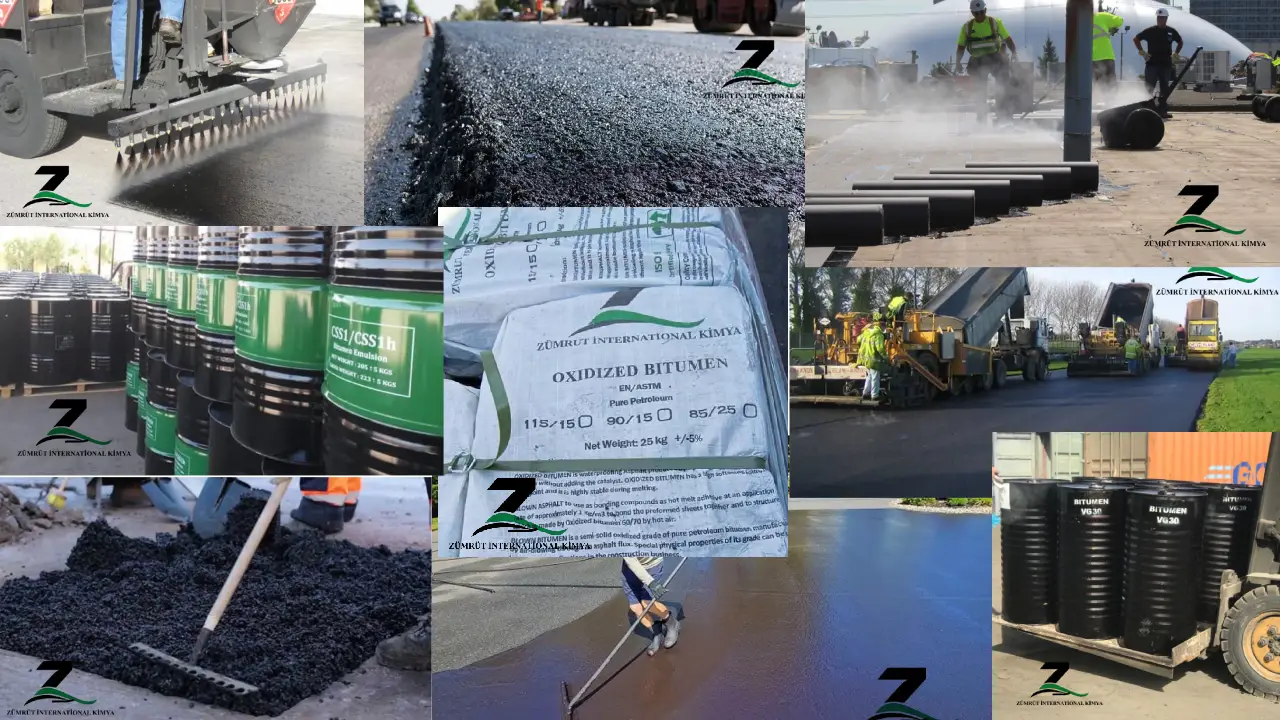
Best Sealing and Water Channels Bitumen
In irrigation and waterproofing projects, bitumen is required which, besides being waterproof, has high adhesion to different surfaces. Emulsion bitumen and polymer bitumen fit for this purpose.
These types of bitumen’s completely seal water channels due to the ease of application and uniformity of the layer that can be created. Moreover, such bitumen has a high resistance to continuous water flow and temperature changes, which creates longer durability.
Bitumen most suitable for airport asphalt
Due to the heavy pressure of planes and rapid temperature changes, the asphalts of airport runways require special bitumen’s. Polymer modified bitumen and special aviation bitumen are the best choice for that kind of application.
Those kinds of bitumen have very special flexibility, which avoids the cracking of asphalt in addition to high resistance against temperature changes and traffic pressures. This kind of asphalt is very common using SBS compounds in PMB.
Cutback Bitumen
- Description: Produced by adding solvents to reduce viscosity, making it easier to work with at lower temperatures.
- Applications: Used for surface dressing, patching, and priming coats.
Emulsion Bitumen
- Description: A mixture of bitumen and water with added emulsifiers, making it an eco-friendly option.
- Applications: Suitable for cold weather applications, surface treatments, and maintenance.
Oxidized Bitumen
- Description: Treated with air blowing to increase durability and resistance to aging.
- Applications: Used in roofing, waterproofing, and industrial applications such as pipe coatings.
Choosing the Right Bitumen Grade
Selecting the appropriate bitumen grade depends on several factors, including:
Climatic Conditions: Temperature fluctuations and weather patterns affect bitumen performance.
Traffic Load: Heavily trafficked areas require more durable and flexible bitumen.
Project Requirements: Road construction, waterproofing, or industrial applications require specific bitumen properties.