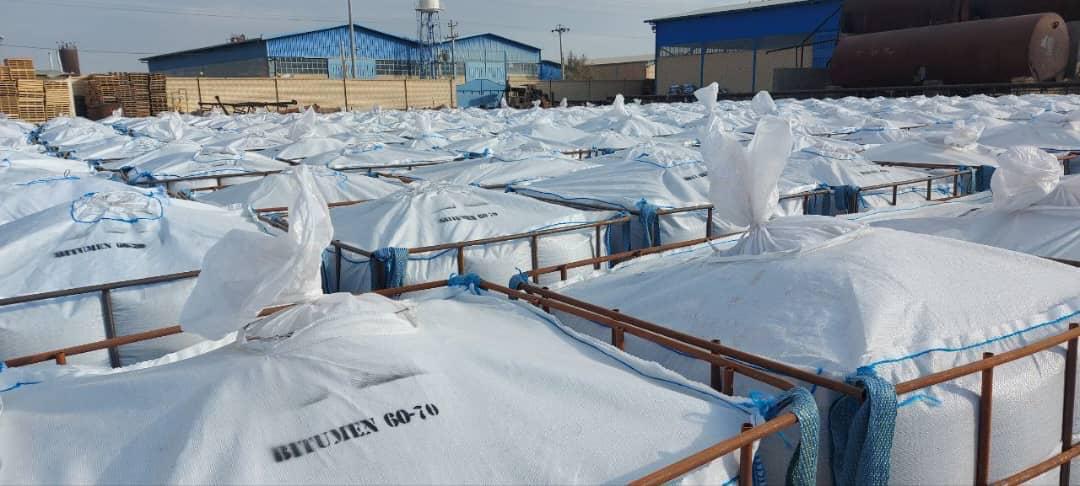
bitumen penetration 60/70 FOB Turkey

Bitumen 60/70 is the world’s most widely used penetration grade bitumen — a standard binder for road construction, highway paving, airport runways, and waterproofing applications. Zumrut International Kimya supplies bitumen 60/70 FOB Iskenderun and Mersin, compliant with ASTM D946 and EN 12591, with full COA documentation and export to 30+ countries.

Bitumen 60/70: Complete Technical Guide & FOB Turkey Supplier

Bitumen 60/70

Penetration Grade Bitumen 60/70 — ASTM D946 & EN 12591 compliant. The world’s most used road paving binder. FOB Iskenderun & Mersin. Full COA. Export to 30+ countries.

📐 ASTM D946 / EN 12591 🚢 FOB Iskenderun & Mersin 📋 Full COA & MSDS 🌍 30+ Countries

Quick Answer: Bitumen 60/70 is a penetration grade bitumen with a needle penetration of 60–70 × 0.1 mm at 25°C and a softening point of 49–56°C. It is the most commonly specified bitumen grade for highway construction globally, particularly in hot and warm climates. Available FOB Iskenderun and Mersin in jumbo bags, drums, bitubags, and bulk tanker — with full ASTM/EN compliance documentation.

60–70 Penetration (0.1mm)
49–56°C Softening Point
≥232°C Flash Point
30+ Export Countries

What Is Bitumen 60/70?

Bitumen 60/70, also referred to as asphalt 60/70 or penetration grade bitumen PG 60/70, is a thermoplastic hydrocarbon material produced during the vacuum distillation of crude oil. The designation “60/70” refers to the penetration value — the depth in tenths of a millimeter (0.1 mm) that a standard needle penetrates a sample of bitumen under a load of 100 grams for 5 seconds at 25°C. A penetration of 60–70 indicates a moderately hard, semi-solid binder suited to a broad range of climatic and traffic conditions.

Among all penetration grades of bitumen, 60/70 is the single most widely specified and traded grade globally. It serves as the standard binder in hot mix asphalt (HMA) for highways, airports, and urban roads across the Middle East, Africa, South Asia, Southeast Asia, and South America. Its combination of hardness, thermal stability, ductility, and adhesion to aggregates makes it the default specification for major road construction tenders worldwide.

Bitumen 60/70 Full Technical Specifications

Property Test Method Unit Specification
Penetration at 25°C ASTM D5 / EN 1426 mm/10 60–70
Softening Point (R&B) ASTM D36 / EN 1427 °C 49–56
Specific Gravity at 25°C ASTM D70 g/cm³ 1.01–1.06
Ductility at 25°C ASTM D113 cm ≥ 100
Loss on Heating ASTM D6 wt % ≤ 0.2
Drop in Penetration after Heating ASTM D5 / D6 % ≤ 20
Flash Point (Cleveland Open Cup) ASTM D92 °C ≥ 232
Solubility in Trichloroethylene ASTM D2042 wt % ≥ 99
Spot Test AASHTO T102 Negative
Density at 25°C ASTM D70 kg/m³ 1,010–1,060
📄 Download full specification sheet: Bitumen 60/70 Specifications PDF

Physical & Chemical Properties Explained

🔬 Penetration — What It Means

The penetration value of 60–70 indicates moderate hardness. A standardized needle penetrates 6.0–7.0 mm into the bitumen under 100g load for 5 seconds at 25°C. Lower values = harder bitumen. Among penetration grades, 60/70 sits between the harder 40/50 and softer 80/100, making it ideal for warm-to-hot climates with medium-to-heavy traffic.

🌡️ Softening Point — Thermal Performance

The Ring & Ball softening point of 49–56°C means the bitumen retains its structural integrity up to this temperature before flowing. In hot climates where pavement surface temperatures can exceed 60°C, 60/70 grade is preferred over softer 80/100 for its superior resistance to rutting and permanent deformation.

📏 Ductility — Flexibility Under Load

A ductility of ≥100 cm means the bitumen can stretch at least 100 cm before breaking at 25°C. This ensures the binder maintains cohesion under traffic loads without cracking or fracturing, contributing to fatigue resistance and long pavement life.

⚡ Flash Point — Safety in Handling

The flash point of ≥232°C ensures safe handling during hot-mix asphalt production at typical mixing temperatures of 150–170°C. This wide safety margin is critical for plant operators and reduces fire risk during loading, transport, and application.

Climate Performance: Is Bitumen 60/70 Right for Your Region?

Selecting the correct bitumen grade for your climate is critical for long-term pavement performance. Bitumen 60/70 is optimized for warm and hot climate zones where summer pavement temperatures regularly exceed 40°C. It outperforms softer grades like 80/100 in rutting resistance at high temperatures while maintaining adequate flexibility for mild winters.

Climate Zone Summer Temp Bitumen 60/70 Recommended For
Hot & Arid (Middle East, N. Africa) > 45°C ✓ Excellent Highways, urban roads, airports
Tropical (W. Africa, SE Asia) 35–45°C ✓ Excellent All road types, port roads
Warm Temperate (S. Europe, S. America) 30–40°C ✓ Very Good Highways, secondary roads
Temperate (N. Europe, N. America) 20–30°C ⚠ Consider 70/100 Urban roads, lower traffic
Cold (Scandinavia, Canada) < 20°C ✗ Not recommended Use 80/100 or 100/150

Bitumen 60/70 Applications

🛣️

Highway & Road Construction

Primary binder in hot mix asphalt (HMA) for highways, motorways, urban roads, and rural roads. Binds aggregate particles to form durable asphalt concrete resistant to traffic loads and weathering.

✈️

Airport Runways & Taxiways

The hardness and load resistance of 60/70 make it ideal for airport pavements subjected to heavy static and dynamic loads from aircraft. Widely used in international airport construction projects.

🏠

Roofing & Waterproofing

Used in modified bitumen roofing membranes, damp-proof courses, foundation waterproofing, and bridge deck sealing. Provides a durable, water-impermeable barrier for buildings and infrastructure.

🔧

Pavement Maintenance

Applied in chip sealing, slurry sealing, and surface dressing to preserve and extend the life of existing asphalt pavements. Also used in cold patch and crack-filling formulations.

🚢

Marine & Port Infrastructure

Used in marine construction for sealing and waterproofing port terminals, harbor facilities, and underwater structures. Resists saltwater corrosion and abrasion in coastal environments.

🏭

Industrial & Pipe Coating

Applied as anti-corrosion coating on steel pipelines for oil, gas, and water networks. Also used in industrial floor coatings and chemical-resistant sealants in heavy-duty environments.

Packing Options for Bitumen 60/70

Packing Type Unit Weight Loading / 20ft FCL Best For
Jumbo Bag (with cage & pallet) 1 MT 20 MT Standard B2B export
Jumbo Bag (without cage) / 40ft 1 MT 20 MT Cost-efficient large volumes
Jumbo Bag 1,300 kg / 40ft 1.3 MT 26 MT Maximum container utilization
New Steel Drum 180 kg 110 drums (~20 MT) Retail, small contractors
Bitubag 375 kg 24 MT Easy remelting in plant
Bulk in Vessel 2,000–20,000 MT Large infrastructure projects
Bulk in Flexi Bag 20 MT Flexible container shipping

HS Code for Bitumen 60/70

HS Code

2713.20

Description

Petroleum bitumen — penetration grade

Chapter

Chapter 27 — Mineral fuels & petroleum products

Applies To

40/50, 60/70, 80/100, 85/100 penetration grades

Bitumen 60/70 Price FOB Turkey

Bitumen 60/70 prices fluctuate weekly based on crude oil benchmarks, seasonal demand, and freight markets. For current FOB Iskenderun and Mersin prices, visit our dedicated price page — updated every week.

Export Markets — Where We Ship Bitumen 60/70

Zumrut International Kimya exports bitumen 60/70 to buyers across more than 30 countries through Iskenderun and Mersin ports:

🇦🇲 Armenia 🇾🇪 Yemen 🇰🇪 Kenya 🇧🇷 Brazil 🇻🇳 Vietnam 🇰🇼 Kuwait 🇰🇭 Cambodia 🇦🇪 UAE 🇱🇷 Liberia 🇨🇱 Chile 🇹🇷 Turkey 🇲🇾 Malaysia 🇨🇳 China 🇹🇭 Thailand 🇲🇿 Mozambique 🇨🇩 Congo 🇹🇿 Tanzania 🇲🇲 Myanmar 🇩🇯 Djibouti 🇹🇼 Taiwan 🇴🇲 Oman 🇬🇪 Georgia 🇸🇩 Sudan 🇵🇪 Peru 🇮🇳 India 🇰🇷 South Korea 🇵🇭 Philippines 🇮🇩 Indonesia 🇿🇦 South Africa 🇶🇦 Qatar 🇷🇼 Rwanda 🇸🇴 Somalia 🇷🇴 Romania

Frequently Asked Questions — Bitumen 60/70

What does 60/70 mean in bitumen?
The 60/70 designation refers to the penetration value range of the bitumen. A standard needle penetrates 60 to 70 tenths of a millimeter (6.0–7.0 mm) into the bitumen sample under a 100-gram load for 5 seconds at 25°C. This measures the hardness of the bitumen — higher numbers mean softer material. 60/70 is a moderately hard grade suited for hot climates and heavy-traffic roads.
What is the difference between bitumen 60/70 and 80/100?
Bitumen 60/70 is harder with a higher softening point (49–56°C) — better for hot climates and heavy traffic where rutting resistance is critical. Bitumen 80/100 is softer, more flexible, and better suited to cold climates and lighter-traffic applications. For a full technical comparison, see our Bitumen 60/70 vs 80/100 comparison page.
What is the density of bitumen 60/70?
The density of bitumen 60/70 typically ranges between 1.01 and 1.06 g/cm³ (1,010–1,060 kg/m³) at 25°C, as measured by ASTM D70. This value can vary slightly depending on the crude oil source and refining process. For exact density values, always refer to the supplier’s Certificate of Analysis (COA) for the specific batch.
What is the softening point of bitumen 60/70?
The softening point of bitumen 60/70 is 49–56°C, measured using the Ring & Ball method (ASTM D36 / EN 1427). This is the temperature at which the bitumen transitions from a solid to a flowable state. For road paving in regions where summer pavement surface temperatures exceed 55°C, additional measures such as gilsonite modification or polymer modification may be considered.
What standards does bitumen 60/70 comply with?
Bitumen 60/70 from Zumrut International complies with ASTM D946-09 (American standard), EN 12591-2009 (European standard), and ISIRI 2349 (Iranian standard). Every shipment is tested by accredited laboratories and comes with a full Certificate of Analysis confirming compliance with the specified standard.
What is the mixing temperature for bitumen 60/70 in hot mix asphalt?
For hot mix asphalt (HMA) production, bitumen 60/70 is typically heated to 150–170°C for mixing with aggregates, and aggregates are heated to 160–180°C. The compaction temperature at the paving site is generally 130–150°C. These temperatures ensure proper workability and coating of aggregate particles. The exact mixing and compaction temperatures should be confirmed through viscosity-temperature testing for each specific bitumen batch.
What is the HS code for bitumen 60/70?
Bitumen 60/70 is classified under HS Code 2713.20 — Petroleum bitumen, under Chapter 27 (Mineral fuels, mineral oils and products of their distillation). In some countries this extends to 8 or 10-digit national tariff codes such as 2713.20.00. Always verify the applicable code with your local customs authority for import duty calculations.

Related Products & Pages

Request a Quote — Bitumen 60/70 FOB Turkey

Tell us your required quantity, packing type, and destination port. We respond within 24 hours with a competitive FOB price and full documentation.