Performance Grade Bitumen Definition
Performance Grade (PG) bitumen is bitumen which is graded based on its performance at different temperatures. The Long-Term Pavement Performance(LTPP) has given certain algorithm to calculate the temperature of the pavement based on the temperature of the air above. From this, the highest and the lowest temperatures of the pavement is calculated and the bitumen that performs well in that temperature range is selected. Zumrut International Kimiya is a big producer of Performance Grade Bitumen in Iran & Middle East.
Penetration grading and viscosity grading are somewhat limited in their ability to fully characterize asphalt binder for use in Hot Mix Asphalt(HMA) pavement. Therefore, as part of the Super pave research effort new binder tests and specifications were developed to more accurately and fully characterize asphalt binders for use in HMA pavements. These tests and specifications are specifically designed to address HMA pavement performance parameters such as rutting, fatigue cracking and thermal cracking.
Super pave performance grading (Performance Grade) is based on the idea that an HMA asphalt binder’s properties should be related to the conditions under which it is used. For asphalt binders, this involves expected climatic conditions as well as aging considerations. Therefore, the PG system uses a common battery of tests (as the older penetration and viscosity grading systems do) but specifies that a particular asphalt binder must pass these tests at specific temperatures that are defendant upon the specific climatic conditions in the area of use. This concept is not new – selection of penetration or viscosity graded asphalt binders follows the same logic – but the relationships between asphalt binder properties and conditions of use are more complete and more precise with the Super pave PG system. Information on how to select a PG asphalt binder for a specific condition is contained in Super pave mix design method. Table below shows how the Super pave PG system addresses specific penetration, AC and AR grading system general limitations.
| Limitations of Penetration, AC and AR Grading Systems | Super pave Binder Testing and Specification Features that Address Prior Limitations |
|---|---|
| Penetration and ductility tests are empirical and not directly related to HMA pavement performance. | The physical properties measured are directly related to field performance by engineering principles. |
| Tests are conducted at one standard temperature without regard to the climate in which the asphalt binder will be used. | Test criteria remain constant, however, the temperature at which the criteria must be met changes in consideration of the binder grade selected for the prevalent climatic conditions. |
| The range of pavement temperatures at any one site is not adequately covered. For example, there is no test method for asphalt binder stiffness at low temperatures to control thermal cracking. | The entire range of pavement temperatures experienced at a particular site is covered. |
| Test methods only consider short-term asphalt binder aging (thin film oven test) although long-term aging is a significant factor in fatigue cracking and low temperature cracking. | Three critical binder ages are simulated and tested: Original asphalt binder prior to mixing with aggregate. Aged asphalt binder after HMA production and construction. Long-term aged binder. |
| Asphalt binders can have significantly different characteristics within the same grading category. | Grading is more precise and there is less overlap between grades. |
| Modified asphalt binders are not suited for these grading systems. | Tests and specifications are intended for asphalt “binders” to include both modified and unmodified asphalt cements. |
Performance Grade Bitumen (PG Bitumen) HS Code, chemical Formula and Cas number
The Harmonized System (HS) code for performance grade bitumen varies depending on the specific grade and its intended use, but generally, bitumen falls under HS code 27132000. The chemical formula for bitumen is complex and varies depending on its source and processing, but it is primarily composed of hydrocarbons. The CAS (Chemical Abstracts Service) number for bitumen is 8052-42-4.
Performance Grade Bitumen (PG Bitumen) Production Process
The production process of Performance Grade (PG) bitumen involves several steps:
- Crude Oil Distillation: Bitumen is typically obtained as a byproduct of crude oil refining. Crude oil undergoes fractional distillation to separate it into various fractions, including bitumen.
- Air Blowing: The bitumen obtained from crude oil distillation is often too viscous for certain applications. To improve its properties, air blowing is commonly used. In this process, air is blown through the bitumen at high temperatures to oxidize it, reducing its viscosity and making it suitable for use in asphalt applications.
- Additives: Depending on the desired characteristics of the final product, additives such as polymers or anti-stripping agents may be incorporated into the bitumen during the production process to enhance its performance and durability.
- Quality Control: Throughout the production process, quality control measures are implemented to ensure that the final product meets the required specifications and standards for its intended use.
- Packaging and Distribution: Once the bitumen has been produced and tested, it is typically packaged in drums, tanks, or other containers for distribution to customers, where it will be used in various asphalt applications such as road construction and waterproofing.
Performance Grade Bitumen (PG Bitumen) Types and Grades
Performance Grade (PG) bitumen comes in various types and grades, each designed to meet specific performance requirements for different climates and pavement applications. Some common types and grades of PG bitumen include:
- PG 52, PG 58, PG 64, PG 70, PG 76: These numbers represent the high-temperature performance grade (in Celsius) of the bitumen. For example, PG 64 bitumen is designed to perform well at high temperatures up to 64°C.
- PG 22, PG 28, PG 34, PG 40: These numbers represent the low-temperature performance grade (in Celsius) of the bitumen. For example, PG 22 bitumen is designed to remain flexible and resistant to cracking at low temperatures down to -22°C.
- Polymer-Modified Bitumen (PMB): These are PG bitumen’s that have been modified with polymers to enhance their properties such as elasticity, rut resistance, fatigue resistance, and durability. Common polymer modifiers include styrene-butadiene-styrene (SBS) and styrene-butadiene rubber (SBR).
- Crumb Rubber Modified Bitumen (CRMB): These are PG bitumen’s that have been modified with recycled tire rubber (crumb rubber) to improve their properties such as elasticity, resistance to rutting, and fatigue resistance.
- Warm Mix Asphalt (WMA) PG Bitumen: These are PG bitumen’s designed to be used at lower production temperatures compared to traditional hot mix asphalt, resulting in reduced energy consumption, lower emissions, and improved workability.

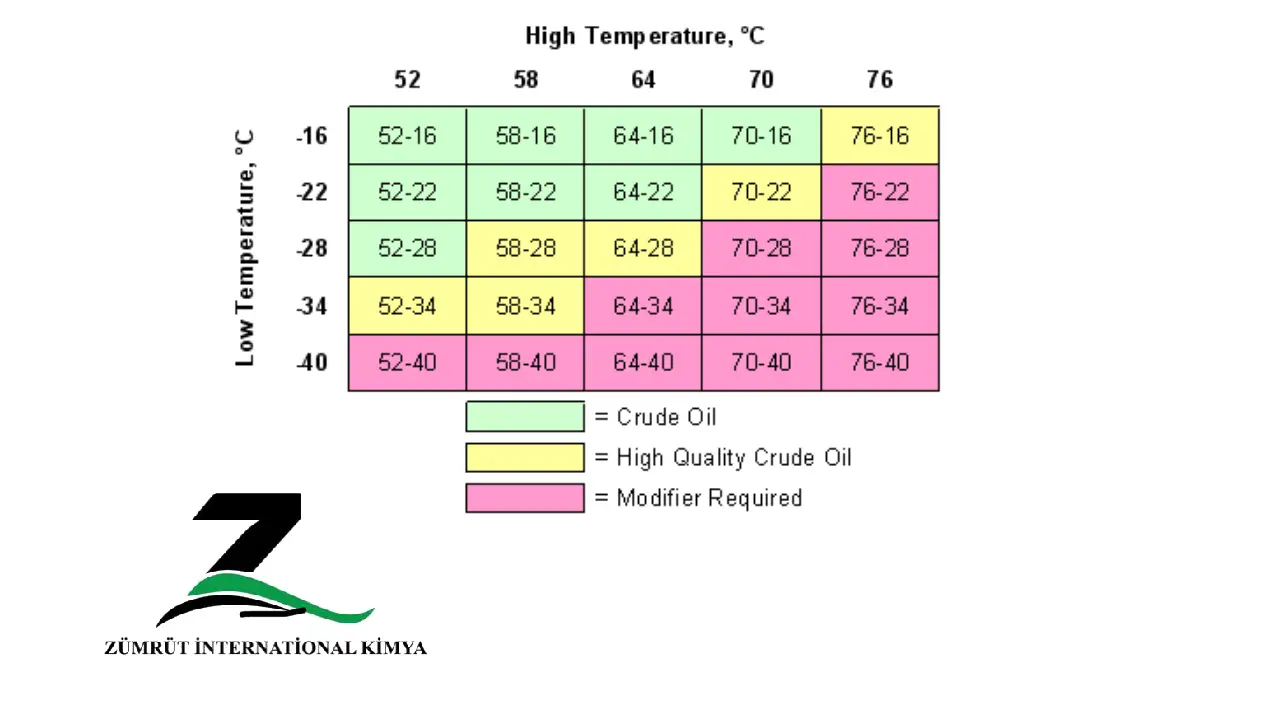
Compare the Performance Grade Bitumen (PG Bitumen) With Penetration Bitumen and Viscosity Grade Bitumen
Performance Grade (PG) bitumen, penetration bitumen, and viscosity grade bitumen are all used in asphalt applications but have different properties and are classified based on different criteria. Here’s a comparison of these three types of bitumen:
1. Performance Grade (PG) Bitumen:
– PG bitumen is classified based on its performance characteristics under different temperature conditions, specifically its high-temperature and low-temperature performance.
– PG bitumen offers a more precise specification for its behavior under various conditions, making it suitable for specifying asphalt binder in regions with diverse climates and traffic conditions.
– It is commonly used in asphalt mixtures for road construction, where performance requirements are stringent and varied.
2. Penetration Bitumen:
– Penetration bitumen is classified based on its penetration value, which indicates the hardness or consistency of the bitumen at a standard temperature and load.
– Penetration bitumen is typically softer and more ductile compared to PG bitumen, making it suitable for applications where flexibility and deformation resistance are important.
– It is commonly used in surface treatments, such as chip seals and surface dressings, as well as in some asphalt mixtures for low-traffic roads and lightly loaded pavements.
3. Viscosity Grade Bitumen:
– Viscosity grade bitumen is classified based on its viscosity at a specific temperature, typically 60°C or 135°C.
– Viscosity grade bitumen provides an indication of flow characteristics and workability at elevated temperatures, which is important during asphalt mixing and placement.
– It is commonly used in hot mix asphalt (HMA) production, where the workability of the binder is crucial for achieving proper coating and compaction of aggregate particles.
In summary, PG bitumen is classified based on performance characteristics, penetration bitumen is classified based on penetration value, and viscosity grade bitumen is classified based on viscosity at a specified temperature. Each type of bitumen serves different purposes and is selected based on specific project requirements, climate conditions, and performance criteria.
Performance Grade Bitumen (PG Bitumen) Durability
Performance Grade (PG) bitumen is known for its enhanced durability compared to other types of bitumen such as penetration bitumen. Its durability stems from several factors:
- Temperature Sensitivity: PG bitumen is classified based on its performance at high and low temperatures, ensuring that it remains stable and functional across a wide range of climatic conditions. This means it can resist rutting at high temperatures and cracking at low temperatures, which are critical factors in pavement durability.
- Customization: PG bitumen allows for customization to meet specific performance requirements of different pavement designs and traffic loads. By selecting the appropriate PG grade, engineers can ensure that the asphalt binder will withstand the anticipated stresses and strains over its service life.
- Additives: PG bitumen can be modified with additives such as polymers or rubber to further enhance its durability. These additives improve characteristics such as elasticity, fatigue resistance, and aging properties, extending the lifespan of the pavement.
- Quality Control: The production and use of PG bitumen involve stringent quality control measures to ensure consistency and reliability. This helps minimize variability in performance and ensures that the asphalt pavement meets durability requirements over time.
The PG grading system is defined by two numbers, which represent pavement temperatures. The first number PG 64-XX represents the high pavement temperature in degrees Celsius, while the second number PG XX-22 represents the low pavement temperature.
Performance Grade Bitumen (PG BITUMEN) Price and Buy
The petroleum industry, a cornerstone of the global economy, is marked by a variety of products, with Performance Grade Bitumen (PG Bitumen) being one of the key derivatives. With its wide range of applications in road construction and roofing, the price of Performance Grade Bitumen (PG Bitumen) plays a significant role in the overall project costs. This part aims to provide a comprehensive understanding of the dynamics of the Performance Grade Bitumen (PG Bitumen) price.
Firstly, it’s important to remember that like all petroleum products, the price of Performance Grade Bitumen (PG Bitumen) is directly influenced by the international crude oil market. Fluctuations in oil prices can lead to changes in the price of Performance Grade Bitumen (PG Bitumen). Global economic trends, geopolitical events, and supply-demand imbalances are some of the significant factors influencing crude oil prices and, consequently, the price of PG Bitumen.
Secondly, the cost of processing and refining crude oil into PG Bitumen also impacts the Performance Grade Bitumen (PG Bitumen) price. The process involves a number of steps, including distillation, vacuum flashing, and air blowing, each requiring specific machinery and equipment. The cost of these operations, including maintenance and workforce costs, contribute to the final PG Bitumen price.
The availability and cost of transportation also play a key role in the Performance Grade Bitumen (PG Bitumen) price. Transporting PG Bitumen involves special procedures and equipment due to its viscosity and temperature requirements. Moreover, the distance between the production facility and the end-use location influences the overall transportation costs, hence affecting the price of Performance Grade Bitumen (PG Bitumen).
Quality standards and grades of the PG Bitumen can also impact the price. Higher grade bitumen typically demands a higher price due to enhanced performance characteristics. Various manufacturers, including reputable companies such as ZUMRUT , produce different grades of PG Bitumen to meet diverse requirements of the market.
Lastly, market competition is a crucial determinant of the Performance Grade Bitumen (PG Bitumen) price. In a competitive market with multiple suppliers, companies might adjust their prices to maintain their market share. It is always recommended to check the Performance Grade Bitumen (PG Bitumen) price list from different suppliers before making a purchase decision.
In conclusion, understanding the dynamics of the Performance Grade Bitumen (PG Bitumen) price is essential for buyers and stakeholders in the industry. By keeping a close eye on these factors, one can make informed decisions and effectively manage their project costs. The price list of Performance Grade Bitumen (PG Bitumen) is regularly updated, reflecting the ongoing market trends and providing a clear benchmark for buyers. At ZUMRUT, we aim to offer the most competitive prices, ensuring our customers get the best value for their investments.
Performance Grade Bitumen (PG Bitumen) Packing
- Bulk Tanker Trucks: Large quantities of PG bitumen are often transported in bulk tanker trucks, especially for use in asphalt mixing plants or for large construction projects. These tankers can carry thousands of gallons of bitumen and are equipped with heating systems to maintain the bitumen at the desired temperature during transport.
- Drums or Barrels: Smaller quantities of PG bitumen are commonly packed in drums or barrels, typically with capacities ranging from 100 to 200 liters. This packaging method is convenient for smaller construction projects or for storage at remote sites where bulk tanker delivery may not be feasible.
- Bitutainers or Flex tanks: Intermediate packaging options for PG bitumen include bitutainers or flex tanks, which are large, collapsible containers designed to transport bulk liquids. These containers offer a balance between the capacity of bulk tankers and the flexibility of drums, making them suitable for medium-sized construction projects or for shipping PG bitumen to locations without bulk tanker access.
- Bagged Bitumen: In some cases, PG bitumen may be packaged in bags for easier handling and transportation, especially for smaller volumes or for use in areas with limited infrastructure. These bags are typically made of heavy-duty plastic and can range in size from a few kilograms to several hundred kilograms.
Performance Grade Bitumen (PG Bitumen) Manufacturers and Suppliers
The global market of Performance Grade Bitumen (PG Bitumen) is a complex web of manufacturers, suppliers, and consumers spanning across continents. This part will offer a comprehensive review of the major players in this arena, the Performance Grade Bitumen (PG Bitumen) suppliers and manufacturers, providing an invaluable resource for those involved in this sector.
Let’s begin with manufacturers, the entities responsible for the initial production of PG Bitumen. Manufacturers or factories operate in various parts of the world, with significant concentrations in countries rich in crude oil resources. They source crude oil, refine it, and then subject it to specific processes to produce various grades of PG Bitumen.
Reputable Performance Grade Bitumen (PG Bitumen) manufacturers adhere to strict quality standards to ensure the best product performance. They invest significantly in research and development to improve their products and cater to the unique requirements of various clients. Some well-established PG Bitumen manufacturers include Petro Naft, ExxonMobil, and Shell Bitumen. ZUMRUT, for instance, is renowned for its high-quality bitumen products and exceptional customer service.
When selecting a manufacturer, it is often advisable to opt for a nearby Performance Grade Bitumen (PG Bitumen) manufacturer. This not only reduces transportation costs but also enables a closer relationship with the manufacturer, which can be beneficial for addressing concerns and customization requirements quickly.
Moving onto Performance Grade Bitumen (PG Bitumen) suppliers or firms, these are the entities that act as intermediaries between manufacturers and end-users. Suppliers play a crucial role in maintaining a smooth flow of PG Bitumen from production factories to the places of usage. They manage logistics, storage, and distribution, ensuring that the product reaches the customer in the right condition at the right time.
Performance Grade Bitumen (PG Bitumen) suppliers often offer a range of services, including providing technical advice, product selection assistance, and after-sales support. Some major global suppliers in the PG Bitumen industry include British Petroleum, Total, and Zumrut. ZUMRUT not only manufactures but also supplies PG Bitumen globally, standing as a reliable partner for many infrastructure projects.
In summary, both manufacturers and suppliers are pivotal in the PG Bitumen industry, each playing distinctive roles. Choosing the right partner is crucial for ensuring the best product quality, service, and value. Remember to consider the factors such as reputation, service range, and location while choosing your Performance Grade Bitumen (PG Bitumen) manufacturer or supplier.
How to read a Performance Grade?
The PG grading system is based on climate, so the grade notation consists two portions: high and low pavement service temperature. The major concern for high temperature performance is rutting, which typically takes time to cumulate, therefore an average of 7 day maximum pavement temperature is used for describing the high temperature climate. On the low temperature side, thermal cracking can happen during one really cold night; therefore the minimum pavement temperature is used for describing the low temperature climate. For both high and low temperature grade, PG grades are graded in 6°C increment. The average 7 day maximum pavement temperature typically ranged from 46 to 82°C, and minimum pavement temperature typically ranged from −46°C to −10°C.
A binder identified as PG 64-10 must meet performance criteria at an average 7 day maximum pavement temperature of 64°C and also at a minimum pavement temperature of −10°C. Please note that maximum pavement temperature is typically higher than the air temperature by about 20°C since the dark color pavement absorbs the heat and retains it. The maximum pavement temperature is typically measured at about 1 inch below the pavement surface. However, the minimum pavement temperature occurs on the surface of the pavement and is equal to the air temperature.
The common minimum reliability used is 98%, so that means when the PG 64-10 binder is selected, the asphalt binder in the AC pavement should perform satisfactorily under normal traffic condition at the location where the extreme pavement temperature are within the range of −10°C and 64°C throughout its service life with a minimum 98% confidence level. Where the traffic condition is not typical, such as the really heavy traffic like interstate highway, or slow traffic such as bus stop or intersection area, one or two grades stiffer asphalt binder may be used to help prevent the rutting problem.
Polymer modified binders are used wherever extra performance and durability are desired. Improvement in resistance to rutting, thermal cracking, fatigue damage, stripping, and temperature susceptibility have led polymer modified binders to be substituted for asphalt in many paving and maintenance applications. Especially when good rutting resistance for high temperature and good thermal cracking resistance for low temperature are concurrently required in the same application, the polymer modification is generally required.
rule of thumb to differentiate the polymer modified binder from unmodified binder is to add both low and high temperature grades together, if the sum is greater than 90, it is likely to be a polymer modified binder. For example, a Performance Grade bitumen 76-22 is likely to be a polymer modified binder since the sum is 98, while a Performance Grade Bitumen 64-10 is likely to be an unmodified since the sum is 74.