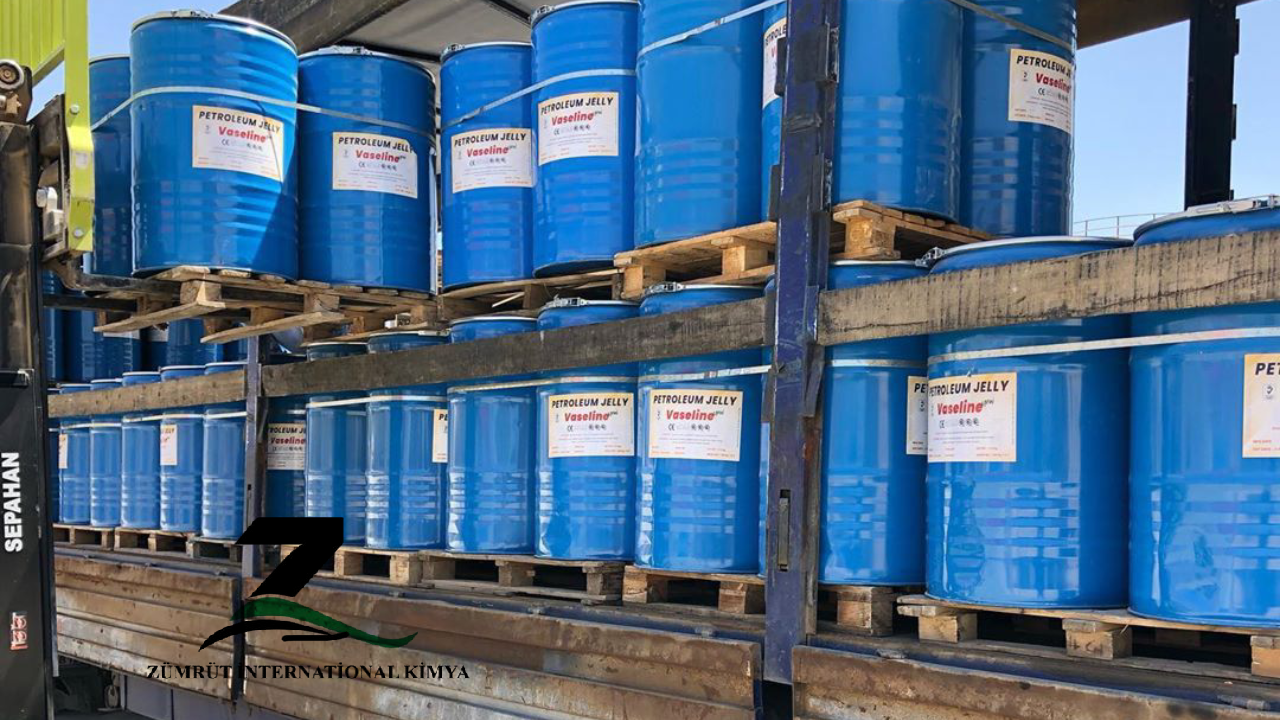
- White petroleum Jelly Definition
- Advantages White Petroleum jelly
- Delivery of petroleum jelly to African Destination Ports
- The difference between white petroleum jelly and snow white petroleum jelly
- The most used White Petroleum jelly in African countries
- Types of white petroleum jelly grades
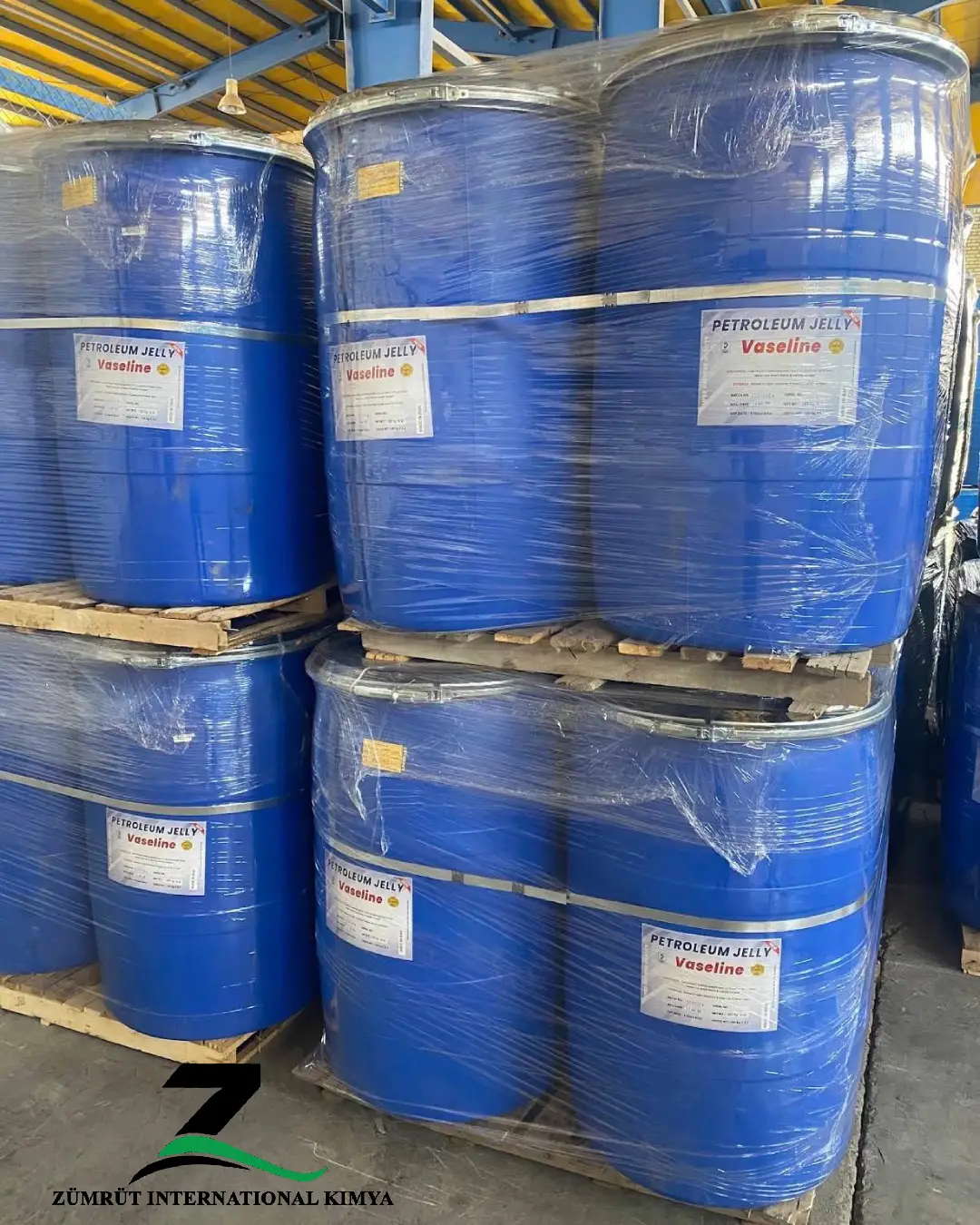
- Packaging and Storage
- Technical Data Sheet White Petroleum Jelly BP & USP
White petroleum jelly, also known as petrolatum or Vaseline, is a semi-solid mixture of hydrocarbons derived from petroleum…
White petroleum Jelly Definition
White petroleum jelly, also known as petrolatum or Vaseline (a common brand name), is a semi-solid mixture of hydrocarbons derived from petroleum. It is colorless or pale yellow and has a smooth, waxy texture. White petroleum jelly is widely used in skincare for its moisturizing and protective properties. It forms a barrier on the skin, preventing moisture loss and protecting against irritants, making it useful for treating dry skin, minor cuts, burns, and chapped lips. It is also used in various cosmetic and pharmaceutical products.
Advantages White Petroleum jelly
White Vaseline offers several advantages, including:
- Moisturizing : Forms a protective barrier on the skin, helping to lock in moisture and prevent dryness.
- Protection : Shields the skin from external irritants, which can be helpful for minor cuts, burns, and chapped lips.
- Healing : Assists in the healing process of minor wounds by keeping the area moist, which can promote faster recovery.
- Versatility : Can be used for a variety of purposes, including as a lip balm, diaper rash cream, and treatment for dry, cracked skin.
- Hypoallergenic : Generally non-irritating and suitable for sensitive skin.
- Cost-effective : Inexpensive and widely available.
- Stability : Has a long shelf life and does not easily degrade or spoil.
- Non-comedogenic : Typically does not clog pores, making it suitable for use on the face and other sensitive areas.
Applications of White Petroleum Jelly
Kerosene jelly, often referred to as petroleum jelly or Vaseline, has a wide range of applications, including:
- Skin Moisturizer: Helps to lock in moisture and prevent dry, cracked skin.
- Lip Balm: Protects and soothes chapped lips.
- Wound Care: Aids in the healing of minor cuts, burns, and scrapes by keeping the area moist and protected.
- Diaper Rash: Used to prevent and treat diaper rash in babies by acting as a barrier against moisture.
- Protective Barrier: Shields skin from irritants and friction, useful for athletes to prevent chafing.
- Cosmetic Uses: Can be used to tame eyebrows, as a makeup remover, or to add shine to the skin.
- Tattoo Healing: Often applied to new tattoos to keep the area moisturized and aid in healing.
- Hair Care: Can be used to condition split ends, tame frizz, and add shine to hair.
- Lubricant: Acts as a lubricant for various applications, including hinges, tools, and machinery.
- Preventing Stains: Applied around the hairline before coloring hair to prevent dye from staining the skin.
- Pet Care: Can be used on pets to treat dry paws or noses and to help prevent hairballs in cats.
Delivery of petroleum jelly to African Destination Ports
- Algeria
Port: Algeria port. - Nigeria
Port: Lagos Port
Port : Apapa - Sudan
Port: Port Sudan - Morocco
Port: Port of Casablanca - Tunisia
Port: Port of Rades
Port : Sfax - Ghana
Port : Tema port - Madagascar
Port : Toamasina, Tomatave
The difference between white petroleum jelly and snow white petroleum jelly
The primary difference between white petroleum jelly and snow white petroleum jelly lies in their level of purity and refinement:
- White Petroleum Jelly : This type is generally well-refined and is commonly used for cosmetic and pharmaceutical purposes. It has a pale yellow to white color and is free of most impurities. It is suitable for general skincare and medicinal applications.
- Snow White Petroleum Jelly : This type is a more highly refined form of petroleum jelly, with a whiter, more translucent appearance. It undergoes additional refining processes to remove impurities and colorants, resulting in a product that is purer and more suitable for use in higher-grade cosmetic, medical, and industrial applications.
Physical properties of white Vaseline
White Vaseline, also known as white Vaseline , has several distinct physical properties:
- Appearance : It is semi-solid, smooth, and has a white or slightly off-white color.
- Texture : It is thick, greasy, and has a waxy consistency.
- Melting Point : It melts at a relatively low temperature, typically between 37°C to 60°C (98.6°F to 140°F).
- Odor : Generally odorless or has a very faint, neutral scent.
- Solubility : Insoluble in water but soluble in organic solvents such as chloroform, benzene, and diethyl ether.
- Density : Its density ranges from 0.815 to 0.880 g/cm³.
- Viscosity : It has high viscosity, making it a thick and slow-flowing substance at room temperature.
- Stability : Chemically stable and resistant to oxidation, with a long shelf life.
These properties make white Vaseline a versatile and widely used product in various applications, including skincare, cosmetics, and pharmaceuticals.
The most used White Petroleum jelly in African countries
In African countries, snow White Vaseline, a popular brand of petroleum jelly, is commonly used for its moisturizing and skin care benefits. Some of the countries where it is widely used include:
- Nigeria : With a large population and a strong demand for personal care products, Nigeria is one of the biggest markets for Snow White Petroleum Jelly.
- Ghana : Similar to Nigeria, Ghana has a high demand for personal care items, including petroleum jelly.
- South Africa : South Africa’s diverse market and established retail networks make it a significant consumer of Snow White Petroleum Jelly.
- Kenya : As a major East African market, Kenya also shows substantial use of this product.
- Tunisia
- Algeria
- Morocco
- Sudan
- Madagascar
Chemical properties of white Vaseline
White Vaseline, or white petroleum jelly, has specific chemical properties that contribute to its functionality and uses:
- Chemical Composition : It is a mixture of hydrocarbons, primarily alkanes (saturated hydrocarbons) with carbon chain lengths generally ranging from C16 to C30.
- Inertness : It is chemically inert and does not react easily with other chemicals, making it safe for use in a variety of applications, including medical and cosmetic.
- Non-polarity : As a non-polar substance, it does not mix with water or other polar substances.
- Hydrophobicity : It repels water, which is why it is effective as a moisture barrier in skincare products.
- Non-reactivity : It does not undergo significant chemical reactions under normal conditions, such as oxidation or hydrolysis, which contributes to its stability and long shelf life.
- Non-flammability : While it is flammable at high temperatures, it is not highly flammable under normal usage conditions.
Types of white petroleum jelly grades
- Cosmetic Grade : High purity, used in skincare and beauty products. It’s formulated to meet safety and quality standards for direct application on the skin.
- Pharmaceutical Grade : Also known as medicinal grade, this type is highly purified and is used in medical and pharmaceutical applications. It is suitable for use in ointments and other medical products.
- Industrial Grade : Used in various industrial applications, this grade might not be as refined as the cosmetic or pharmaceutical grades and may contain more impurities.
Is white petroleum jelly safe for kids?
Despite being derived from petroleum and therefore seeming ‘unclean’, the final white Vaseline product is put through several purification procedures. Any remaining impurities are thus removed, creating a non-irritating white vaseline. Dermatologists recommend white petroleum jelly for sensitive skin conditions, and they’re safe to use on your child’s skin as well. Remember to dry any area of skin thoroughly before applying white petroleum jelly, however.
Can white petroleum jelly clog my pores?
Contrary to popular belief, medical professionals have stated again and again that white petroleum jelly is non-comedogenic- as in the product does not clog skin pores, or cause any sort of irritation or acne.
What are the causes of dry skin?
Dry skin can be caused by external factors like changes in weather, soaps or detergents that don’t suit you, unhealthy diet, or central heating or cooling systems, as the natural oils in your skin are thus sucked out. White petroleum jelly can be used as moisturiser to treat/prevent dry, rough, scaly, or itchy skin. It creates a sealing barrier between cells in dry skin so that it locks in moisture, and can speed up the natural recovery of our skin.
Packaging and Storage
- Packaging: Typically available in various sizes, ranging from small jars to bulk containers, made from materials that prevent contamination and preserve the product’s integrity.
- Storage Conditions: Should be stored in a cool, dry place away from direct sunlight and heat sources. Ideal storage temperature ranges from 15°C to 30°C (59°F to 86°F).
- Shelf Life: Generally, white Vaseline has a long shelf life, often several years, when stored properly.
White Petroleum Jelly BP & USP
White Vaseline can be classified under various pharmacopeial standards, with British Pharmacopoeia (BP) and United States Pharmacopeia (USP) being two prominent ones:
- White Vaseline BP (British Pharmacopoeia) :
– Description : This grade meets the purity and quality standards set by the British Pharmacopoeia. It undergoes rigorous testing to ensure it is free from harmful impurities and meets the specific criteria for pharmaceutical use.
– Uses : It is suitable for use in medicinal and pharmaceutical products, such as ointments, creams, and other topical applications. It is also used in cosmetic products due to its high purity. - White Petroleum Jelly USP (United States Pharmacopeia) :
– Description : This grade meets the standards defined by the United States Pharmacopeia. It is similarly tested to ensure high purity, safety, and efficacy for pharmaceutical and medical applications.
– Uses : Like the BP grade, USP grade white petroleum jelly is used in medicinal products, including ointments and topical treatments, as well as in cosmetics and skincare products.
Technical Data Sheet White Petroleum Jelly BP & USP
| Characteristic | Result | Test Method | Specification |
| Appearance | Passed | BP 2013 | Translucent, soft unctuous mass, slightly fluorescent in daylight when melted |
| Acidity or alkalinity | Passed | BP 2013 | <0.5 ml NaOH 0.01 N |
| Sulphated ash | Passed | USP 2013 | <0.05% |
| Color | White 0.7 Yellow |
BP 2013 Lovibond IP 17 Method A 2 cell |
White or almost white |
| Odor | Passed | BP 2013 | Passed |
| Polycyclic aromatic hydrocarbons |
Passed | BP 2013 | Not more than absorbance of solution 6 mglˉˡ naphthalene in DMSO at 278 nm |
| Solubility | Passed | BP 2013 | Practically insoluble in water slightly soluble in methylene chloride, practically insoluble in alcohol and in glycerol |
| Flash Point | Min 200 ̊ C | ASTM D-92 | – |
| Kinematic Viscosity at 100 ̊ C |
5.5-6 cst | ASTM D-445 | – |
| Consistency Cone Penetration at 25 ̊ C |
Passed 140-150 (0.1mm) |
BP 2013 ASTM D-937 |
60-300 |
| Drop Melting Point | 54-56 C | ASTM D-127 | – |