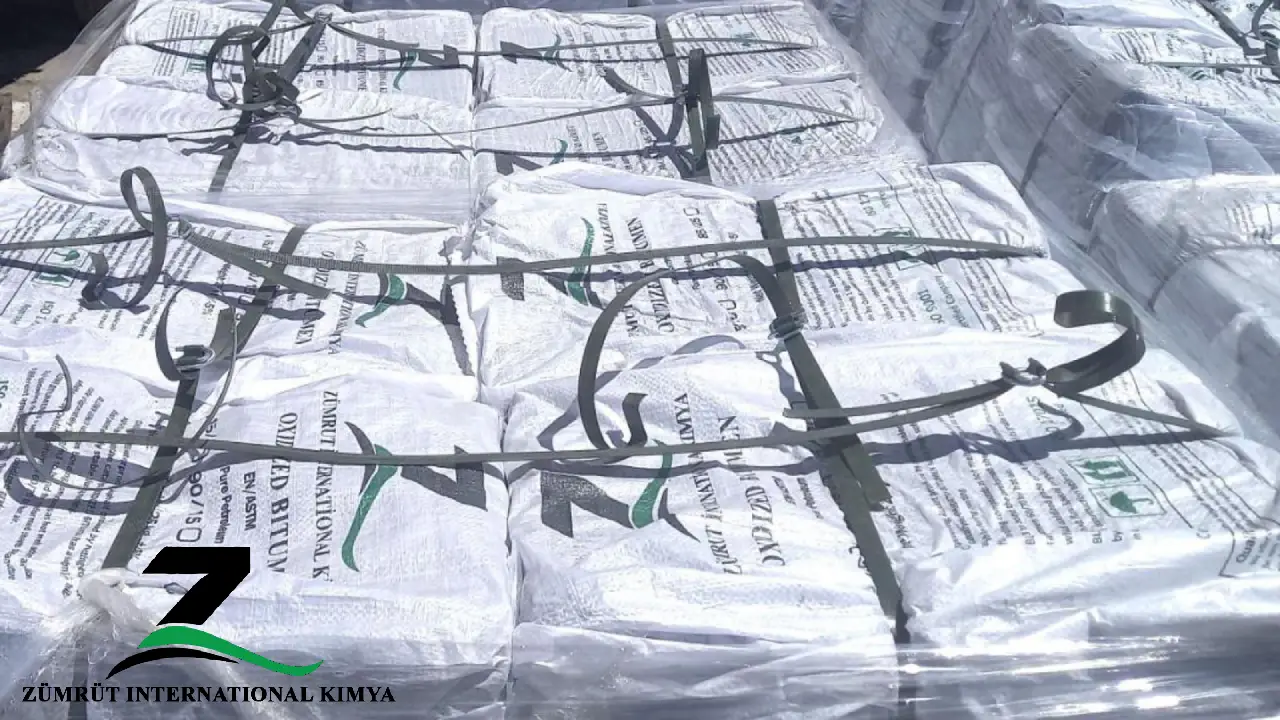
Oxidized Bitumen 150/5 Definition
Oxidized Bitumen 150/5 refers to a specific type of bitumen that has undergone a controlled oxidation process. The numbers in the designation typically refer to the softening point and penetration value of the bitumen. In this case, “150” indicates the softening point in degrees Celsius, and “5” represents the penetration value in tenths of a millimeter.
Oxidized bitumen is produced by blowing air through heated bitumen, which causes the bitumen to oxidize and thicken. This process alters the physical properties of the bitumen, making it more viscous and less prone to flow at high temperatures.
Blown Asphalt 150/5 is commonly used in various applications such as in the manufacturing of roofing materials, waterproofing membranes, adhesives, and sealants. Its higher softening point makes it suitable for use in areas with high temperature fluctuations or where greater durability is required.
Oxidized Bitumen 150/5Compared to paving grade bitumen
When comparing oxidized bitumen 150/5 to paving grade bitumen, several differences emerge:
- Consistency: Blown Asphalt 150/5 has a thicker consistency compared to paving grade bitumen. The oxidation process increases the viscosity of the bitumen, reducing its penetration value and making it more suitable for applications requiring higher resistance to deformation, such as roofing and waterproofing.
- Softening Point: Oxidized bitumen 150/5 typically has a higher softening point compared to paving grade bitumen. This higher softening point enhances its resistance to high temperatures, making it suitable for use in hot climates and applications where thermal stability is crucial.
- Application: Paving grade bitumen is primarily used for road construction and asphalt pavement applications, where it provides the necessary flexibility and adhesion to bind aggregate materials together and withstand traffic loads. On the other hand, oxidized bitumen 150/5 is commonly used in roofing, waterproofing, and industrial applications where durability, waterproofing, and adhesive properties are paramount.
- Durability: Due to its higher softening point and reduced penetration, oxidized bitumen 150/5 offers enhanced durability and resistance to aging, weathering, and UV degradation compared to paving grade bitumen. This makes it suitable for long-term applications requiring extended service life and protection against environmental factors.
- Adhesion: While both types of bitumen exhibit adhesive properties, oxidized bitumen 150/5 typically offers stronger adhesion to various substrates, including asphalt, concrete, metal, and roofing materials, due to its thicker consistency and modified chemical composition resulting from the oxidation process.
Blown Asphalt 150/5 Applications
Oxidized bitumen 150/5 finds applications in various industries due to its specific properties:
- Roofing Materials: It’s commonly used in the production of roofing felts and membranes due to its higher softening point, providing enhanced durability and resistance to high temperatures.
- Waterproofing: The thickened consistency of oxidized bitumen makes it effective for waterproofing applications, such as in the construction of buildings, bridges, and tunnels.
- Adhesives and Sealants: It serves as a key component in the formulation of adhesives and sealants used in construction and automotive industries due to its ability to provide strong bonding and sealing properties.
- Pavement Maintenance: Oxidized bitumen is used in pavement maintenance and repair applications, such as crack sealing and joint filling, to enhance the durability and longevity of asphalt surfaces.
- Paints and Coatings: It can be incorporated into paints and coatings to improve their weather resistance and adhesion properties, especially in outdoor applications.
- Marine Applications: In marine environments, oxidized bitumen is used for protecting structures against corrosion and as a waterproofing material for marine structures like docks and piers.
Oxidized Grade Bitumen shall be broken up into small pieces and heated slowly to the application temperature of 220ºC to 230ºC
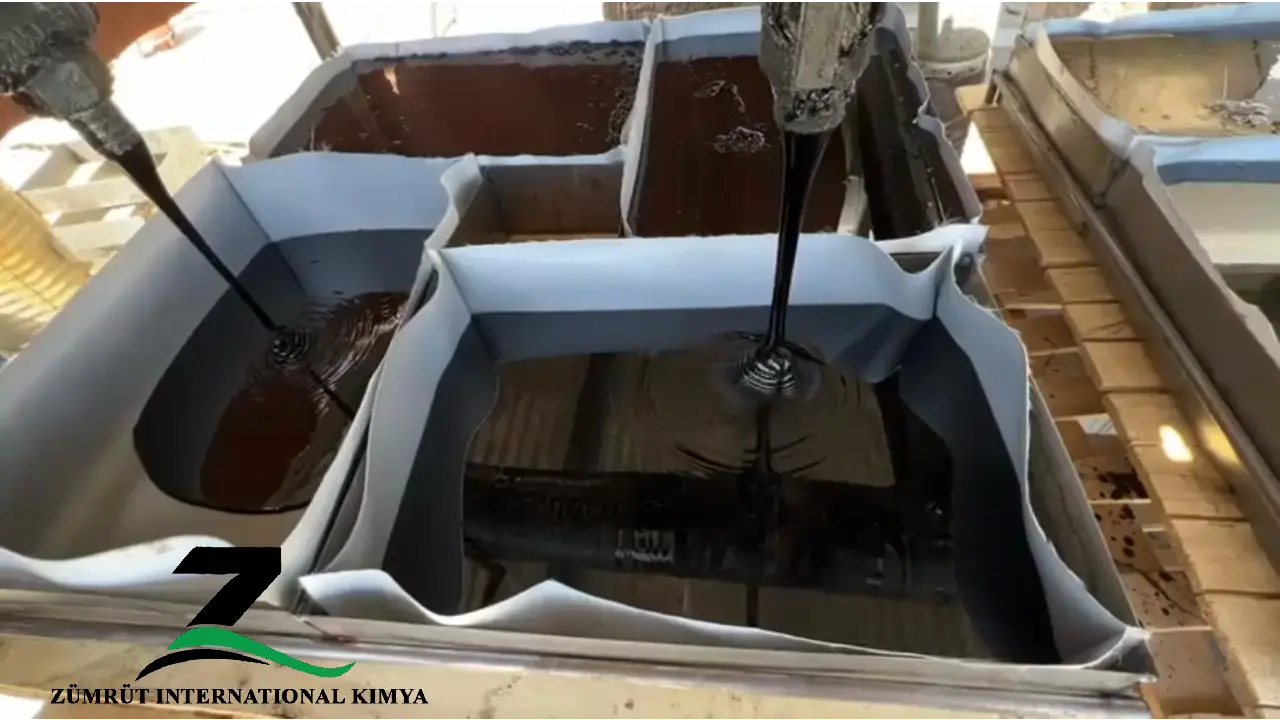
Specialized Uses of Oxidized Bitumen 150/5 in Road Paving:
- Crack Sealing and Joint Filling:
Due to its high viscosity and durability, Blown Asphalt 150/5 is used for sealing cracks in road surfaces. It prevents water infiltration, which can damage the underlying layers of the pavement. - Asphalt Reinforcement:
It is sometimes applied as a coating for asphalt mixtures in road paving to improve durability, weather resistance, and longevity. The addition of oxidized bitumen increases the pavement’s resistance to temperature variations, UV radiation, and oxidation. - Pavement Repair:
Its high softening point makes it suitable for hot climates where standard paving materials may become too soft. Oxidized bitumen 150/5 is used in repair works to withstand higher temperatures without deformation, ensuring a longer lifespan for the repair. - Surface Dressing:
In road construction, surface dressing involves applying a thin layer of bitumen on the road surface to protect it from wear and tear. Oxidized bitumen 150/5 is used in this process to create a harder, more resistant surface layer, enhancing the road’s durability. - Waterproofing Layers:
In certain road structures, especially bridges and tunnels, oxidized bitumen is applied as a waterproofing layer to prevent water from damaging the substructure. Its chemical properties make it a reliable material for this purpose.
Blown Asphalt 150/5 Packing
ZUMRUT Co is the manufacturer of oxidized bitumen 150/5 in various packing, including bitumen 150/5 is available in 20 & 50 Kg Kraft Paper Bags / Poly Amide Bags, 25 Kg Carton box & 150, 180 & 200 kg Steel Drums
Oxidized Bitumen 150/5 Storage/handling
Proper storage and handling of blown asphalt 150/5 are crucial to maintain its quality and ensure safety. Here are some guidelines:
- Storage Conditions: Store blown asphalt 150/5 in a dry, well-ventilated area away from heat sources and direct sunlight. Temperature fluctuations should be minimized to prevent changes in the asphalt’s properties.
- Container Selection: Use appropriate containers made of materials resistant to corrosion and leakage, such as steel drums or tanks. Ensure that containers are tightly sealed to prevent contamination and evaporation.
- Handling Precautions: When handling blown asphalt 150/5, wear appropriate personal protective equipment (PPE), including gloves, goggles, and protective clothing, to prevent skin contact and inhalation of fumes.
- Avoid Mixing: Prevent contamination by keeping blown asphalt 150/5 separate from other materials, especially incompatible substances like strong oxidizers or acids.
- Temperature Control : Maintain the asphalt at its recommended storage temperature to prevent solidification or excessive softening. Heating may be required to liquefy the asphalt for handling and application.
- Avoid Spills: Implement spill prevention measures, such as secondary containment systems and spill kits, to minimize the risk of environmental contamination in case of spills or leaks.
- Ventilation: Ensure adequate ventilation in storage areas to dissipate vapors and reduce the risk of exposure to harmful fumes.
- Labeling: Clearly label containers with relevant information, including product name, composition, hazards, handling instructions, and emergency contact information.
The distinctive feature of Oxidized Bitumen 150/5
The distinctive feature of Oxidized Bitumen 150/5 lies in its high softening point and low penetration rate, making it exceptionally hard and resistant to deformation. Here’s a closer look at what makes Oxidized Bitumen 150/5 unique:
- Hardness and Low Penetration
- High Softening Point
- Oxidation Process Benefits
- High Durability and Water Resistance
- Consistency and Flexibility
Technical Advantages of Blown Asphalt 150/5
Blown Asphalt 150/5 offers several technical advantages in various applications:
- Higher Softening Point : With a softening point of 150°C, oxidized bitumen 150/5 has increased resistance to high temperatures, making it suitable for use in hot climates and applications where thermal stability is crucial.
- Reduced Penetration : The penetration value of 5 indicates that the bitumen has undergone oxidation, resulting in a thicker consistency and reduced penetration, which enhances its durability and resistance to deformation under heavy loads.
- Improved Waterproofing Properties : The thicker consistency and higher softening point of oxidized bitumen 150/5 make it effective for waterproofing applications, providing a durable barrier against moisture ingress in roofing, pavement, and waterproofing membranes.
- Enhanced Aging Resistance : Oxidized bitumen undergoes a controlled oxidation process, which improves its resistance to aging, weathering, and UV degradation, prolonging its service life in outdoor applications.
- Excellent Adhesive Properties : It exhibits strong adhesive properties, allowing it to form a tight bond with various substrates, including asphalt, concrete, metal, and roofing materials, ensuring reliable adhesion and sealing in construction and maintenance applications.
- Versatility : Oxidized bitumen 150/5 can be easily modified with additives to tailor its properties to specific requirements, such as increasing flexibility, improving workability, or enhancing adhesion, making it suitable for a wide range of applications in construction, infrastructure, and manufacturing.
Technical Data Sheet of Oxidized Bitumen 150/5
| Bitumen 150/5 | Test method | Unit | Specification |
| Specific gravity @25/25 C | ASTM D70 | (Kg/m3) | 1.05 approx. |
| Penetration @ 25°c | ASTM D5 | mm/10 | 4/6 |
| Softening point °c | ASTM D36 | °C | 145/155 |
| Ductility @25 °c | ASTM D113 | Cm | 1.5min |
| Loss on heating(wt) % | ASTM D6 | Wt. % | 0.2 max |
| Flashpoint c | ASTM D92 | °C | 250 min |
| Solubility is CS2(wt) % | ASTM D4 | Wt. % | 99.5 max |
| Spot test | A.A.S.H.O.T102 | — | Negative |

T.D.S of Oxidized Bitumen 150/5