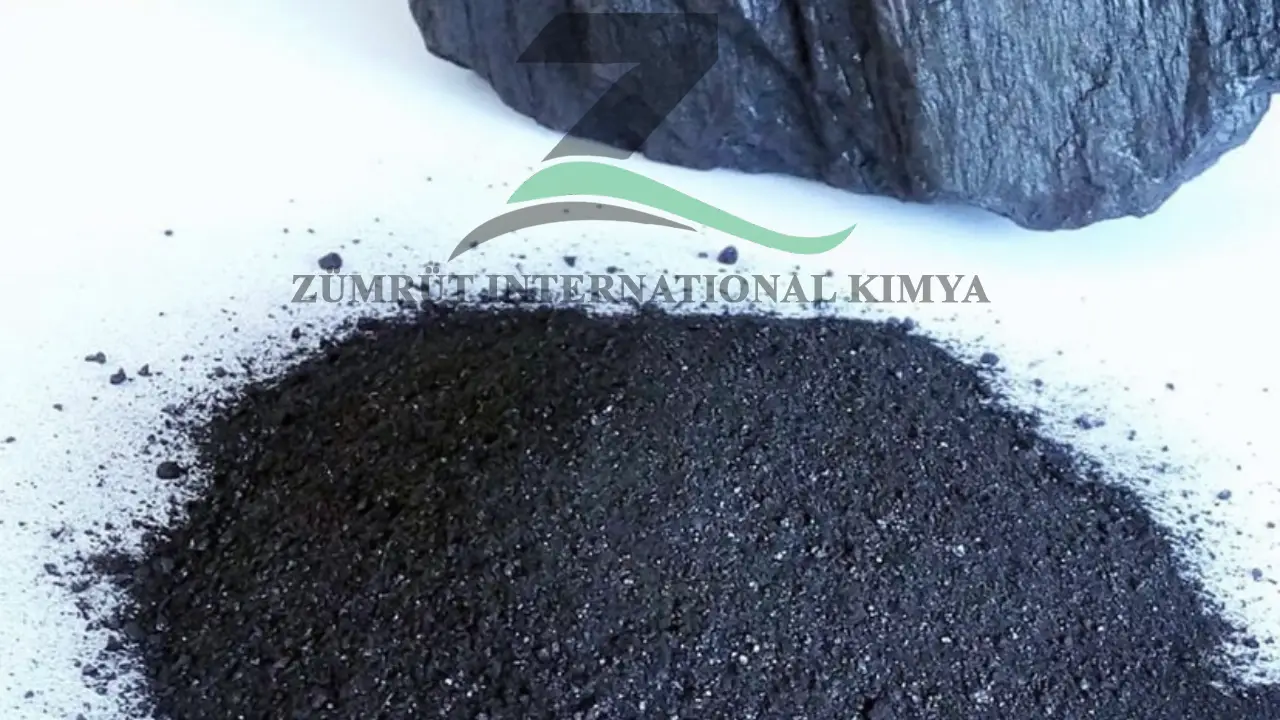
Gilsonite vs Sulfonated Asphalt
in Drilling Fluids
A comprehensive technical comparison of two leading drilling fluid additives — Natural Gilsonite and Sulfonated Asphalt — covering shale stabilization, HTHP fluid loss control, lubricity, mud system compatibility, and cost performance in oil and gas well drilling operations.
Oil-Based Mud (OBM)
Shale Inhibition
HTHP Performance
Fluid Loss Control
Borehole Stability

Gilsonite vs Sulfonated Asphalt — this comparison is one of the most critical technical decisions in oil and gas drilling operations. Both additives protect wellbores from shale instability and control fluid loss in drilling mud — but through fundamentally different mechanisms, with different performance profiles, and at very different cost points. Gilsonite vs Sulfonated Asphalt comparisons appear regularly in SPE technical papers, mud engineering specifications, and drilling contractor procurement decisions worldwide. This guide provides a complete side-by-side technical analysis to help drilling engineers, procurement managers, and mud specialists select the right additive for their well conditions.
Understanding the Two Additives
Gilsonite (Natural Asphalt)
Gilsonite — also called uintahite, natural asphalt, or natural bitumen — is a naturally occurring solid hydrocarbon resin formed over millions of years from crude oil deposits. It is mined primarily in the Uintah Basin of Utah (USA) and the Kermanshah province of Iran, which holds over 1 billion tons of reserves and supplies 40–50% of global exports.
In drilling fluids, gilsonite functions as a physical borehole stabilizer: its particles soften slightly at downhole temperatures and are forced into micro-fractures and pores in the formation under hydrostatic pressure, creating a mechanically strong seal. It also forms a thin, low-permeability filter cake on the wellbore wall. Gilsonite is naturally oil-soluble and requires a surfactant or chemical treatment to remain suspended in water-based muds.
Sulfonated Asphalt (SAS)
Sulfonated Asphalt — marketed as sodium asphalt sulfonate (SAS), Asphasol, or potassium sulfonated asphalt — is produced by chemically treating petroleum-derived asphalt with sulfonating agents (fuming sulfuric acid, SO₃, or chlorosulfonic acid), then neutralizing with NaOH or KOH. This process introduces sulfonic acid groups (–SO₃H) onto the asphalt molecule, making it water-soluble.
In drilling fluids, sulfonated asphalt works through a chemical mechanism: its strongly anionic sulfonate groups adsorb onto the positive-charge edges of clay and shale particles, chemically blocking water entry and suppressing swelling. It is fully water-soluble (≥90%), requires no emulsifier, and is compatible with all mud types — WBM, OBM, and synthetic-based muds.
Lower cost of gilsonite vs sulfonated asphalt in WBM
Fluid loss reduction with gilsonite in HP/HT synthetic mud
Maximum softening point of gilsonite — highest available
HTHP fluid loss reduction rate with sulfonated asphalt
Cost reduction vs premium co-polymer in HP/HT SBM
Gilsonite vs Sulfonated Asphalt: Mechanism of Action
HOW EACH ADDITIVE PROTECTS THE WELLBORE IN DRILLING MUD
🪨
Gilsonite — Physical Sealing Mechanism
🛢️
Sulfonated Asphalt — Chemical Inhibition Mechanism
Gilsonite vs Sulfonated Asphalt: Advantages & Disadvantages
COMPLETE PRO/CON ANALYSIS FOR OIL & GAS DRILLING APPLICATIONS
|
🪨 Gilsonite
Advantages
|
Disadvantages
- ✗
Floats in water-based mud — hydrophobic by nature; unsulfonated gilsonite will float on fresh water and segregate in WBM systems without a surfactant
- ✗
Requires emulsifier for WBM — a wetting agent or surfactant must be added to keep gilsonite particles suspended in water-based drilling fluids
- ✗
Moderate fluorescence — can interfere with mud logging, well logging, and core analysis in formations where hydrocarbon detection is critical
- ✗
Agglomeration risk in OBM — if hydrocarbon condensate is present in the system, unreacted gilsonite particles can agglomerate and cause mud property problems
- ✗
Geographic supply limitation — commercial-grade gilsonite is only mined in Iran and Utah (USA), creating potential supply chain risks
- ✗
Limited chemical inhibition — primarily a physical sealant; weaker chemical clay inhibition compared to sulfonated asphalt’s ionic mechanism
- ✗
Solids control bypass may be needed — in some WBM applications, shaker screens may need adjustment to prevent loss of gilsonite particles
Advantages
- ✓
Fully water-soluble — ≥90% water-soluble content; mixes directly into WBM without emulsifiers, no floating or segregation issues
- ✓
Superior chemical shale inhibition — ionic mechanism blocks water from entering clay interlayers, providing stronger chemical inhibition than physical sealing alone
- ✓
Offshore-safe — produces no oil slick, sheen, or rainbow on water surface; meets strict offshore environmental discharge regulations
- ✓
Minimal fluorescence — does not interfere with mud logging, well logging, or core analysis — critical advantage for exploration wells
- ✓
Universal mud compatibility — works in WBM, OBM, and synthetic-based muds; compatible with all solids control equipment without bypass
- ✓
Potassium grade available — K-SAS delivers ~400 ppm K⁺/lb, providing dual inhibition: chemical (ionic) + potassium clay suppression
- ✓
Globally available — produced wherever petroleum refining exists; no geographic supply constraints
- ✓
Temperature stable after sulfonation — no softening point post-reaction; does not melt or agglomerate at downhole temperatures
Disadvantages
- ✗
Higher unit cost than gilsonite — 25–50% more expensive than natural gilsonite for equivalent WBM performance
- ✗
Petroleum-derived — synthetic manufacturing process with higher carbon footprint than naturally mined gilsonite
- ✗
Lower softening point — after sulfonation the product has no defined softening point but may underperform gilsonite in extreme HTHP particle-based sealing applications
- ✗
Weaker physical bridging — fully dissolved in water, so it cannot provide the same particle-based micro-fracture bridging that solid gilsonite particles deliver
- ✗
Less effective for lost circulation — water-soluble nature means it cannot bridge wide fractures or large vugular zones as effectively as particulate gilsonite
- ✗
Chemical process dependency — product performance varies with sulfonation degree; inconsistent manufacturing can produce variable results in the field
Gilsonite vs Sulfonated Asphalt: Full Technical Comparison
PROPERTY-BY-PROPERTY MATRIX — DRILLING FLUID PERFORMANCE
| Parameter | 🪨 Gilsonite (Natural Asphalt) | 🛢️ Sulfonated Asphalt | Winner |
|---|---|---|---|
| Origin | Natural mineral — Iran, USA | Petroleum-derived — global | Tie |
| Softening Point | 290–400°F (143–204°C) | None after sulfonation | Gilsonite |
| Water Solubility | Oil-soluble — floats in WBM without surfactant | ≥ 90% water-soluble | SAS |
| WBM Compatibility | Needs surfactant / wetting agent | Direct mixing — no emulsifier needed | SAS |
| OBM Compatibility | Excellent — naturally oil-soluble | Good — oil-soluble content ≥18% | Gilsonite |
| SBM Compatibility | Excellent | Good | Gilsonite |
| Shale Inhibition | Physical sealing — micro-fracture plugging | Chemical ionic adsorption onto clay | Context-dependent |
| HTHP Fluid Loss Control | Superior — 45% reduction in HP/HT SBM | ≥ 40% reduction — proven in WBM | Gilsonite (HTHP) |
| Filter Cake Quality | Thin, tough, low-permeability | Thin, tenacious, compressible | Tie |
| Lost Circulation Control | Excellent — particle bridging | Limited — fully dissolved | Gilsonite |
| Lubricity | High — reduces torque and drag | High — synergistic with oils/glycol | Tie |
| Fluorescence | Moderate — may affect logging | Minimal — logging-safe | SAS |
| Offshore Compliance | HSE-acceptable — no sheen | No oil slick or sheen — offshore-safe | Tie |
| Temperature Stability | Exceptional — highest softening point | Excellent — stable post-sulfonation | Gilsonite |
| Potassium Grade | Available | K-SAS — ~400 ppm K⁺/lb | SAS (K-grade) |
| Unit Cost (WBM) | Lower — 25–50% vs SAS | Higher | Gilsonite |
| Unit Cost (HP/HT SBM) | 80%+ savings vs co-polymer | Moderate | Gilsonite |
| ESG / Sustainability | Natural mineral — favorable | Petroleum-derived — standard | Gilsonite |
| Supply Chain | Iran + USA — geographic risk | Global — no constraints | SAS |
| Typical Dosage | 3–6 lb/bbl | 4–8 lb/bbl | Similar |
Performance by Mud System Type
HOW EACH ADDITIVE PERFORMS ACROSS WBM, OBM, AND SBM
Gilsonite vs Sulfonated Asphalt: Which Should You Specify?
DECISION GUIDE FOR DRILLING ENGINEERS AND MUD SPECIALISTS
- Drilling in HP/HT or ultra-deep formations where maximum thermal stability is required
- Using oil-based or synthetic-based mud — gilsonite’s natural oil-solubility provides superior performance
- Dealing with lost circulation in fractured or vugular formations — particle bridging is essential
- Well economics require cost reduction — gilsonite is 25–50% cheaper in WBM, 80%+ in HP/HT SBM
- ESG or sustainability requirements favor natural mineral additives
- Drilling mechanically unstable shale where physical sealing of micro-fractures is the primary need
- Formation temperature exceeds 300°F (149°C) — gilsonite’s softening point advantage becomes critical
- Using water-based mud (WBM) and simple, no-emulsifier mixing is required
- Drilling in offshore environments where zero oil sheen or fluorescence is mandatory
- Well logging or core analysis is planned — minimal fluorescence is critical
- Dealing with chemically reactive smectite shales that require ionic inhibition over physical sealing
- The K-SAS grade is needed for potassium-enhanced clay inhibition in water-sensitive formations
- Solids control equipment must remain in full operation — no bypass required
- A universal additive compatible with WBM, OBM, and SBM in a single product is needed
Frequently Asked Questions
What is the main difference between gilsonite and sulfonated asphalt in drilling fluids?
The fundamental difference in the gilsonite vs sulfonated asphalt comparison is their mechanism of action and water solubility. According to Society of Petroleum Engineers (SPE) technical literature, natural gilsonite is a mined solid hydrocarbon that works as a physical sealant — its particles soften at downhole temperatures and mechanically plug micro-fractures in the formation. Sulfonated asphalt is a chemically processed, water-soluble product that works through an ionic chemical mechanism — adsorbing onto clay surfaces to block water entry. Gilsonite is naturally oil-soluble and requires a surfactant in WBM; sulfonated asphalt is fully water-compatible and mixes directly into any mud system.
Is gilsonite cheaper than sulfonated asphalt for drilling?
Yes, significantly. In water-based mud (WBM) applications, gilsonite costs 25–50% less than sulfonated asphalt for equivalent performance. In high-pressure, high-temperature (HP/HT) synthetic-based mud environments, gilsonite provides cost savings of more than 80% compared to premium co-polymer fluid loss control additives, while simultaneously delivering 45% reduction in fluid loss due to its high softening point.
Can gilsonite be used in water-based drilling mud?
Yes, but it requires a wetting agent or surfactant to remain suspended. Natural gilsonite is hydrophobic and will float on fresh water without chemical treatment. Once properly treated, it performs comparably to sulfonated asphalt in WBM applications for shale stabilization and fluid loss control. The sulfonated form of gilsonite (Sulfonated Gilsonite) is water-soluble and does not require an emulsifier — but that is a different product from natural gilsonite.
Which is better for offshore drilling — gilsonite or sulfonated asphalt?
Sulfonated asphalt is generally preferred for offshore applications because it produces no oil slick, sheen, or rainbow on the water surface, meeting strict offshore environmental discharge regulations. Natural gilsonite has been verified as HSE-acceptable in independent testing, but sulfonated asphalt’s minimal fluorescence (which avoids interference with mud logging) and zero sheen make it the more commonly specified choice for offshore and exploration wells where formation evaluation is critical.
Which additive is better for shale stabilization?
Both are highly effective but through different mechanisms. For mechanically fractured shales where physical plugging of micro-fractures is needed, gilsonite is superior — independent triaxial testing showed gilsonite increased run time by 68% compared to base fluid. For chemically reactive smectite shales where clay swelling due to water absorption is the primary problem, sulfonated asphalt’s ionic inhibition mechanism (especially the potassium grade) provides stronger chemical protection. In practice, the two additives are often used in combination for maximum effect.
What is the typical dosage of gilsonite and sulfonated asphalt in drilling mud?
Natural gilsonite is typically dosed at 3–6 lb/bbl (pounds per barrel) of drilling fluid, depending on formation severity and mud type. Sulfonated asphalt is typically dosed at 4–8 lb/bbl. Both can be adjusted upward in highly reactive shale formations or HP/HT environments. Sulfonated asphalt can be added directly to the active mud system without bypassing solids control equipment; gilsonite may require screen adjustment to prevent particle loss through fine mesh shaker screens.
Can gilsonite and sulfonated asphalt be used together in the same mud system?
Yes. Combining both additives is a recognized practice in complex drilling environments. Gilsonite provides the particle-based physical sealing and high-temperature fluid loss control, while sulfonated asphalt adds the chemical ionic inhibition and improved WBM compatibility. This combination is particularly effective in wells that encounter both mechanically unstable and chemically reactive shale formations, delivering superior borehole stability across a wider range of downhole conditions.
Where does Zumrut International source its gilsonite for drilling applications?
Zumrut International Kimya sources high-grade natural gilsonite directly from the major producing regions — the Kermanshah province of Iran (which holds over 1 billion tons of reserves and supplies 40–50% of global gilsonite exports) and Utah, USA. With processing and export facilities in Ankara, Turkey and Business Bay, Dubai, Zumrut supplies both natural gilsonite and sulfonated asphalt to drilling contractors and mud companies across 30+ countries, meeting API standards for oilfield drilling applications.
Request Technical Datasheets & Pricing
Zumrut International Kimya supplies natural gilsonite and sulfonated asphalt to drilling contractors and mud companies across 30+ countries. Export from Turkey and UAE. API-grade products with full documentation.
Related Products & Pages
|
Gilsonite in Drilling Fluid
How natural gilsonite controls fluid loss and stabilizes shale in water and oil-based muds.
|
Gilsonite Price
Current market pricing, grade comparisons, and procurement guide for Natural Asphalt.
|
Micronized Gilsonite Powder
High-purity fine-ground gilsonite for drilling fluid formulations and specialty applications.
|
|
Gilsonite in Well Cementing
Lightweight cementing additive for lost circulation control and improved cement slurry performance.
|
Granulated Gilsonite
Granulated natural bitumen for easy handling and controlled dosing in drilling operations.
|
Gilsonite — Natural Bitumen
Complete gilsonite product range — lump, powder, and granulated grades for all industries.
|