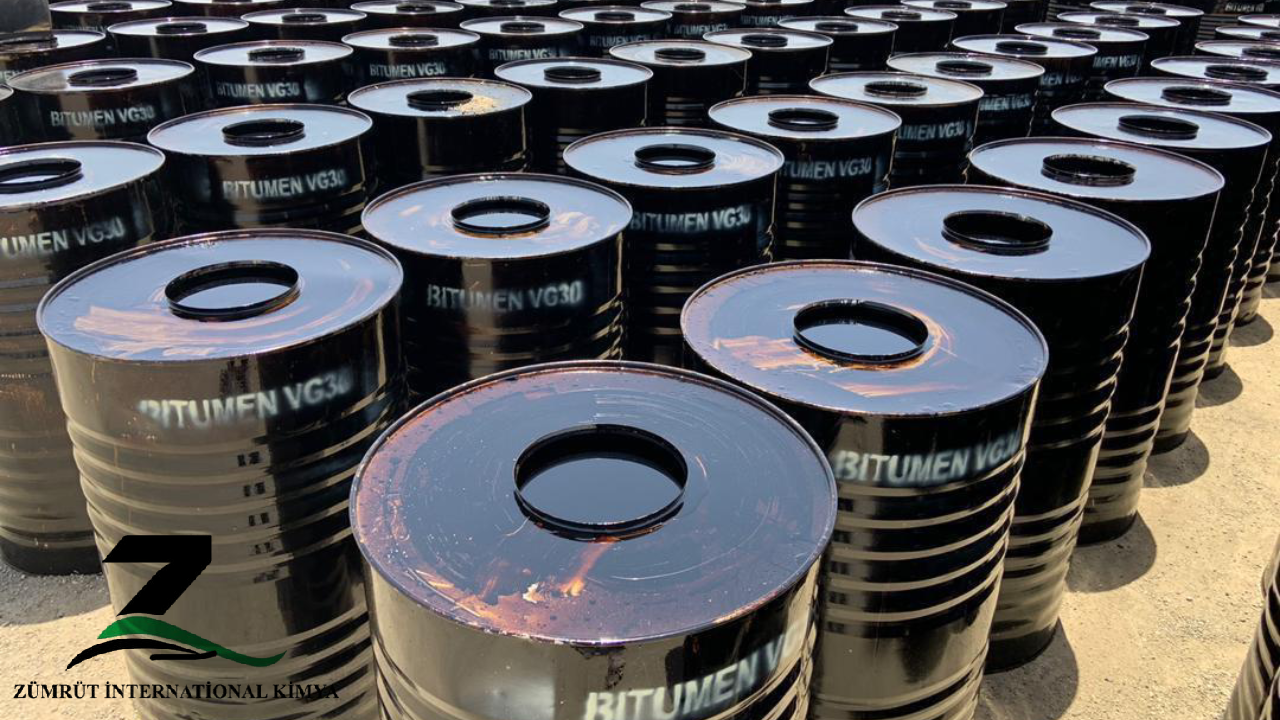
Key Properties of Viscosity Grade Bitumen VG-30
| Property | Value |
|---|---|
| Absolute Viscosity at 60°C | 2400–3600 Poises |
| Kinematic Viscosity at 135°C | ≥350 cSt |
| Penetration at 25°C | 50–70 dmm |
| Softening Point (R&B) | 47°C minimum |
| Ductility at 25°C | 75 cm minimum |
| Flash Point (Cleveland Open Cup) | 220°C minimum |
| Solubility in Trichloroethylene | 99% minimum |
| Penetration Equivalent Grade | 60/70 Penetration Grade |
| Standard | IS 73:2013 / ASTM D3381 / AASHTO M226 |
| HS Code | 2713.20.00 |
IS 73:2013 Full Specification — Viscosity Grade Bitumen VG-30
| Property | Min | Max | Test Method |
|---|---|---|---|
| Absolute viscosity at 60°C, Poises | 2400 | 3600 | IS 1206 (Part 2) |
| Kinematic viscosity at 135°C, cSt | 350 | — | IS 1206 (Part 3) |
| Penetration at 25°C, 100g, 5s, dmm | 50 | 70 | IS 1203 |
| Softening point (R&B), °C | 47 | — | IS 1205 |
| Flash point (Cleveland Open Cup), °C | 220 | — | IS 1209 |
| Ductility at 25°C, cm | 75 | — | IS 1208 |
| Solubility in trichloroethylene, % | 99 | — | IS 1216 |
| Tests on Residue (TFOT / RTFOT) | |||
| Viscosity ratio at 60°C | — | 4.0 | IS 1206 (Part 2) |
| Ductility at 25°C after TFOT, cm | 40 | — | IS 1208 |
FOB Price — Viscosity Grade Bitumen VG-30
Why Viscosity Grading? VG-30 vs Penetration Grade 60/70
The Bureau of Indian Standards replaced penetration grade bitumen with viscosity grade bitumen under IS 73:2013 because viscosity testing provides a more accurate and reliable prediction of in-service pavement performance. Penetration grade measures only the softness of bitumen at 25°C — the average ambient temperature — which gives no information about how the binder will behave during hot mix production (135°C) or under traffic loading on a hot summer day (60°C pavement temperature).
VG-30 is tested at both 60°C and 135°C. The viscosity at 60°C (2400–3600 Poises) predicts rutting resistance under traffic loading in hot weather — the critical failure mode in tropical and subtropical climates. The kinematic viscosity at 135°C (≥350 cSt) predicts workability during hot mix production and determines the correct mixing and compaction temperatures. Penetration grade 60/70 provides neither of these critical data points, which is why IS 73:2013 replaced it. VG-30 is the direct equivalent of 60/70 penetration grade in terms of stiffness and application temperature range, but with far superior performance predictability.
Mixing and Compaction Temperatures for VG-30
Correct mixing and compaction temperatures are critical for hot mix asphalt quality. For VG-30, these temperatures are determined from the kinematic viscosity at 135°C and can be calculated from the viscosity-temperature relationship.
| Operation | Target Viscosity | Typical Temperature Range |
|---|---|---|
| Mixing (aggregate + bitumen) | 150–190 cSt at mixing temp | 155–163°C |
| Compaction (roller passes) | 250–310 cSt at compaction temp | 140–152°C |
| Storage in tank | — | 150–180°C |
All Four VG Grades Compared
| Grade | Viscosity at 60°C (P) | Penetration Equivalent | Best Application |
|---|---|---|---|
| VG-10 | 800–1200 | 80/100 | Cold climates, surface dressing, emulsion base |
| VG-20 | 1600–2400 | 70/100 | Cold/moderate climates, high-altitude roads |
| VG-30 ✓ | 2400–3600 | 60/70 | Hot climates, heavy traffic, highways, DBM, wearing course |
| VG-40 | 3200–4800 | 30/40 | Extreme heat, intersections, airport aprons, heavy axle loads |
Applications of Viscosity Grade Bitumen VG-30
VG-30 is the standard paving grade bitumen for hot climates and heavy traffic conditions. Its absolute viscosity of 2400–3600 Poises at 60°C provides the stiffness required to resist permanent deformation (rutting) under slow-moving heavy vehicles in tropical temperatures, while remaining sufficiently workable at mixing temperatures of 155–163°C.
Dense Bituminous Macadam (DBM): VG-30 is the mandatory binder for DBM base and binder courses in India under MoRTH specifications. DBM provides the structural backbone of flexible pavements on national highways and state highways with heavy truck traffic. The high viscosity of VG-30 at 60°C ensures the DBM layer resists shear deformation under slow-moving heavy vehicles during peak summer temperatures.
Bituminous Concrete (BC) Wearing Course: VG-30 is specified for BC wearing course on high-traffic roads. The wearing course is directly exposed to traffic and weathering — VG-30’s stiffness and durability ensure the surface maintains riding quality and skid resistance over years of service. BC with VG-30 is the standard wearing course for national highways, airport service roads, and port access roads.
Semi-Dense Bituminous Concrete (SDBC): Used in urban roads and secondary highways, SDBC with VG-30 provides a smooth, durable wearing surface with better resistance to cracking compared to traditional penetration grade mixes.
Bituminous Macadam (BM): Open-graded base course for roads with lower traffic intensity. VG-30 is used where moderate binder stiffness is required in hot climates.
Highways and Expressways: India’s National Highways Authority (NHAI) and MoRTH mandate VG-30 for all national highway pavement layers. The grade is also specified by road authorities in Bangladesh, Sri Lanka, and other South Asian countries for primary and secondary highway construction.
Airport Taxiways and Aprons: VG-30 is used in airfield flexible pavement construction where resistance to rutting under aircraft wheel loads and fuel spillage is required.
Packaging & Shipping
VG-30 bitumen is a hot product — it must be maintained at 150–180°C for pumping and loading. Zumrut International Kimya supplies VG-30 in the following configurations from Iskenderun (Turkey) and Jebel Ali (UAE):
- New Steel Drum: 170–180 kg net, sealed, on pallets — suitable for smaller orders and destinations without bulk unloading facilities
- Bitutainer / ISO Tank: 20,000–24,000 kg — cost-effective for medium volume orders
- Bulk Tanker (road): ex-Iskenderun or Jebel Ali terminal, for local delivery
- Bulk Vessel / Flexi-Flexi: for very large volume orders, subject to minimum quantity
All VG-30 shipments are accompanied by a Certificate of Analysis (CoA) confirming compliance with IS 73:2013, ASTM D3381, or AASHTO M226 as required by the buyer. Third-party inspection by SGS, Intertek, or Bureau Veritas is available on request.
Export Destinations
Zumrut International Kimya exports Viscosity Grade Bitumen VG-30 primarily to South Asian markets where IS 73 VG grading is mandatory or preferred: India (via ports including Nhava Sheva, Kandla, Chennai, Vizag), Bangladesh (Chittagong), Sri Lanka (Colombo), Pakistan (Karachi). We also supply VG-30 to road construction projects in East Africa (Kenya, Tanzania, Ethiopia) and the Middle East (Iraq, Jordan, Oman) where VG-30 is specified on international tender documents. Shipments depart from Iskenderun Port (Turkey) and Jebel Ali Port (UAE).
Frequently Asked Questions — Viscosity Grade Bitumen VG-30
What is VG-30 bitumen?
VG-30 (Viscosity Grade 30) is a paving grade bitumen classified by its absolute viscosity of 2400–3600 Poises at 60°C, as specified in IS 73:2013. It is the most widely used bitumen grade for road construction in India and South Asia, replacing the older Penetration Grade 60/70 classification. VG-30 offers better performance predictability because it is tested at both service temperature (60°C) and production temperature (135°C), whereas penetration grade only tests softness at 25°C.
What is the equivalent penetration grade for VG-30?
VG-30 is the direct equivalent of Penetration Grade 60/70. Both grades use similar base bitumen with penetration values of 50–70 dmm at 25°C, but VG-30 additionally specifies absolute viscosity at 60°C (2400–3600 Poises) and kinematic viscosity at 135°C (≥350 cSt), providing a much more complete picture of binder performance across the temperature range relevant to road construction and service.
What is the difference between VG-30 and VG-40?
VG-40 has a higher absolute viscosity at 60°C (3200–4800 Poises) compared to VG-30 (2400–3600 Poises), making it stiffer and more resistant to rutting under extreme heat and heavy axle loads. VG-40 is specified for heavily stressed locations — intersections, bus stops, toll plazas, truck parking areas, and airport aprons — where slow-moving heavy vehicles create concentrated stress. VG-30 is the standard choice for highways, expressways, and wearing courses under normal to heavy traffic conditions.
What is the mixing temperature for VG-30 bitumen?
The mixing temperature for VG-30 hot mix asphalt is typically 155–163°C, at which the bitumen reaches a kinematic viscosity of 150–190 cSt suitable for coating aggregates uniformly. The compaction temperature is typically 140–152°C. These values are derived from the viscosity-temperature chart for VG-30. Mixing above 175°C risks thermal hardening; mixing below 150°C results in inadequate binder coating and poor mix quality.
Can VG-30 replace 60/70 penetration grade bitumen?
Yes — VG-30 is the specified replacement for 60/70 penetration grade under IS 73:2013. India officially mandated VG grading in 2006 through BIS, with IndianOil refineries completing the transition by 2009. For export markets specifying penetration grade 60/70, VG-30 from Zumrut International Kimya meets or exceeds all penetration grade parameters while also providing full VG compliance documentation.
What is the storage temperature for VG-30?
VG-30 should be stored at 150–180°C in heated bitumen tanks or insulated tankers. At temperatures below 100°C, VG-30 begins to solidify and loses pumpability. Do not heat above 200°C as this causes oxidative hardening and loss of ductility. Avoid repeated heating and cooling cycles, which progressively harden the binder and reduce pavement performance. Bulk storage tanks should be fitted with circulation pumps to maintain temperature uniformity and prevent localised overheating near heating elements.
Related Products
Viscosity Grade Bitumen VG-10 |
Viscosity Grade Bitumen VG-20 |
Viscosity Grade Bitumen VG-40 |
Penetration Grade Bitumen 60/70 |
Viscosity Grade Bitumen Hub |
Live Bitumen Price
Request a Quote for Viscosity Grade Bitumen VG-30
Tell us your required quantity, packing type, and destination port. We provide FOB and CFR pricing with Certificate of Analysis within 24 hours.
| Contact Us | WhatsApp Turkey | WhatsApp UAE |