Group I Base Oil Market: A Complete Buyer’s Review of Virgin and Recycled Grades
Group I base oil remains the workhorse of the global lubricant industry. Despite two decades of refinery rationalisation and the steady advance of Group II and Group III stocks, solvent-refined Group I still supplies the bulk of industrial oils, greases, process oils, marine lubricants and general-purpose blends across Africa, South Asia, the Middle East, the CIS and Latin America.
Written by the Zumrut International Kimya export desk · last reviewed 02 September 2026
For blenders in these markets the practical question is not whether to buy Group I, but which Group I to buy: virgin solvent-refined material, or re-refined (recycled) material produced from used lubricating oil. This page reviews both routes in full — specification, quality behaviour, application fit, current pricing, documentation and logistics — so procurement teams can compare them on the same basis.
Zumrut International Kimya supplies and exports both virgin and recycled Group I grades, with regular shipments from the ports of Iskenderun and Mersin, Türkiye, to all world ports, and a second loading option at Jebel Ali, UAE.
What Defines Group I Virgin vs RC base oil
The API 1509 system classifies base stocks by saturates content, sulphur content and viscosity index. Group I sits at the base of that ladder and is produced by solvent extraction, solvent dewaxing and clay or hydrofinishing — a simpler and less capital-intensive route than the hydrocracking used for Group II and III.
| API Group | Saturates | Sulphur | Viscosity Index | Typical Process |
|---|---|---|---|---|
| Group I | < 90% | > 0.03% | 80 – 120 | Solvent refining and dewaxing |
| Group II | ≥ 90% | ≤ 0.03% | 80 – 120 | Hydrocracking |
| Group III | ≥ 90% | ≤ 0.03% | ≥ 120 | Severe hydrocracking / isodewaxing |
The higher aromatic and sulphur content that disqualifies Group I from modern low-SAPS engine oils is precisely what makes it valuable elsewhere. Aromatics give Group I superior solvency, additive-holding capacity and seal-swell behaviour, which is why grease manufacturers, rubber process oil formulators and industrial oil blenders continue to specify it.
The Standard Virgin Grades
Group I is traded by Solvent Neutral (SN) viscosity grade. Typical characteristics of the mainstream export grades are shown below; values are indicative and each shipment is supplied against its own certificate of analysis.
| Grade | Viscosity @ 40°C (cSt) | Viscosity @ 100°C (cSt) | VI | Flash Point (°C) | Pour Point (°C) | Colour (D1500) |
|---|---|---|---|---|---|---|
| SN 100 | 18 – 22 | 3.8 – 4.2 | 95 min | 200 min | −9 max | 1.5 max |
| SN 150 | 28 – 32 | 5.0 – 5.6 | 95 min | 210 min | −9 max | 1.5 max |
| SN 300 | 52 – 60 | 7.4 – 8.2 | 95 min | 225 min | −6 max | 2.0 max |
| SN 350 | 62 – 70 | 8.2 – 9.0 | 95 min | 230 min | −6 max | 2.5 max |
| SN 500 | 90 – 110 | 10.5 – 11.8 | 95 min | 240 min | −6 max | 3.0 max |
| SN 650 | 115 – 135 | 12.5 – 14.0 | 95 min | 250 min | −6 max | 4.0 max |
| Bright Stock 150 | 440 – 500 | 30 – 34 | 90 min | 280 min | −3 max | 7.5 max |
SN 500 is the single most traded Group I grade worldwide and functions as the reference point for the whole group. Bright Stock is the structural exception: it cannot be produced by hydrocracking, so its supply is tied entirely to surviving Group I refineries, and it consistently commands the highest premium in the group.
Recycled and Re-refined Group I Base Oil
Virgin vs RC base oil is produced from used lubricating oil collected from workshops, fleets and industrial plants. The term covers a wide quality range, and buyers should be precise about which product they are actually purchasing.
Three Different Products, One Loose Name
- Filtered or reconditioned oil. Used oil passed through settling, dehydration and mechanical filtration. Physical contaminants are removed; chemical degradation products and spent additives are not. Suitable for fuel oil blending and non-critical applications only.
- Re-refined Virgin vs RC base oil (RRBO). Used oil processed through vacuum distillation, followed by solvent extraction, thin-film evaporation or hydrotreating, plus clay or hydrofinishing. The additive package, metals, water and light ends are removed and the product is returned to a genuine Virgin vs RC base oil specification.
- Recycled Process Oil (RPO). A heavier, darker distillate cut used in rubber compounding, reclaimed rubber, mould release and low-specification industrial applications rather than as a lubricant base.
Only re-refined Virgin vs RC base oil should be compared with virgin Group I. When properly hydrotreated, Virgin vs RC base oil can reach saturates and sulphur levels at, or in some plants above, the Group I threshold, while filtered oil never will.
Typical Re-refined Group I Properties
| Property | RC SN 150 (typical) | RC SN 300 (typical) |
|---|---|---|
| Viscosity @ 40°C (cSt) | 28 – 33 | 52 – 62 |
| Viscosity Index | 95 – 110 | 92 – 105 |
| Sulphur (%) | 0.02 – 0.30 | 0.05 – 0.40 |
| Colour (ASTM D1500) | 1.0 – 2.5 | 2.0 – 4.0 |
| Flash point (°C) | 195 – 215 | 215 – 235 |
| Water content | Trace | Trace |
| Total metals (ppm) | < 10 | < 20 |
Availability is the key constraint. Used-oil feedstock is dominated by light and medium engine oils, so re-refining plants naturally yield light grades. Volume concentrates around 4 – 6 cSt at 100°C, equivalent to SN 100 and SN 150. Heavier re-refined cuts up to SN 300 and SN 400 are produced in smaller volumes, genuine re-refined SN 500 is scarce, and re-refined Bright Stock is effectively unavailable.
Quality Comparison: Virgin Group I vs Re-refined Group I
| Criterion | Virgin Group I | Re-refined Group I |
|---|---|---|
| Batch-to-batch consistency | High — single crude slate, continuous refinery operation | Variable — depends on collected feedstock mix and plant technology |
| Grade range | SN 100 to Bright Stock, full slate | Concentrated in SN 100 – SN 350; heavy grades limited |
| Colour and appearance | Consistently bright and clear | Acceptable to slightly darker; can drift between batches |
| Oxidation stability (RPVOT) | Predictable, well mapped by blenders | Good from hydrotreated plants; weaker from clay-finished routes |
| Additive response | Established and documented | Requires validation; residual additive fragments can interact |
| Odour | Neutral | Can carry a faint residual odour |
| Documentation | Refinery COA plus third-party inspection | Plant COA plus third-party inspection; feedstock traceability matters |
| Carbon footprint | Reference case | Substantially lower; supports circular-economy and ESG reporting |
| Price | Reference case | Around 19% below virgin of comparable viscosity at current levels |
The practical conclusion for blenders: re-refined material is a legitimate substitute in cost-driven and industrial formulations, but it must be qualified once and then bought from a stable, repeatable source. Switching re-refining plants between orders is where most quality complaints originate, and it is the reason a supplier’s consistency matters more than a single attractive certificate of analysis.
Application Fit by Grade
| Application | Preferred Grades | Virgin | Re-refined |
|---|---|---|---|
| Automotive engine oils (API SL / CF and above) | SN 150, SN 500 | Recommended | Only from hydrotreated, fully qualified sources |
| Industrial gear and circulating oils | SN 500, SN 650, BS 150 | Recommended | Limited by heavy-grade availability |
| Hydraulic oils | SN 150, SN 350 | Recommended | Suitable for general-duty grades |
| Grease manufacture | SN 500, BS 150 | Recommended | Partial substitution |
| Metalworking fluids and quenching oils | SN 100, SN 150 | Suitable | Well suited, strong economics |
| Transformer and cable compounds | Specialty cuts | Specification-dependent | Not recommended |
| Rubber process oil and reclaimed rubber | SN 500, RPO | Suitable | Well suited, primary market |
| Textile, chain and general-purpose oils | SN 100 – SN 350 | Suitable | Well suited |
| Marine and cylinder oils | BS 150, SN 650 | Recommended | Not available at scale |
Group I Base Oil Prices Today
FOB Iskenderun, Türkiye · updated 02 September 2026
Group I · Virgin
Base Oil SN 150
$1,315
per MT, FOB Iskenderun
Group I · Virgin
Base Oil SN 500
$1,320
per MT, FOB Iskenderun
Recycled
Virgin vs RC base oil SN 300
$1,080
per MT, FOB Iskenderun
Recycled
RC Base Oil SN 150
$1,060
per MT, FOB Iskenderun
Loading from Jebel Ali, UAE is quoted at the Iskenderun level plus a fixed differential, currently $15 per MT. At today’s levels recycled SN 150 sits about 19% below virgin SN 150, which is the working economic case for switching the light-grade portion of a blend slate to re-refined stock. Prices move weekly; the live figures and a full FOB-to-CFR calculator covering more than sixteen destination ports are maintained on the base oil price page.
What Actually Moves the Price
- Crude and vacuum gasoil. Feedstock cost sets the floor for virgin production and the alternative value of the same stream as fuel.
- Group I capacity closures. Europe and Asia have retired significant solvent-refining capacity, tightening supply structurally — most acutely for Bright Stock.
- Group II substitution. Where Group II arrives in volume it caps Group I upside in light grades; where it does not, Group I holds its premium.
- Freight and insurance. Route risk premiums and container or flexitank availability can add $25 – 60 per MT on Middle East and Asia routings.
- Seasonality. Pre-monsoon restocking in South Asia and pre-winter blending in the CIS both pull volume forward.
- Used-oil collection rates. For recycled grades, feedstock availability and collection pricing, not crude, are the dominant variable.
- Order size and packing. Bulk and flexitank parcels price below drummed cargo, which carries the highest cost per ton.
Market Outlook
Three structural forces define the Group I market through the rest of the decade. First, supply is shrinking: closures across Europe, Japan and North America have removed capacity that will not be rebuilt, leaving Group I production concentrated in a smaller number of regions. Second, demand is not shrinking at the same rate, because the industrial, marine, grease and process-oil applications that depend on Group I solvency have no drop-in Group II replacement. Third, re-refining capacity is expanding globally as circular-economy policy and ESG procurement targets make collected used oil a strategically valuable feedstock rather than a waste stream.
The result is a two-track market. Heavy virgin grades and Bright Stock tighten and hold a premium. Light grades face competition from both Group II imports and a growing supply of re-refined product. For buyers, the practical strategy is to secure heavy virgin grades on term cover, and to qualify a reliable re-refined source for the light-grade and industrial portion of the blend slate.
Quality Control and Documentation
Every shipment is covered by a full documentary set, and pre-shipment third-party inspection is available on request from SGS, Intertek, Bureau Veritas or a nominated equivalent.
| Test | Method | Purpose |
|---|---|---|
| Kinematic viscosity @ 40 and 100°C | ASTM D445 | Grade confirmation |
| Viscosity index | ASTM D2270 | Temperature performance |
| Flash point (COC) | ASTM D92 | Safety and light-ends check |
| Pour point | ASTM D97 | Cold handling |
| Colour | ASTM D1500 | Refining quality and appearance |
| Total acid number | ASTM D664 / D974 | Oxidation and contamination |
| Sulphur content | ASTM D4294 | Group classification |
| Density @ 15°C | ASTM D1298 | Quantity conversion |
| Water content | ASTM D6304 / D95 | Storage and blending integrity |
| Copper strip corrosion | ASTM D130 | Material compatibility |
For re-refined grades, buyers should additionally request metals content by ICP and confirmation of the finishing route used, since hydrotreated and clay-finished products behave differently in service despite reporting similar headline viscosity figures.
Packing and Logistics
| Packing | Unit | Per 20ft Container | Net Weight |
|---|---|---|---|
| New steel drums | 180 kg | 80 drums | ≈ 14.4 MT |
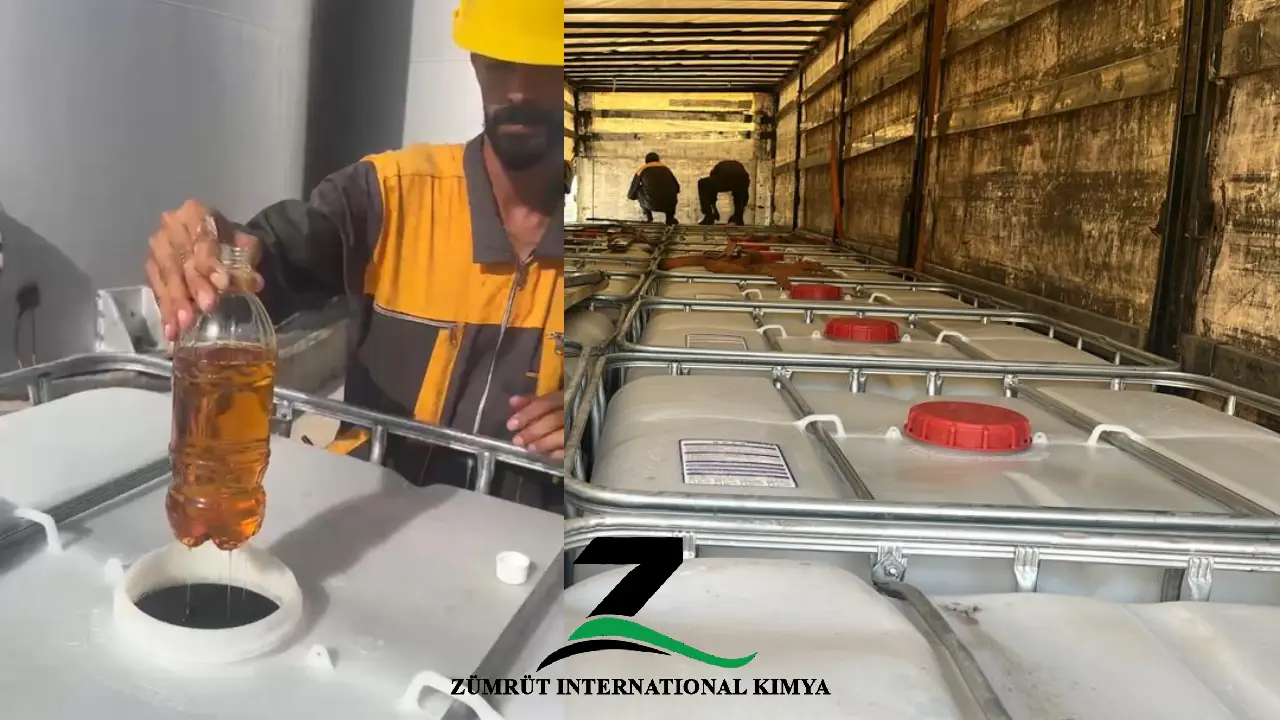
| IBC tank | 1,000 litres (1 MT) | 20 units | ≈ 20 MT |
| Flexitank | One per container | 1 unit | 20 – 24 MT |
| ISO tank | Tank container | 1 unit | 20 – 24 MT |
| Bulk vessel parcel | Voyage basis | — | From 1,000 MT |
Shipping documents comprise the commercial invoice, packing list, bill of lading, certificate of origin, certificate of analysis, MSDS and any inspection certificate required by the destination. Terms are quoted FOB, CFR or CIF as required.
Zumrut International Kimya as Your Group I Supply Partner
Zumrut International Kimya is a Türkiye-based supplier and exporter of petroleum, petrochemical and lubricant raw materials, and one of the leading exporters of Group I base oil in both virgin and re-refined grades. The company’s position rests on four things buyers can verify.
- Full grade coverage. Virgin SN 100 through SN 650 and Bright Stock, alongside qualified recycled grades, supplied from a vetted network of refining and re-refining sources.
- Regular sailings from Iskenderun and Mersin. Both Turkish Mediterranean ports run continuous liner and bulk services, giving direct access to West and East Africa, the Gulf, the Indian subcontinent, Southeast Asia, the Black Sea, Europe and Latin America — shipment to all world ports, with Jebel Ali available as an alternative load port.
- Verified quality before loading. Certificate of analysis on every batch, independent inspection arranged at the buyer’s request, and sealed sample retention.
- Transparent, dated pricing. Published weekly FOB levels and a CFR calculator for more than sixteen destination ports, so buyers can budget before they negotiate.
Türkiye’s location is the underlying advantage. Cargo loaded at Iskenderun or Mersin reaches North and West Africa, the Gulf and the Mediterranean rim on short transit times, while remaining fully connected to deep-sea services for Asian and American destinations. For buyers who need reliable, repeatable Group I supply rather than one-off spot lots, that combination of grade depth and sailing frequency is the difference between a working supply chain and a series of delays.
Frequently Asked Questions
Is Group I base oil being phased out?
No. Production capacity is declining, but demand from industrial oils, greases, marine lubricants and process-oil applications continues, and Bright Stock in particular has no hydrocracked substitute. The realistic expectation is a smaller, tighter and structurally firmer Group I market rather than its disappearance.
Can re-refined base oil be used in engine oils?
Yes, where the material is genuinely re-refined and hydrotreated, and where the finished formulation is validated against the target specification. Re-refined base stocks receive no specification waivers; they must meet the same requirements as virgin material to qualify.
How much cheaper is recycled base oil?
At current levels RC SN 150 is priced at $1,060 per MT FOB Iskenderun against $1,315 for virgin SN 150, a discount of roughly 19%. The spread widens when crude rises and narrows when it falls, and it is wider for clay-finished material than for hydrotreated material with full documentation.
What is the minimum order quantity?
One 20ft container: approximately 14.4 MT in new steel drums, 20 MT in IBC tanks, or 20 – 24 MT in flexitank. Bulk vessel parcels start at 1,000 MT.
Which grade should a new blending plant start with?
SN 500 for general lubricant blending, paired with SN 150 for lighter formulations. This combination covers the majority of hydraulic, gear, engine and industrial oil requirements and is the most liquid pair to source.
Do you supply Bright Stock?
Yes, Bright Stock 150 in virgin grade. Given its structural scarcity, buyers are advised to place requirements in advance rather than on a spot basis.
Specifications on this page are indicative and typical; every shipment is supplied against its own certificate of analysis. Prices are dated FOB levels for market orientation and do not constitute a binding offer.
Request a Group I Base Oil Quotation
Send your required grade, quantity, packing, destination port and preferred incoterm. Zumrut International Kimya will return a firm, dated offer with a current certificate of analysis and a shipping schedule from Iskenderun or Mersin.
Contact Zumrut International Kimya
WhatsApp Türkiye · +90 501 003 88 00
WhatsApp UAE · +971 50 334 5424