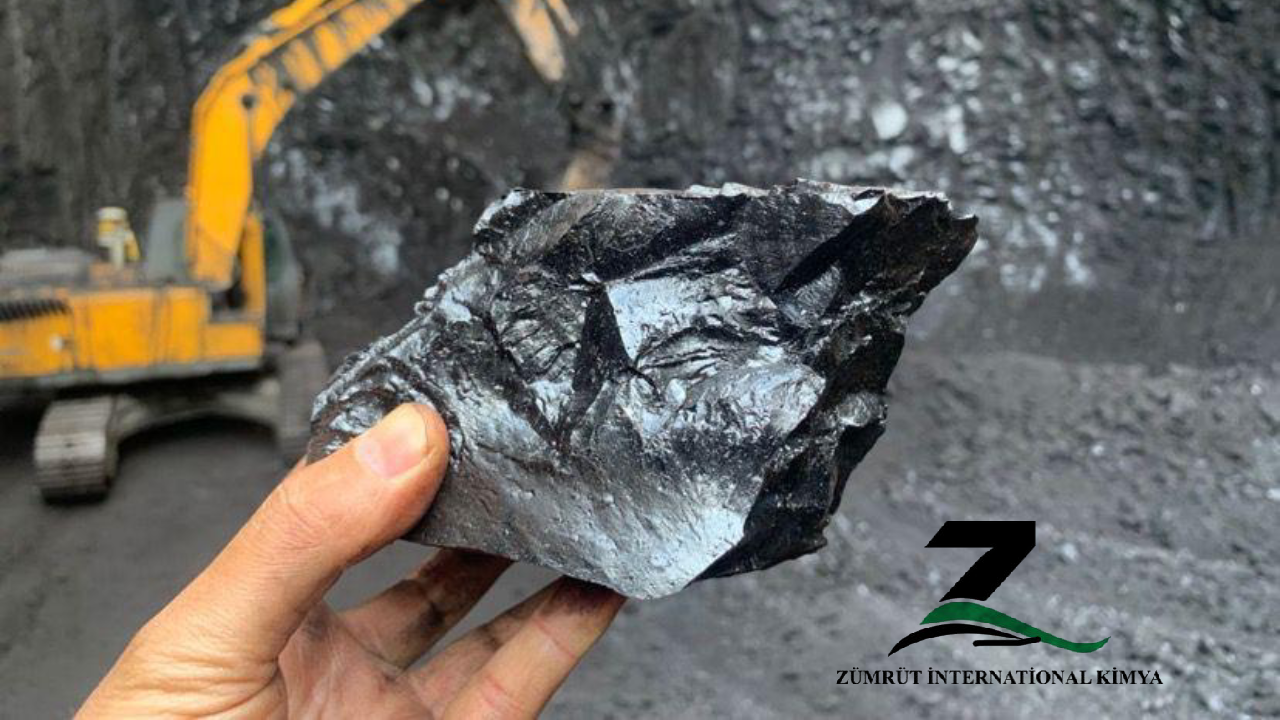
- What is Gilsonite (Natural Bitumen)?
- Applications of Gilsonite:
- Major Gilsonite Mines:
- The Importance of Gilsonite in South Korea-Japan
- Local and main suppliers of Gilsonite South Korea-Japan
- Packaging of Gilsonite South Korea-Japan
- Key ports for Gilsonite South Korea-Japan discharge
- General Specification of Gilsonite South Korea-Japan
What is Gilsonite (Natural Bitumen)?
Gilsonite is a type of Natural Bitumen (asphaltite) that occurs naturally in mines and resembles hard, black asphalt. This substance is composed of hydrocarbon compounds and differs from petroleum-based bitumen in its chemical and physical properties.
Characteristics of Gilsonite:
- Color: Shiny black
- Solubility: Soluble in organic solvents such as toluene and benzene
- High resistance: Resistant to water, heat, and chemicals
- Density: Lower than petroleum-based bitumen
Applications of Gilsonite:
- Oil and gas drilling industry: Used as an additive in drilling mud to reduce fluid loss.
- Asphalt production: Enhances the quality and durability of asphalt, reducing cracking.
- Ink and paint manufacturing: Used due to its high solubility and coloring properties.
- Casting and foundry industry: Added to molding sands to improve the quality of cast parts.
- Rubber and plastic industries: Enhances the mechanical properties of products.
- Insulation and waterproofing materials: Used in construction and waterproofing applications.
Major Gilsonite Mines:
Iran: The provinces of Kermanshah, Ilam, and Lorestan have some of the richest Gilsonite reserves.
USA: The state of Utah is the world’s largest producer of Gilsonite.
Other countries: China, Venezuela, Colombia, and Canada also have Gilsonite deposits.
Conclusion:
Due to its unique physical and chemical properties, Gilsonite is widely used across various industries. It serves as an excellent alternative to some petroleum-based products and is increasingly utilized in modern industries.
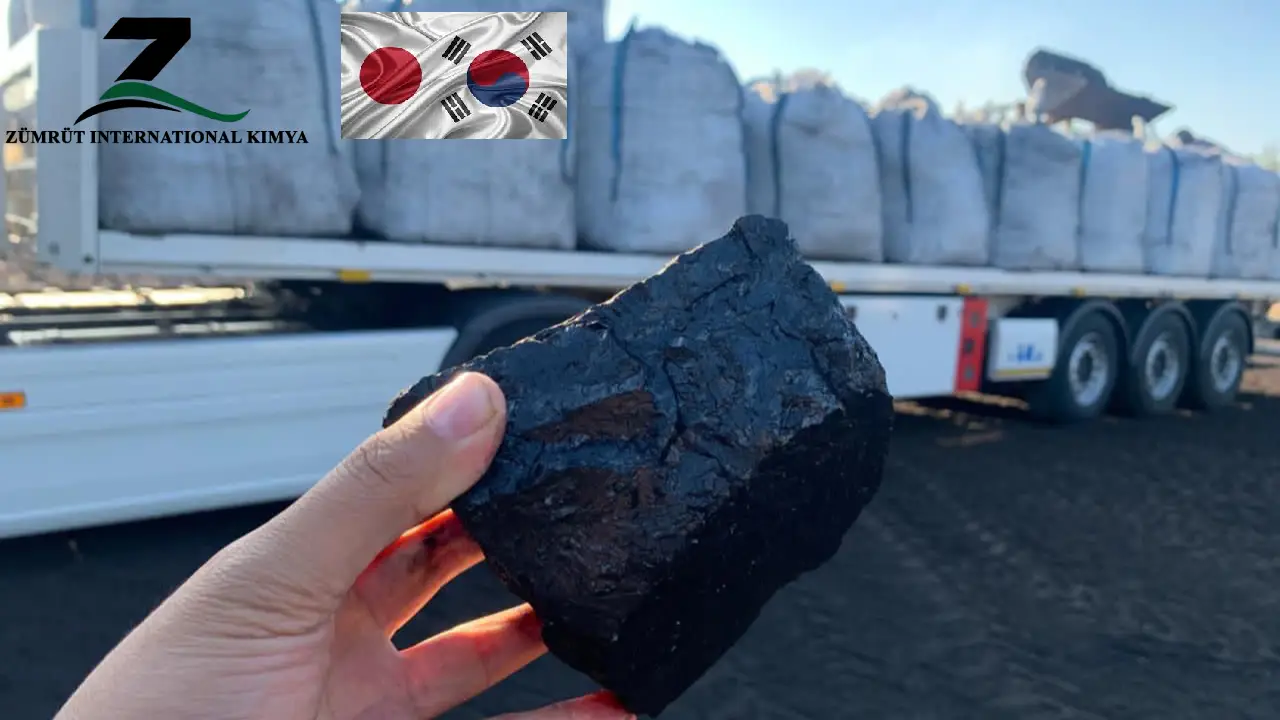
The Importance of Gilsonite in South Korea-Japan
Gilsonite, also known as natural bitumen or asphaltite, is a valuable hydrocarbon material with a wide range of industrial applications. In South Korea and Japan, its importance has grown due to its unique properties and versatile usage across multiple industries.
Key Uses of Gilsonite in South Korea and Japan:
- Oil and Gas Industry
Used as an additive in drilling fluids to reduce fluid loss and strengthen wellbore stability.
Enhances performance in deepwater and high-pressure drilling operations, which are common in offshore oil exploration in both countries. - Ink, Paint, and Coating Industry
Gilsonite-based inks provide better adhesion, durability, and water resistance, making them ideal for printing and packaging industries in South Korea and Japan.
Used in high-performance industrial coatings, especially for marine and automotive applications, where corrosion resistance is crucial. - Rubber and Plastic Manufacturing
Enhances rubber compounds for increased strength and elasticity, making it a key ingredient in automotive tire production.
Acts as a reinforcing agent in plastic products, improving durability and heat resistance. - Construction and Asphalt Industry
Used as an asphalt modifier to improve the performance of road pavements, reducing cracking and increasing longevity.
Essential for high-traffic roads, airports, and bridges, where durability is critical. - Foundry and Metal Casting
Added to foundry molds to improve the quality and smoothness of cast metal parts, which is essential in precision manufacturing industries like automotive and electronics.
Why South Korea and Japan?
Advanced Industrial Base
Both countries have well-developed petrochemical, automotive, and construction industries, which require high-quality raw materials like Gilsonite.
High Demand for Durable and High-Performance Materials
Industries in Japan and South Korea prioritize high-performance coatings, strong rubber compounds, and durable construction materials, all of which benefit from Gilsonite additives.
Growing Infrastructure Projects
Both nations invest heavily in smart roads, high-speed railways, and resilient urban development, increasing demand for asphalt and construction materials.
Local and main suppliers of Gilsonite South Korea-Japan
Gilsonite, also known as natural bitumen or asphaltite, is a versatile hydrocarbon resin utilized in various industries, including drilling, asphalt production, and ink manufacturing. In South Korea and Japan, the demand for Gilsonite has led to the emergence of both local suppliers and significant international exporters catering to these markets.
Local Suppliers in South Korea and Japan:
While specific local suppliers in South Korea and Japan are not extensively documented in the provided sources, there are indications of companies involved in the bitumen and related industries:
JIN-SUNG CNT (South Korea): This company is recognized for supplying various products, including bitumen, oxidized bitumen, Gilsonite, rubber process oil, and blown asphalt. Their operations are based in Seoul, South Korea.
International Suppliers Serving Gilsonite South Korea-Japan:
*Zumrut Kimya: A Leading Supplier of Gilsonite in South Korea and Japan*
Introduction
Zumrut International Kimia is a premier global supplier of Gilsonite, serving industries across South Korea and Japan. With a strong commitment to quality, reliability, and innovation, the company has established itself as a trusted provider of this valuable natural bitumen, catering to diverse industrial applications.
Zumrut Kimia’s Presence in South Korea and Japan
With a strong global distribution network, Zumrut Kimia ensures the seamless supply of high-quality Gilsonite to South Korea and Japan, two of the most technologically advanced and industrially developed nations.
Why Choose Zumrut Kimia?
- High-Quality Products: Zumrut Kimia sources premium-grade Gilsonite from the best mines, ensuring consistent purity and performance.
- Custom Solutions: The company offers tailor-made formulations to meet the specific needs of South Korean and Japanese industries.
- Reliable Supply Chain: With efficient logistics and a well-established distribution network, Zumrut Kimia ensures timely deliveries and uninterrupted supply.
- Sustainable Practices: The company is committed to environmentally responsible mining and production, aligning with global sustainability goals.
Conclusion
Zumrut Kimia continues to strengthen its presence in South Korea and Japan by providing top-quality Gilsonite solutions to various industries. With a focus on excellence, innovation, and customer satisfaction, the company remains a leading name in the global Gilsonite market.
For inquiries and orders, visit **[Zumrut International Kimia’s website]** or contact our sales team to explore how our Gilsonite products can enhance your industrial operations.
Packaging of Gilsonite South Korea-Japan
- Jumbo bags of 1Mt or 500Kgs -Which we advise for lambs shipment.
- 25-50 Kgs bags -Which we advise for powdered shipment.
- Spiciall packing for Europe markets 25Kgs sand paper bags , palletised and shriked.
Key ports for Gilsonite South Korea-Japan discharge
Gilsonite, also known as natural bitumen or asphaltite, is a valuable hydrocarbon resin utilized across various industries, including oil and gas drilling, asphalt production, and ink manufacturing. In South Korea and Japan, the efficient import and distribution of Gilsonite are facilitated by several key ports.
Major Ports in South Korea for Gilsonite Discharge:
- Port of Busan (KRPUS):
As South Korea’s largest port and one of the world’s busiest container ports, Busan serves as a central hub for international trade, including the import of industrial materials like Gilsonite. - Port of Incheon (KRINC):
Strategically located near Seoul, Incheon handles a diverse range of cargo, making it a vital entry point for Gilsonite imports destined for the country’s industrial regions. - Port of Ulsan (KRUSN):
Known as South Korea’s petrochemical industrial hub, Ulsan’s port facilities are well-equipped to manage the import of petroleum-related products, including Gilsonite. - Port of Gwangyang (KRKAN):
As a significant commercial port, Gwangyang specializes in handling bulk cargo, making it suitable for Gilsonite shipments.
Major Ports in Japan for Gilsonite Discharge:
- Port of Yokohama:
Located near Tokyo, Yokohama is one of Japan’s largest ports, handling a wide array of cargo types, including industrial materials like Gilsonite. - Port of Nagoya:
As Japan’s busiest port by cargo volume, Nagoya is equipped to handle various commodities, making it a key entry point for Gilsonite imports. - Port of Osaka:
Serving the Kansai region, Osaka’s port facilities are integral to the importation of industrial goods, including Gilsonite. - Port of Kobe:
With its advanced infrastructure, Kobe port efficiently manages diverse cargo types, supporting the distribution of Gilsonite within Japan
General Specification of Gilsonite South Korea-Japan
| Specification | unit | results | Test Method |
| Ash Content | %Wt | 2.0 – 10.0 | ASTM D-3174 |
| Moisture Content | %Wt | 1.0 – 3.0 | ASTM D-3173 |
| Volatile Matter | %Wt | 63 | ASTM D-3175 |
| Fixed Carbon | %Wt | 29 | ASTM D-3172 |
| Solubility in CS2 | %Wt | 81 | ASTM D-4 |
| Specific Gravity at 25°C | —– | 1.01 – 1.06 | ASTM D-3289 |
| Normal Hepthan Insolubles | %Wt | 79 | ASTM D-3279 |
| Color in Mass | —– | Black | —– |
| Color in Streak or Powder | —– | Brown | —– |
| Softening Point | °C | 180 – 205 | ASTM D-36 |
| Penetration at 25°C | 0.1MM | 0 | ASTM D-5 |