Polyethylene Glycol (PEG) Definition
Polyethylene Glycol (PEG) is a polyether compound that is widely used in a variety of industries due to its solubility in water and many organic solvents. It is a polymer made from ethylene glycol monomers and can vary in molecular weight, which affects its physical properties. PEG is commonly used in pharmaceuticals as a laxative, in cosmetics as a base for creams and ointments, and in industrial applications such as lubricants and surfactants. Its versatility stems from its non-toxic, non-irritating, and non-volatile nature. Polyethylene glycol is a highly biocompatible poly(ether), which is soluble in aqueous solutions and organic solvents, which contributes to its biocompatibility and processability, respectively. The low toxicity and non-immunogenicity of poly(ethylene glycol), coupled with the ability for low molecular weight poly(ethylene glycol)s to obtain renal clearance render the biopolymer a popular choice for the surface modification of biomaterials, particles and micelles for active molecule transport, and for chemical and physical hydrogels. Poly(ethylene glycol) is not hydrolytically dissociated in vivo; however, its hydrophilic functionalities confer an enhanced water affinity and biodegradability to the polymer. Poly(ethylene glycol)s are fabricated via the polycondensation of ethylene glycol in the presence of acidic or basic catalysts, producing a lower molecular weight product.
Different grades of Polyethylene Glycol (PEG)
Polyethylene glycol (PEG) comes in various grades, primarily distinguished by their molecular weights, which influence their physical properties and applications. The molecular weight of PEG is often indicated by a number following "PEG." Here are some common grades:
- PEG 200 – 600 : – State : Liquid. – Applications : Often used as solvents, plasticizers, and humectants in cosmetics, pharmaceuticals, and food products. These grades can also act as carriers in drug formulations.
- PEG 800 – 1500 : – State : Semi-solid or waxy. – Applications : Commonly used in ointments, creams, and as a base in pharmaceuticals. These grades are useful in the preparation of emulsions and as lubricants.
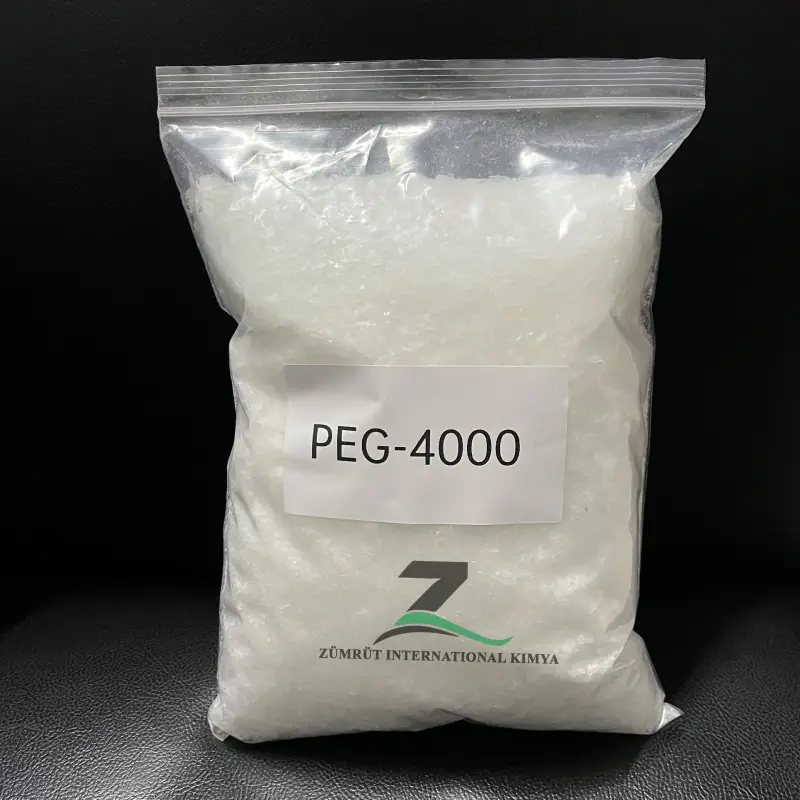
- PEG 2000 – 6000 : – State : Solid, waxy. – Applications : Typically used in tablet coatings, suppositories, and as an excipient in drug formulations. PEG in this range also serves as a binder and stabilizer in various applications.
- PEG 8000 and above : – State : Solid, wax-like. – Applications : These high molecular weight PEGs are often used as lubricants, in detergents, and as dispersing agents. In pharmaceuticals, they can act as release agents in controlled-release formulations.
Specialized applications of Polyethylene Glycol (PEG)
Polyethylene Glycol (PEG) is used in a variety of specialized applications due to its unique properties, such as water solubility, biocompatibility, and ability to form hydrogels. Here are some of its more specialized applications:
- Pharmaceuticals and Drug Delivery : – PEGylation : PEG molecules are covalently attached to drugs, peptides, or proteins to improve their pharmacokinetic properties, such as increasing solubility, reducing immunogenicity, and extending the half-life in the bloodstream. PEGylated drugs are commonly used in treatments for cancer, hepatitis, and autoimmune diseases. – Laxatives : PEG 3350 is widely used as an osmotic laxative in over-the-counter and prescription medications to treat constipation.
- Biotechnology and Biomedicine : – Tissue Engineering and Regenerative Medicine : PEG is used to create hydrogels that mimic the extracellular matrix for tissue engineering. These hydrogels provide a scaffold for cell growth and can be used to deliver cells or bioactive molecules to specific sites in the body. – Gene Therapy : PEG is used in the formulation of nanoparticles and liposomes for gene delivery. It helps protect nucleic acids from degradation and improves cellular uptake.
- Surface Modification : – Anti-Fouling Coatings : PEG is applied as a coating to medical devices, implants, and biosensors to reduce protein adsorption and cell adhesion, minimizing the risk of immune response and fouling in biological environments. – Contact Lenses : PEG is sometimes incorporated into the material of contact lenses to enhance comfort by reducing protein deposits and increasing hydration.
- Cryopreservation : – Cell and Tissue Preservation : PEG is used as a cryoprotectant to protect cells, tissues, and organs from damage during freezing and thawing processes. It helps prevent ice crystal formation, which can cause cellular injury.
- Cosmetics and Personal Care : – Skin and Hair Care : PEG derivatives are used in creams, lotions, shampoos, and conditioners to improve texture, moisture retention, and the overall feel of the products. PEG acts as an emulsifier, thickener, and lubricant. – Medical Ointments : PEG serves as a base in topical ointments due to its non-reactive nature and ability to dissolve a wide range of substances.
- Industrial Applications : – Lubricants and Anti-Foaming Agents : PEG is used in the manufacturing of lubricants for metalworking, rubber processing, and as an anti-foaming agent in various industrial processes. – Paints and Coatings : PEG is used in the formulation of water-based paints and coatings to improve flow properties, stabilize emulsions, and enhance the durability of the final product.
- Food Industry : – Food Additive : PEG is used as an anti-caking agent, thickener, or carrier in food products. It is often used in the processing of baked goods, confectionery, and beverages. – Encapsulation : PEG is utilized in encapsulating flavors, vitamins, or other active ingredients in food products to protect them from degradation and control their release.
- Environmental Applications : – Wastewater Treatment : PEG is used in the formulation of flocculants and coagulants for the treatment of industrial wastewater. It aids in the aggregation of suspended particles, making them easier to remove from water. – Soil Stabilization : PEG can be applied to soils to reduce erosion and improve water retention in agricultural and landscaping applications.
- Microelectronics : – Manufacturing of Electronic Components : PEG is used as a component in photoresists, which are materials applied in the photolithography process for the manufacture of semiconductors and printed circuit boards.
These specialized applications demonstrate the versatility and importance of PEG in a wide range of fields, from medicine and biotechnology to industry and environmental management.
Applications by Industry:
- Pharmaceuticals : Used as a laxative (e.g., PEG 3350), a binder, and an excipient.
- Cosmetics : Functions as a moisturizer, emulsifier, and viscosity agent in creams and lotions.
- Industrial : Acts as a lubricant, surfactant, or antifreeze agent.