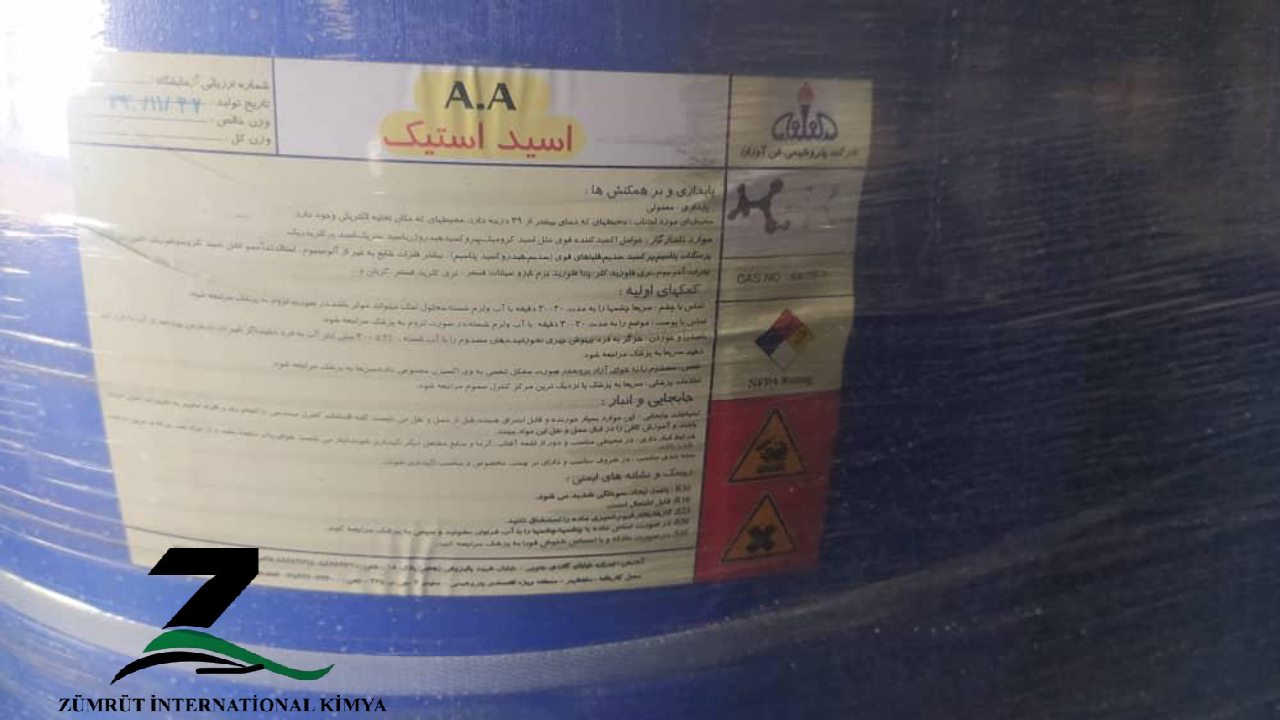
Description of ACETIC ACID
ACETIC ACID, also known as Ethanoic Acid, is a chemical compound found in many different products. It’s perhaps most well-known as the main component of vinegar, apart from water, and is thought to supply ingredients like apple cider vinegar with many of their health-promoting properties. Chemically speaking, the acetic acid formula is C2H4O2, which can also be written as CH3COOH or CH3CO2H. Because of the presence of a carbon atom in the CH₃COOH structure, it’s considered an organic compound. The acetic acid density is about 1.05 grams/cm³; compared to other compounds like nitric acid, sulfuric acid or formic acid, the density of acetic acid is quite a bit lower. Conversely, the acetic acid melting point is significantly higher than many other acids, and the ethanoic acid molar mass and acetic acid boiling point tend to fall right about in the middle.
ethanoic acid, also known as ethanoic acid, is a simple carboxylic acid with the chemical formula CH₃COOH. It is a key component of vinegar and has various industrial and household uses. Here are the key aspects of acetic acid:
Properties:
- Appearance : Colorless liquid
- Odor : Characteristic pungent, vinegar-like smell
- Molecular Weight : 60.05 g/mol
- Boiling Point : 118°C (244°F)
- Melting Point : 16.6°C (61.9°F)
- Density : 1.049 g/cm³ at 25°C
- Solubility : Miscible with water, alcohols, and many other organic solvents
Chemical Structure:
- Molecular Formula : CH₃COOH
- Structural Formula :
H|H-C-C=O|H OH
Uses of Ethanoic Acid
- Food Industry :
– Vinegar : ethanoic acid is the main component of vinegar, which is used as a condiment and preservative.
– Food Additive : Used as an acidity regulator (E260) in various food products. - Chemical Industry :
– Production of Acetate Esters : Used in the production of solvents like ethyl acetate and butyl acetate.
– Chemical Intermediate : Involved in the manufacture of various chemicals such as acetic anhydride, vinyl acetate, and glacial acetic acid.
– Plastic Production : Used in the production of polyethylene terephthalate (PET) plastic and other polymers. - Textile Industry :
– Dyeing and Printing : Used in the dyeing and printing of textiles to adjust the pH and enhance color fastness. - Medical Uses :
– Antiseptic : Used in diluted form as an antiseptic and to treat ear infections.
– Pharmaceuticals : Used as a reagent in the synthesis of various drugs and pharmaceuticals. - Household Uses :
– Cleaning Agent : Commonly used in household cleaning products due to its ability to dissolve mineral deposits, grease, and grime.
– Descaling Agent : Used to remove limescale from kettles, coffee makers, and other appliances. - Agriculture :
– Pesticide : Used in some formulations as a herbicide and pesticide.
– Silage Preservative : Helps preserve silage by inhibiting bacterial growth.
Safety and Handling:
- Corrosive : Concentrated acetic acid is corrosive and can cause skin burns, eye damage, and respiratory irritation.
- Flammable : ethanoic acid is flammable and should be handled with care, away from open flames and sources of ignition.
- Storage : Should be stored in a cool, well-ventilated area, in containers made of materials resistant to corrosion.
Environmental Impact:
- Biodegradability : ethanoic acid is readily biodegradable and does not persist in the environment.
- Ecotoxicity : In high concentrations, it can be harmful to aquatic life.
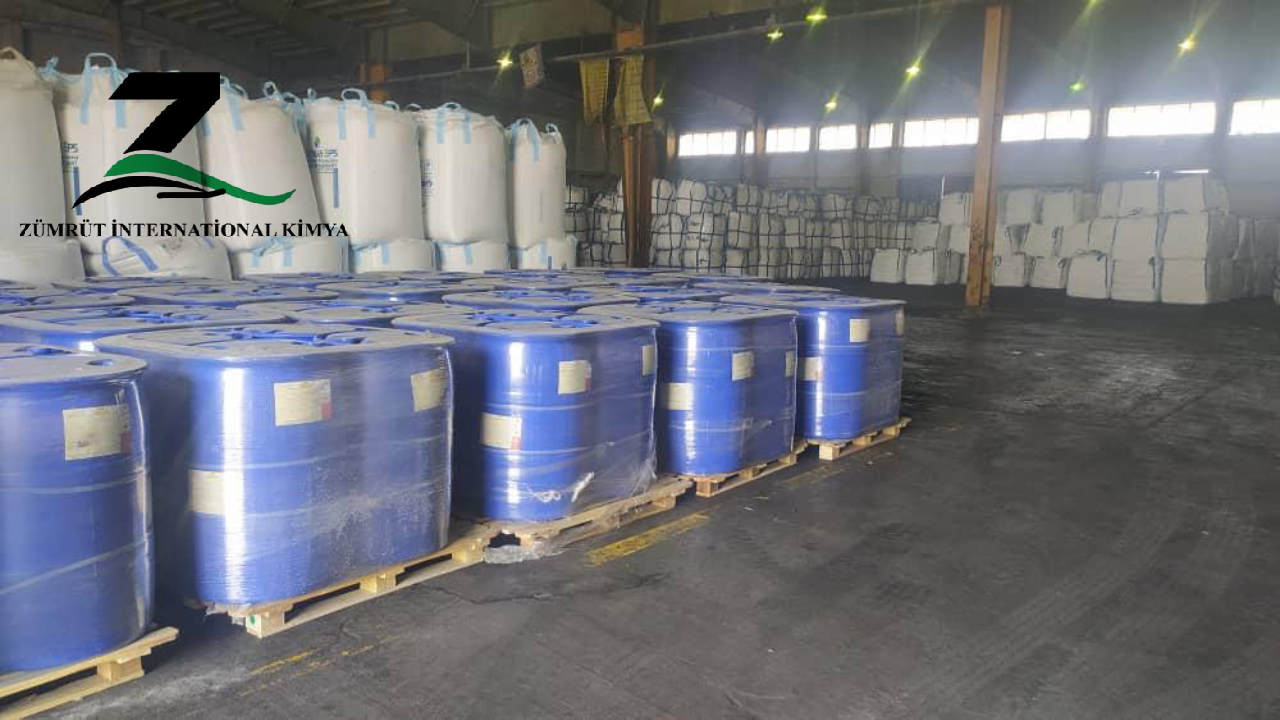
PACKING of Acetic Acid
- BULK
- 220 PE DRUM
Specification of Acetic Acid
| Physical Form | Liquid |
| Packaging | HDPE plastic bottle |
| Vapor Density | 2.1 |
| pH | 2.5 |
| Boiling Point | 117°C |
| Molecular Formula | C2H4O2 |
| Formula Weight | 60.05g/mol |
| Nickel (Ni) | ≤0.1ppm |
| Vapor Pressure | 1.52kPa at 20°C |
| Melting Point | 16°C |
| Color | Colorless |

TECHNICAL DATA SHEET OF ACID ACETIC
| NO | TEST | METHOD | RESULT | LIMIT(SPEC) |
| 1 | Appearance | MAP-SM111 | Clear; free from matter in suspention | Clear; free from matter in suspention |
| 2 | Purity (WT%) | MAP-70014 | Greater than 99.85 | Min 99.85 |
| 3 | Water (WT%) | ASTM-D1364 | Less than 0.15 | Max 0.15 |
| 4 | Formic ACID (WT%) | ASTM-D3546 | Less than 0.050 | Max 0.050 |
| 5 | Density@20℃ kg/lit | ASTM-D1298 | 1.048-1.051 | 1.048-1.051 |
| 6 | Acetaldehyde (WT%) | ASTM-D2191 | Less than 0.02 | Max 0.02 |
| 7 | Permanganate Time@20℃, hours | ASTM-70019 | Greater than 2 hours | Min 2 hours |
| 8 | Crystallization point | ASTM-D1493 | Greater than 16.35 ℃ | Min 16.35℃ |
| 9 | Sulphates (as SO4) | MAP-70021 | Less than 1PPM | Max 1PPM |
| 10 | Chloride (as CL) | MAP-70020 | Less than 1 PPM | Max 1PPM |
| 11 | Total Iron (ppm) | ASTM-E394 | Less than 1.0 | Max 1.0 |
| 12 | Propionic Acid (WT%) | M602.515 | Less than 0.010 | Max 0.010 |
| 13 | Non volatile matter (WT%) | ASTM-D1353 | Less than 0.003 | Max 0.003 |
| 14 | Heavy metals (as Pb) | Determination by Atomic Absorption | Less than 0.5 | Max 0.5 PPM |
| 15 | Color (APHA) | ASTM-D1209 | Below 10 APHA | Max 10 APHA |