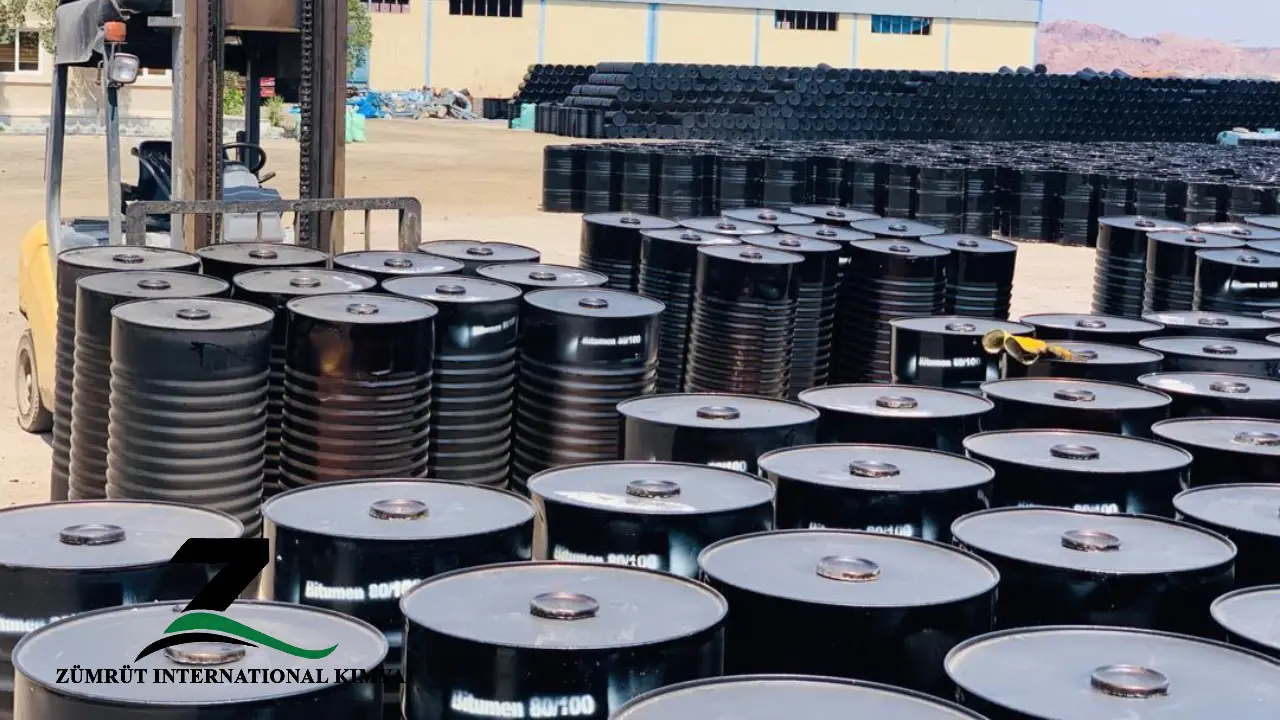
- Bitumen and Its Different Grades
- Which grade of bitumen is most important in Mauritania
- Jumbo Bag and Drum Packaging for Bitumen Grades 60/70 and 80/100 for Mauritania
- Key Ports for Bitumen Grades Mauritania Discharge
- Domestic and foreign Bitumen Supplier Mauritania
- Bitumen penetration grade specifications 60/70, 80/100, 40/50 for Mauritania
Bitumen and Its Different Grades
What is Bitumen?
Bitumen is a viscous, black, and sticky petroleum-based material primarily used in road construction, waterproofing, and industrial applications. It is produced through the distillation of crude oil and is known for its waterproofing, adhesive, and durability properties.
Different Grades of Bitumen
Bitumen is classified based on its penetration value, viscosity, or performance under specific conditions. The most common types include:
- Penetration Grade Bitumen (Most Common for Roads)
Classified by penetration value (hardness level) measured in 0.1 mm units.
The lower the penetration number, the harder and more durable the bitumen.
Common grades & uses:
– Bitumen 40/50 → Heavy-duty roads, airport runways
– Bitumen 60/70 → Highways, expressways (best for tropical climates)
– Bitumen 80/100 → Provincial & city roads, waterproofing - Viscosity Grade Bitumen (VG)
Classified by viscosity at 60°C (better for temperature variations).
Used in hotter climates and industrial applications.
Common grades:
– VG-10 → Low-traffic roads, spraying applications
– VG-30 → Highways & urban roads (widely used in India & hot climates)
– VG-40 → Heavy-duty pavements & industrial use - Performance Grade (PG) Bitumen
Designed to withstand specific temperature ranges.
Used in regions with extreme temperature fluctuations.
Example: PG 64-22 (can handle +64°C max and -22°C min temperatures). - Oxidized (Blown) Bitumen
Produced by blowing air into hot bitumen, making it harder & more resistant to aging.
Used for roofing, waterproofing, and industrial coatings.
Grades: Ranging from Bitumen 85/25 to 115/15. - Cutback Bitumen
Bitumen mixed with solvents (kerosene, diesel) for cold weather applications.
Used for road repair & spray sealing. - Emulsified Bitumen
Bitumen mixed with water & emulsifiers for cold applications.
Used in pothole repairs, surface treatments, and rural roads.
Choosing the Right Bitumen Grade
- Highways & heavy traffic roads → 60/70 or VG-30
- Urban roads & general paving → 80/100 or VG-10
- Roofing & waterproofing → Oxidized bitumen
- Cold weather construction → Cutback or Emulsified bitumen
Which grade of bitumen is most important in Mauritania
Why Bitumen 60/70 is Key in Mauritania:
- Climate Suitability
Mauritania has a hot, arid climate—especially in the inland desert regions.
Bitumen 60/70 is well-suited for high temperatures, offering a good balance of hardness and flexibility for road paving. - Road Infrastructure Development
The government and international development projects (like those funded by the World Bank or African Development Bank) typically specify 60/70 penetration grade for highway and road works.
Used in both asphalt concrete and surface dressing projects. - Availability from Major Exporters
Mauritania imports most of its bitumen from Iran, UAE, and Morocco.
60/70 is the standard grade produced and traded internationally, making procurement easier.
Other Grades Used:
Bitumen 80/100 – Occasionally used in cooler coastal areas like Nouadhibou.
Cutback or Emulsion Bitumen – For remote or temporary roads, but these are special-use products.
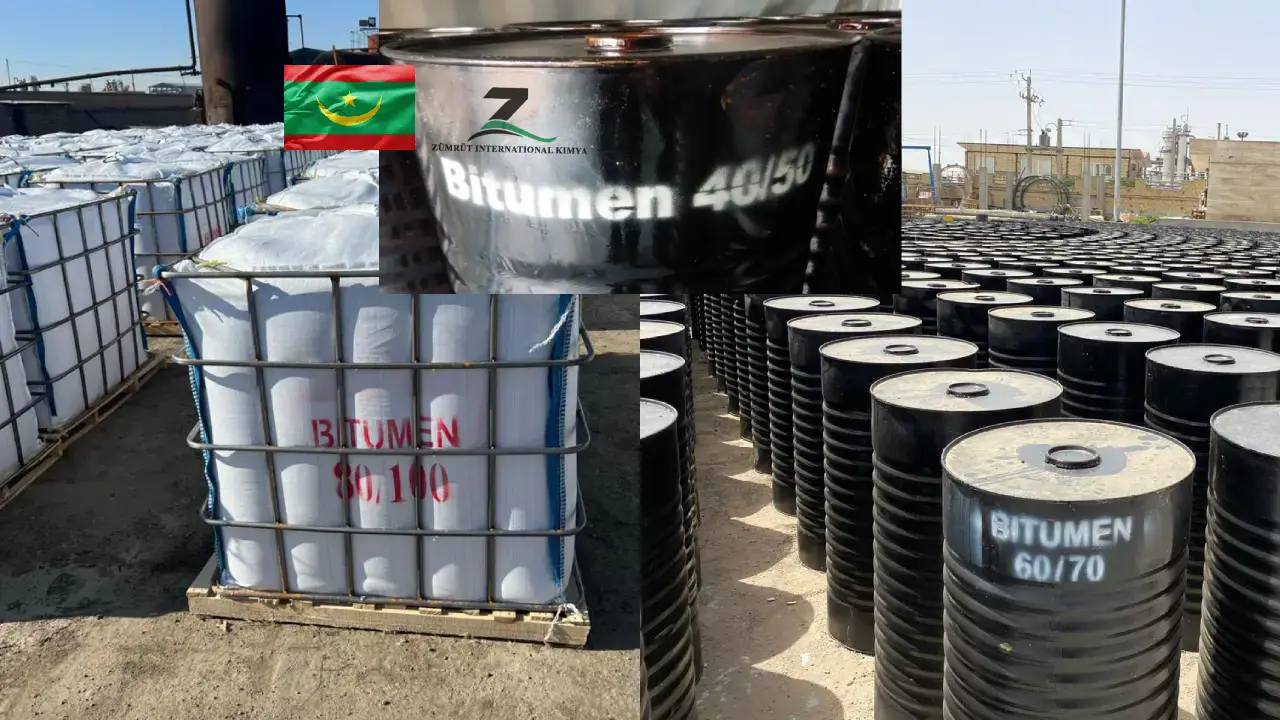
Jumbo Bag and Drum Packaging for Bitumen Grades 60/70 and 80/100 for Mauritania
Bitumen 60/70-80/100 in 1 MT Jumbo Bag with a steel cage and pallet: Loading 20 MT in 20 ft Container
Bitumen 60/70 in 1200 KG Jumbo Bag : Loading 24 MT in 40 ft Container
Bitumen 60/70 in 1300 Kg Jumbo Bag: Loading 26 MT in 40 ft Container
Bitumen 60/70 in 300 Kg BituBag: Loading 24 MT in 20 ft Container
Bitumen 60/70-80/100 in 180kg New Steel Drum: Loading 110 Drum in 20 ft = 20 Ton
Key Ports for Bitumen Grades Mauritania Discharge
- Port of Nouakchott (Port de l’Amitié / PANPA)
Location: Nouakchott, the capital city
Main commercial seaport of Mauritania
Handles drummed and bulk bitumen imports.
Has terminals capable of handling containers, tankers, and general cargo.
Most inland road construction projects receive their bitumen via Nouakchott. - Port of Nouadhibou
Location: Northwestern Mauritania (near the border with Western Sahara)
Primarily a mineral export port, but also handles general cargo.
Occasionally used for bitumen discharge for projects in the northern region.
Less frequent than Nouakchott but important for coastal or regional works.
Domestic and foreign Bitumen Supplier Mauritania
Domestic Bitumen Suppliers in Mauritania
Mauritania does not have significant domestic bitumen production. The country lacks large-scale refineries capable of producing penetration-grade bitumen (like 60/70 or 80/100).
Instead:
Local construction companies and government projects depend entirely on imports.
A few local distributors and logistics firms act as intermediaries to receive and store bitumen, especially in Nouakchott and Nouadhibou.
International Bitumen Supplier Mauritania
International supplier of bitumen from Mauritania By choosing Zumrut International Kimya, you benefit from lasting quality, professional service, and unparalleled expertise in bitumen supply. We are committed to sustainability, innovation, and customer satisfaction, continuously striving to deliver cutting-edge solutions in the bitumen industry.
🔹 Zumrut International Kimya is fully prepared to supply and deliver various grades of bitumen on CIF and CFR terms to various Mauritania ports, .🔹
Bitumen penetration grade specifications 60/70, 80/100, 40/50 for Mauritania
| Property | Bitumen 40/50 | Bitumen 60/70 | Bitumen 80/100 | Test Method |
| Penetration (25°C, 100g, 5s) (0.1 mm) | 40 – 50 | 60 – 70 | 80 – 100 | ASTM D5 |
| Softening Point (°C) | 50 – 58 | 48 – 56 | 45 – 52 | ASTM D36 |
| Ductility (25°C, cm) | >100 | >100 | >100 | ASTM D113 |
| Specific Gravity @ 25°C | 1.01 – 1.06 | 1.01 – 1.06 | 1.01 – 1.06 | ASTM D70 |
| Flash Point (°C, min) | 250 | 230 | 225 | ASTM D92 |
| Loss on Heating (% max) | 0.5 | 0.5 | 0.5 | ASTM D6 |
| Solubility in Trichloroethylene (% min) | 99 | 99 | 99 | ASTM D2042 |
| Viscosity @ 135°C (cSt) | 400 – 600 | 200 – 400 | 150 – 300 | ASTM D2170 |
| Spot Test | Negative | Negative | Negative | AASHTO T102 |