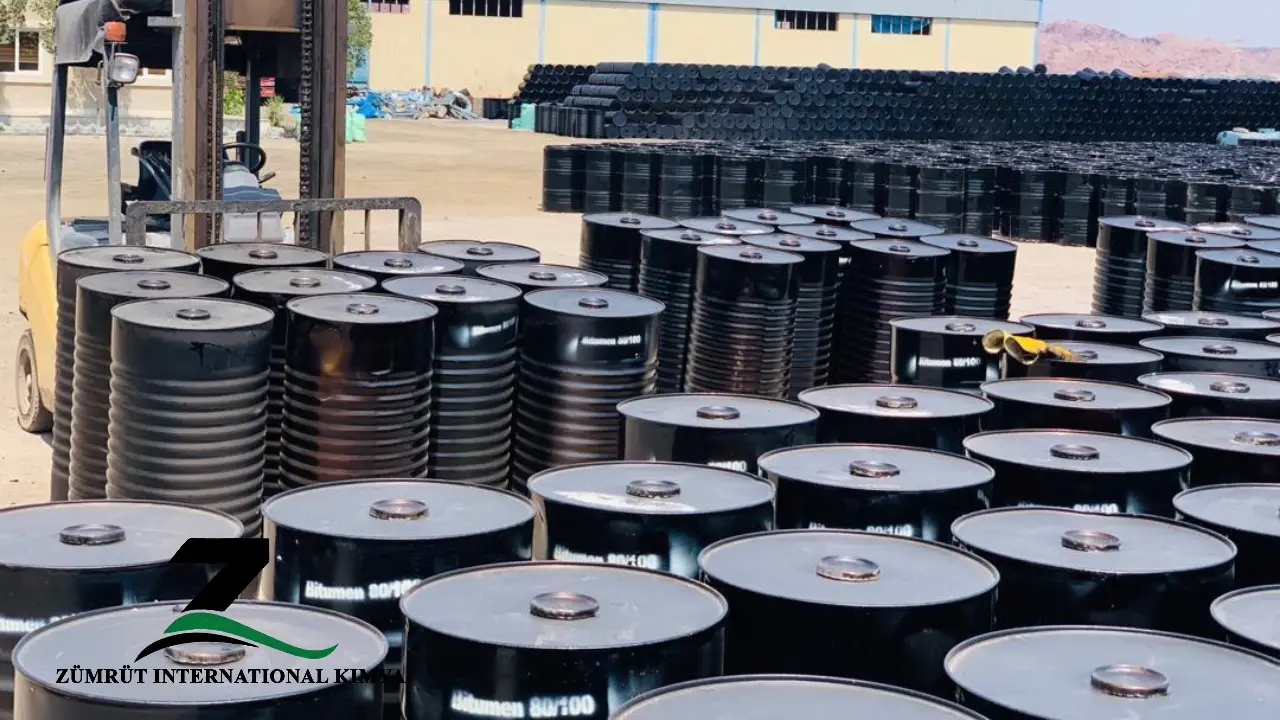
- Bitumen and Its Different Grades
- Which grade of bitumen is most commonly used in DRC Congo?
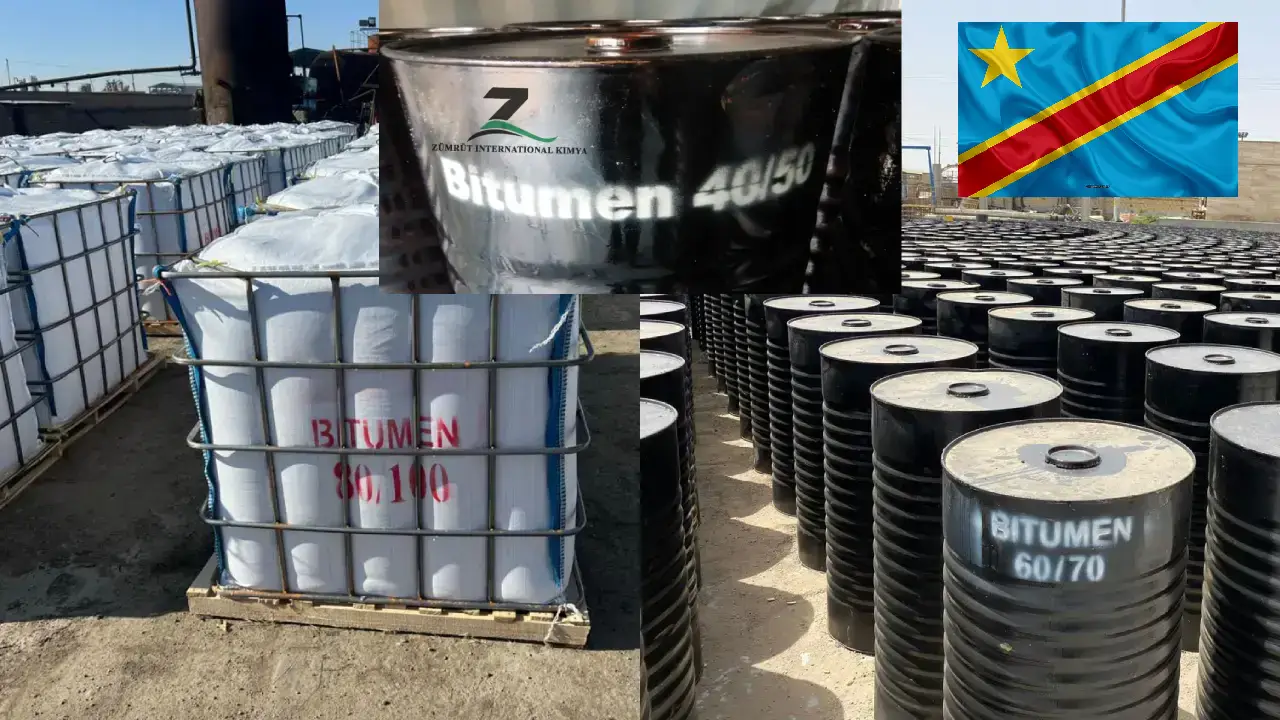
- Jumbo Bag and Drum Packaging for Bitumen Grades 60/70 and 80/100 for DRC Congo
- Key Ports for Unloading Bitumen in DRC Congo
- Domestic and foreign Bitumen Supplier DRC Congo
- Bitumen penetration grade specifications 60/70, 80/100, 40/50 for DRC Congo
Bitumen and Its Different Grades
What is Bitumen?
Bitumen is a viscous, black, and sticky petroleum-based material primarily used in road construction, waterproofing, and industrial applications. It is produced through the distillation of crude oil and is known for its waterproofing, adhesive, and durability properties.
Different Grades of Bitumen
Bitumen is classified based on its penetration value, viscosity, or performance under specific conditions. The most common types include:
- Penetration Grade Bitumen (Most Common for Roads)
Classified by penetration value (hardness level) measured in 0.1 mm units.
The lower the penetration number, the harder and more durable the bitumen.
Common grades & uses:
– Bitumen 40/50 → Heavy-duty roads, airport runways
– Bitumen 60/70 → Highways, expressways (best for tropical climates)
– Bitumen 80/100 → Provincial & city roads, waterproofing - Viscosity Grade Bitumen (VG)
Classified by viscosity at 60°C (better for temperature variations).
Used in hotter climates and industrial applications.
Common grades:
– VG-10 → Low-traffic roads, spraying applications
– VG-30 → Highways & urban roads (widely used in India & hot climates)
– VG-40 → Heavy-duty pavements & industrial use - Performance Grade (PG) Bitumen
Designed to withstand specific temperature ranges.
Used in regions with extreme temperature fluctuations.
Example: PG 64-22 (can handle +64°C max and -22°C min temperatures). - Oxidized (Blown) Bitumen
Produced by blowing air into hot bitumen, making it harder & more resistant to aging.
Used for roofing, waterproofing, and industrial coatings.
Grades: Ranging from Bitumen 85/25 to 115/15. - Cutback Bitumen
Bitumen mixed with solvents (kerosene, diesel) for cold weather applications.
Used for road repair & spray sealing. - Emulsified Bitumen
Bitumen mixed with water & emulsifiers for cold applications.
Used in pothole repairs, surface treatments, and rural roads.
Choosing the Right Bitumen Grade
- Highways & heavy traffic roads → 60/70 or VG-30
- Urban roads & general paving → 80/100 or VG-10
- Roofing & waterproofing → Oxidized bitumen
- Cold weather construction → Cutback or Emulsified bitumen
Which grade of bitumen is most commonly used in DRC Congo?
In the Democratic Republic of the Congo (DRC), the most commonly used grade of bitumen for road construction is Penetration Grade 60/70. This grade is favored for its balance between hardness and flexibility, making it suitable for the country’s diverse climate and traffic conditions. Bitumen 60/70 is widely used in African nations due to its cost-effectiveness and performance in hot mix asphalt applications .
Additionally, Penetration Grade 50/70 is also utilized in the region. This semi-hard grade is suitable for road construction and repair, particularly in the production of asphalt pavements .
For areas with higher temperatures or heavy traffic loads, Viscosity Grade VG-30 and Performance Grade (PG) Bitumen, such as PG 64-16, are employed. These grades offer enhanced resistance to deformation and are suitable for regions experiencing extreme climatic conditions .
In summary, while Penetration Grade 60/70 is the most commonly used bitumen in the DRC, the choice of grade may vary depending on specific project requirements and environmental conditions.
Jumbo Bag and Drum Packaging for Bitumen Grades 60/70 and 80/100 for DRC Congo
Bitumen 60/70-80/100 in 1 MT Jumbo Bag with a steel cage and pallet: Loading 20 MT in 20 ft Container
Bitumen 60/70 in 1200 KG Jumbo Bag : Loading 24 MT in 40 ft Container
Bitumen 60/70 in 1300 Kg Jumbo Bag: Loading 26 MT in 40 ft Container
Bitumen 60/70 in 300 Kg BituBag: Loading 24 MT in 20 ft Container
Bitumen 60/70-80/100 in 180kg New Steel Drum: Loading 110 Drum in 20 ft = 20 Ton
Key Ports for Unloading Bitumen in DRC Congo
- Matadi Port
As the largest seaport in the DRC, Matadi is a central hub for international trade. It is well-connected by rail to Kinshasa, facilitating the inland distribution of goods, including bitumen. - Boma Port
Located downstream from Matadi, Boma is the second-largest port in the country. It also handles significant volumes of bitumen and other petrochemical imports. - Banana Port (Under Development)
The DRC is constructing its first deep-water port at Banana, along its Atlantic coastline. Once operational, this port is expected to handle larger vessels and increase the country’s capacity for importing goods like bitumen.
Domestic and foreign Bitumen Supplier DRC Congo
Cohydro (Congolaise des Hydrocarbures)
Cohydro is a state-owned enterprise responsible for the import, export, and distribution of hydrocarbons, including bitumen, within the DRC. Established in 1999, it aims to promote petroleum independence for the country. The company operates service stations in several cities, including Kinshasa, and is actively expanding its network. Cohydro’s involvement in the bitumen sector supports domestic supply and distribution efforts.
International Bitumen Supplier DRC Congo
International supplier of bitumen from DRC Congo By choosing Zumrut International Kimya, you benefit from lasting quality, professional service, and unparalleled expertise in bitumen supply. We are committed to sustainability, innovation, and customer satisfaction, continuously striving to deliver cutting-edge solutions in the bitumen industry.
🔹 Zumrut International Kimya is fully prepared to supply and deliver various grades of bitumen on CIF and CFR terms to various DRC Congo ports, .🔹
Bitumen penetration grade specifications 60/70, 80/100, 40/50 for DRC Congo
| Property | Bitumen 40/50 | Bitumen 60/70 | Bitumen 80/100 | Test Method |
| Penetration (25°C, 100g, 5s) (0.1 mm) | 40 – 50 | 60 – 70 | 80 – 100 | ASTM D5 |
| Softening Point (°C) | 50 – 58 | 48 – 56 | 45 – 52 | ASTM D36 |
| Ductility (25°C, cm) | >100 | >100 | >100 | ASTM D113 |
| Specific Gravity @ 25°C | 1.01 – 1.06 | 1.01 – 1.06 | 1.01 – 1.06 | ASTM D70 |
| Flash Point (°C, min) | 250 | 230 | 225 | ASTM D92 |
| Loss on Heating (% max) | 0.5 | 0.5 | 0.5 | ASTM D6 |
| Solubility in Trichloroethylene (% min) | 99 | 99 | 99 | ASTM D2042 |
| Viscosity @ 135°C (cSt) | 400 – 600 | 200 – 400 | 150 – 300 | ASTM D2170 |
| Spot Test | Negative | Negative | Negative | AASHTO T102 |