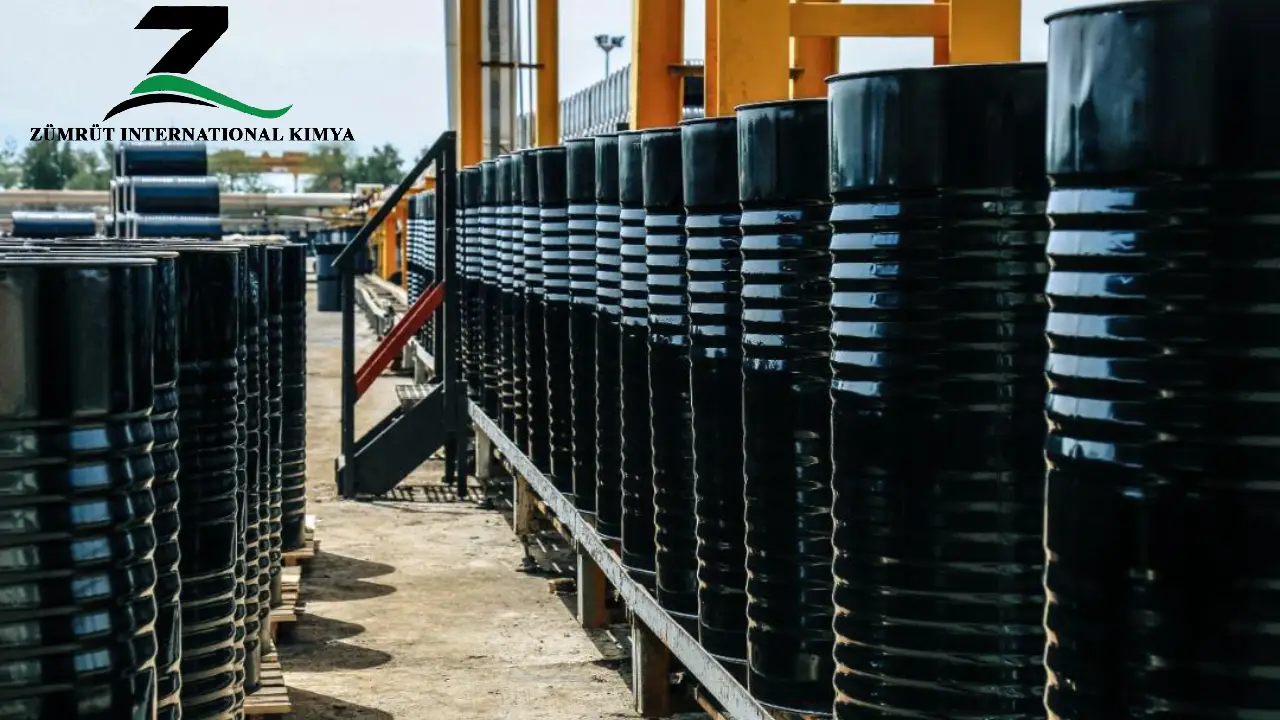
- Bitumen and Its Different Grades
- Which grade of bitumen is most commonly used in Ivory Coast
- Jumbo Bag and Drum Packaging for Bitumen Grades 60/70 and 80/100 for Ivory Coast
- Key Ports for Unloading Bitumen Supplier Ivory Coast
- Domestic and foreign Bitumen Supplier Ivory Coast
- Bitumen penetration grade specifications 60/70, 80/100, 40/50 for Ivory Coast
Bitumen and Its Different Grades
What is Bitumen?
Bitumen is a viscous, black, and sticky petroleum-based material primarily used in road construction, waterproofing, and industrial applications. It is produced through the distillation of crude oil and is known for its waterproofing, adhesive, and durability properties.
Different Grades of Bitumen
Bitumen is classified based on its penetration value, viscosity, or performance under specific conditions. The most common types include:
- Penetration Grade Bitumen (Most Common for Roads)
Classified by penetration value (hardness level) measured in 0.1 mm units.
The lower the penetration number, the harder and more durable the bitumen.
Common grades & uses:
– Bitumen 40/50 → Heavy-duty roads, airport runways
– Bitumen 60/70 → Highways, expressways (best for tropical climates)
– Bitumen 80/100 → Provincial & city roads, waterproofing - Viscosity Grade Bitumen (VG)
Classified by viscosity at 60°C (better for temperature variations).
Used in hotter climates and industrial applications.
Common grades:
– VG-10 → Low-traffic roads, spraying applications
– VG-30 → Highways & urban roads (widely used in India & hot climates)
– VG-40 → Heavy-duty pavements & industrial use - Performance Grade (PG) Bitumen
Designed to withstand specific temperature ranges.
Used in regions with extreme temperature fluctuations.
Example: PG 64-22 (can handle +64°C max and -22°C min temperatures). - Oxidized (Blown) Bitumen
Produced by blowing air into hot bitumen, making it harder & more resistant to aging.
Used for roofing, waterproofing, and industrial coatings.
Grades: Ranging from Bitumen 85/25 to 115/15. - Cutback Bitumen
Bitumen mixed with solvents (kerosene, diesel) for cold weather applications.
Used for road repair & spray sealing. - Emulsified Bitumen
Bitumen mixed with water & emulsifiers for cold applications.
Used in pothole repairs, surface treatments, and rural roads.
Choosing the Right Bitumen Grade
- Highways & heavy traffic roads → 60/70 or VG-30
- Urban roads & general paving → 80/100 or VG-10
- Roofing & waterproofing → Oxidized bitumen
- Cold weather construction → Cutback or Emulsified bitumen
Which grade of bitumen is most commonly used in Ivory Coast
In Ivory Coast, the most commonly used grade of bitumen for road construction is Penetration Grade 60/70. This grade is well-suited for the country’s tropical climate, offering a balance of flexibility and durability essential for road surfaces in moderate to high temperatures. It is widely utilized in the production of hot mix asphalt for both base and wearing courses in road construction .
Additionally, Viscosity Grade (VG) bitumen, particularly VG-30, is also prevalent in Ivory Coast. VG-30 is favored for its higher resistance to deformation and cracking, making it suitable for regions with heavier traffic loads and higher temperatures. The country has seen a significant increase in the importation of VG-grade bitumen, with a notable rise in shipments from various countries, including France and Italy .
Furthermore, Polymer Modified Bitumen (PMB) is gaining traction in Ivory Coast, especially for high-stress applications such as highways and airport runways. PMB offers enhanced elasticity, strength, and resistance to cracking, making it ideal for infrastructure subjected to heavy traffic and extreme weather conditions .
In summary, while Penetration Grade 60/70 remains the most commonly used bitumen grade in Ivory Coast, the adoption of VG-30 and PMB is increasing to meet the demands of more challenging construction projects and environmental conditions.
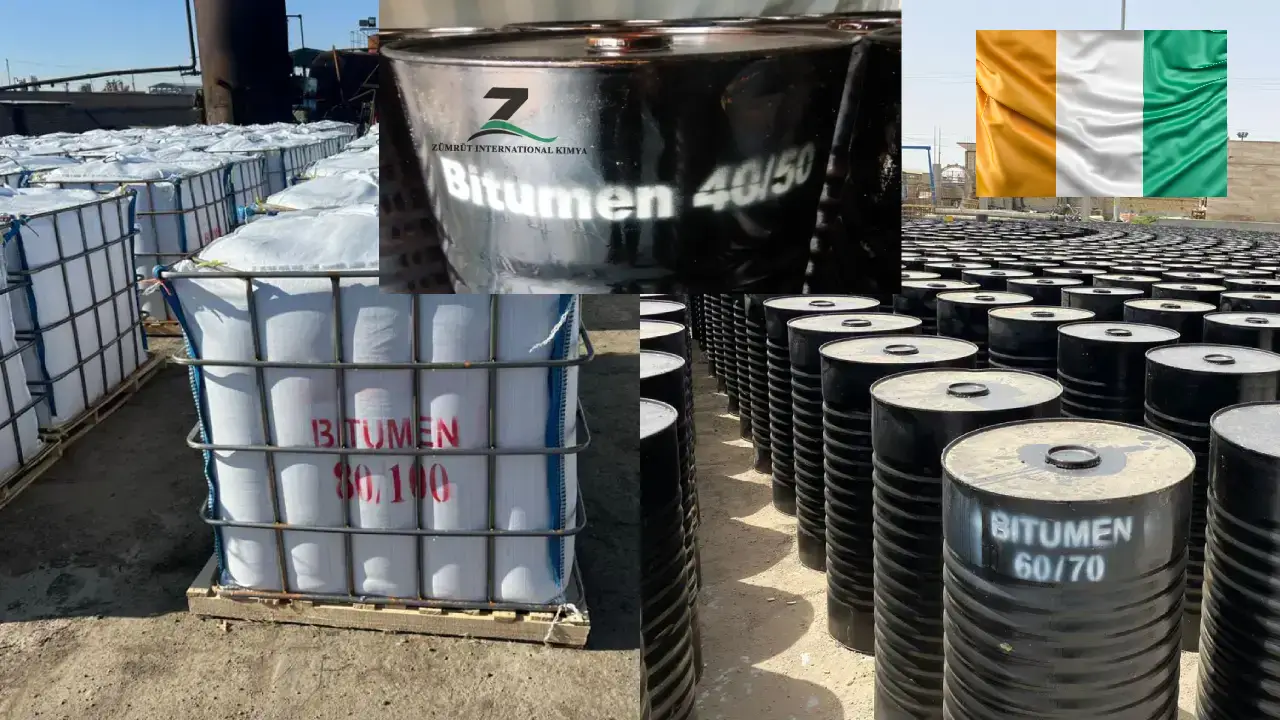
Jumbo Bag and Drum Packaging for Bitumen Grades 60/70 and 80/100 for Ivory Coast
Bitumen 60/70-80/100 in 1 MT Jumbo Bag with a steel cage and pallet: Loading 20 MT in 20 ft Container
Bitumen 60/70 in 1200 KG Jumbo Bag : Loading 24 MT in 40 ft Container
Bitumen 60/70 in 1300 Kg Jumbo Bag: Loading 26 MT in 40 ft Container
Bitumen 60/70 in 300 Kg BituBag: Loading 24 MT in 20 ft Container
Bitumen 60/70-80/100 in 180kg New Steel Drum: Loading 110 Drum in 20 ft = 20 Ton
Key Ports for Unloading Bitumen Supplier Ivory Coast
In Ivory Coast, the primary ports for unloading bitumen are the Autonomous Port of Abidjan and the Autonomous Port of San Pedro. Both ports are equipped with specialized facilities to handle petroleum products, including bitumen, and play crucial roles in the country’s import infrastructure.
- Autonomous Port of Abidjan
Located in Treichville, Abidjan, this port is the largest in Ivory Coast and one of the most significant in West Africa. It handles approximately 90% of the country’s foreign trade and serves as a key hub for landlocked neighboring countries such as Burkina Faso, Mali, and Niger. - Côte d’Ivoire Terminal (CIT): A newly inaugurated container terminal capable of handling vessels with a 16-meter draft, enhancing the port’s capacity and efficiency.
Domestic and foreign Bitumen Supplier Ivory Coast
Société Multinationale de Bitumes (SMB)
SMB is the principal domestic producer of bitumen in Ivory Coast. Based in Abidjan, the company specializes in refining crude oil to produce road bitumen and related by-products. SMB not only serves the local market but also exports to neighboring countries such as Mali, Burkina Faso, and Niger.
International Bitumen Supplier Ivory Coast
International supplier of bitumen from Ivory Coast By choosing Zumrut International Kimya, you benefit from lasting quality, professional service, and unparalleled expertise in bitumen supply. We are committed to sustainability, innovation, and customer satisfaction, continuously striving to deliver cutting-edge solutions in the bitumen industry.
🔹 Zumrut International Kimya is fully prepared to supply and deliver various grades of bitumen on CIF and CFR terms to various Ivory Coast ports, .🔹
Bitumen penetration grade specifications 60/70, 80/100, 40/50 for Ivory Coast
| Property | Bitumen 40/50 | Bitumen 60/70 | Bitumen 80/100 | Test Method |
| Penetration (25°C, 100g, 5s) (0.1 mm) | 40 – 50 | 60 – 70 | 80 – 100 | ASTM D5 |
| Softening Point (°C) | 50 – 58 | 48 – 56 | 45 – 52 | ASTM D36 |
| Ductility (25°C, cm) | >100 | >100 | >100 | ASTM D113 |
| Specific Gravity @ 25°C | 1.01 – 1.06 | 1.01 – 1.06 | 1.01 – 1.06 | ASTM D70 |
| Flash Point (°C, min) | 250 | 230 | 225 | ASTM D92 |
| Loss on Heating (% max) | 0.5 | 0.5 | 0.5 | ASTM D6 |
| Solubility in Trichloroethylene (% min) | 99 | 99 | 99 | ASTM D2042 |
| Viscosity @ 135°C (cSt) | 400 – 600 | 200 – 400 | 150 – 300 | ASTM D2170 |
| Spot Test | Negative | Negative | Negative | AASHTO T102 |