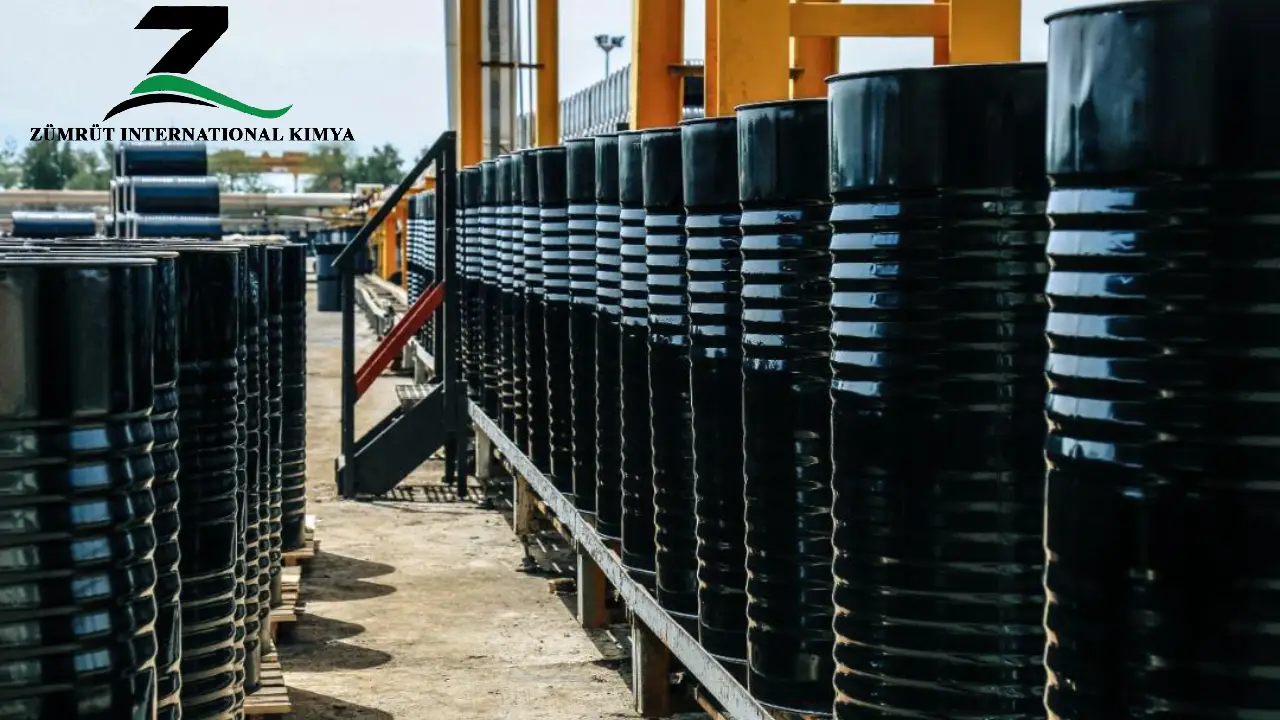
Bitumen Penetration 50/70 Definition
Asphalt Penetration Grade 50/70 is a type of bituminous binder used extensively in the construction industry, particularly for road construction and paving. The “50/70” designation refers to its penetration value, which indicates the hardness and consistency of the bitumen.
Characteristics
Penetration Value : The 50/70 grade signifies a penetration range of 50 to 70 decimillimeters (tenths of a millimeter) when a standard needle penetrates the bitumen sample under a load of 100 grams for 5 seconds at 25°C. This range indicates that it is slightly softer than the 40/60 grade, providing a balance between hardness and flexibility.
Viscosity : It has a moderate viscosity, making it suitable for various applications where good flow properties are required during the mixing and laying processes.
Softening Point : Typically ranges from 46°C to 54°C. This is the temperature at which the bitumen softens and starts to flow, which is critical for understanding its performance in different climates.
Ductility : Bitumen 50/70 exhibits good ductility, meaning it can stretch and deform under stress without breaking, which is crucial for preventing cracks in pavements.
Specific Gravity : Approximately 1.01 to 1.06, indicating it is slightly denser than water.
Bitumen Penetration Grade 50/70 is a standard penetration grade Bitumen usually used as a Paving Grade Bitumen suitable for road construction and for the production of asphalt pavements with superior properties. This grade of Bitumen is mainly used in the manufacture of hot mix asphalt for bases and wearing courses. Penetration Grade Bitumen supplied by ZURMUT Co is petroleum grade bitumen, manufactured from fractional / vacuum distillation of crude oil. The Bitumen supplied by ZUMRUT is produced from the vacuum residue (short residue) feedstock. Penetration Grade bitumens are specified by the penetration and softening point test. The designation is by penetration range only. The penetration grade bitumens have a thermoplastic property which causes the material to soften at high temperatures and to harden at lower temperatures. This unique temperature/ viscosity relationship is important when determining the performance parameters such as the adhesion, rheology, durability and application temperatures of bitumen.
Penetration Grade Bitumen is a standard bitumen usually used as a Paving Grade Bitumen essential for road construction and for the production of asphalt pavements with superior properties, and it’s very important once it bounds the aggregates and creates a unique cohesion and stability to the bituminous mix.
Asphalt Penetration 50/70 Application
Bitumen Penetration Grade 50/70 is widely used in various construction and industrial applications due to its balanced properties of hardness and flexibility. Here are the key applications:
Road Construction
- Asphalt Concrete Production :
– Surface Courses : Used in the top layer of roads, providing a durable, smooth, and weather-resistant finish that can handle regular traffic loads.
– Binder Courses : Utilized in the intermediate layer of the pavement structure, providing load distribution and enhancing structural support. - Road Surfacing and Resurfacing :
– New Road Construction : Essential for constructing new roads, ensuring the aggregates are well-bonded and the pavement is durable.
– Maintenance and Repairs : Ideal for resurfacing and maintenance work on existing roads, helping to restore the road surface and extend its lifespan.
Paving and Infrastructure
- Parking Lots and Driveways : Frequently used in the construction of parking lots and driveways, providing a robust surface that can withstand vehicular traffic.
- Airport Runways and Taxiways : Suitable for the construction of airport runways and taxiways, where durability and resistance to heavy loads and high stress are crucial.
Industrial Applications
- Heavy Machinery Areas : Used in industrial zones where heavy machinery operates, providing a strong and long-lasting surface that can handle significant loads and wear.
- Port and Harbor Paving : Suitable for areas with heavy container traffic and large equipment, ensuring a stable and resilient surface.
Waterproofing and Roofing
- Roofing Felt and Membranes : Occasionally used in the production of roofing felt and waterproof membranes due to its water-resistant properties.
- Foundations and Basements : Applied in waterproofing foundations and basements to prevent water ingress and protect structural integrity.
Special Applications
- Bridge Decks and Flyovers : Employed in the construction of bridge decks and flyovers, where materials need to accommodate structural movements and heavy loads.
- Sports Courts and Playgrounds : Used in the construction of sports courts and playgrounds, providing a smooth and resilient playing surface.
- Cycle Paths and Footpaths : Suitable for paving cycle paths and footpaths, ensuring a smooth and durable surface for pedestrians and cyclists.
Benefits in Applications
- Durability and Longevity : Provides a long-lasting surface capable of enduring various traffic loads and weather conditions.
- Flexibility and Crack Resistance : Offers good flexibility, reducing the likelihood of cracks and other surface deformities.
- Adhesive Properties : Ensures a strong bond with aggregates, resulting in a cohesive and stable pavement structure.
- Weather Resistance : Performs well in moderate climates, maintaining its properties without significant degradation due to temperature variations.
Packing of Bitumen 50/70
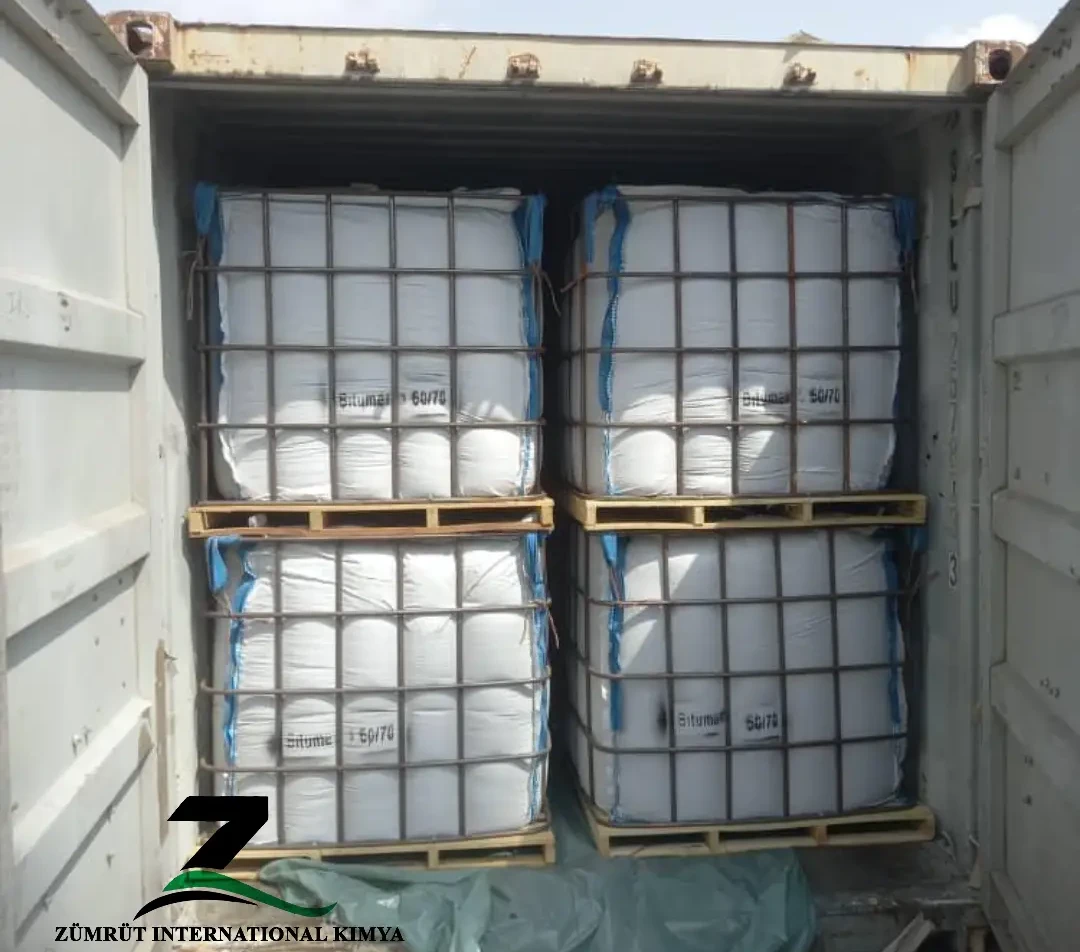
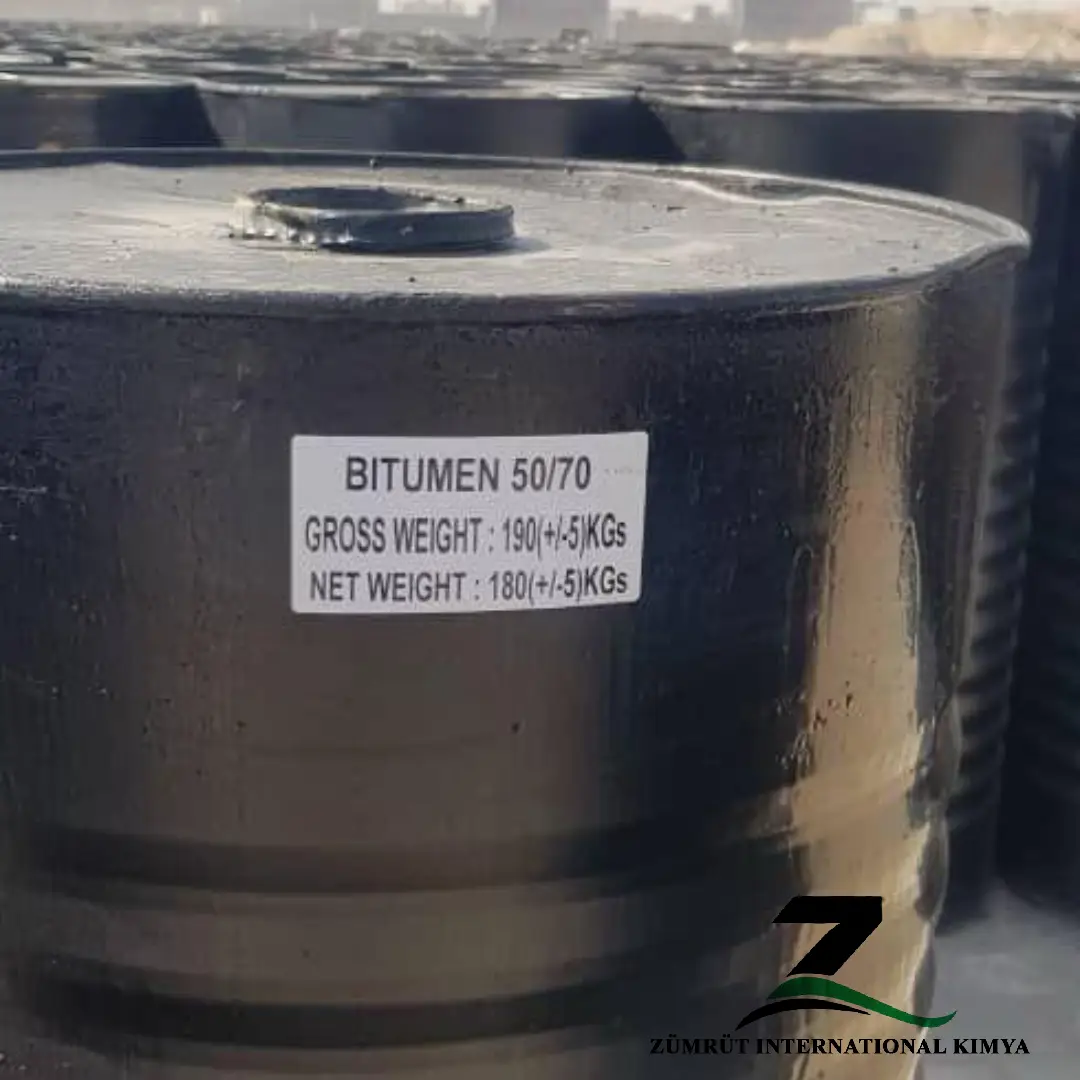
Paving Bitumen 50/70 is commonly packed in new steel drums, 150, 180 & 220 Kg barrels
1MT and 500Kg Jumbo Bags or 300kg Bitubag.
Likewise, the rest of the grades are ready to load Ex-work bulk ZUMRUT by truck.
Guaranty and safety of bitumen 50/70
Guaranty
- Quality Assurance :
– Industry Standards : Bitumen 50/70 is manufactured and tested according to stringent international standards such as ASTM (American Society for Testing and Materials), AASHTO (American Association of State Highway and Transportation Officials), and EN (European Norms). Adherence to these standards ensures consistent quality and performance.
– Manufacturer Certification : Reliable manufacturers provide quality certificates and product data sheets that guarantee the bitumen meets the specified penetration grade and other key properties. - Performance Warranty :
– Longevity : Bitumen 50/70, when properly applied, can deliver long-lasting performance. It is designed to endure regular traffic loads and moderate weather conditions for many years.
– Maintenance : Some manufacturers offer performance warranties that cover the bitumen’s functionality over a specified period, provided that the product is applied and maintained according to their guidelines. - Technical Support :
– Application Guidance : Manufacturers often provide technical support, including detailed guidelines on proper handling, storage, and application to ensure optimal performance.
– Post-Application Assistance : Technical support may also include assistance with troubleshooting any issues that arise after application, ensuring any problems can be promptly addressed and resolved.
Safety
- Handling and Storage :
– Personal Protective Equipment (PPE) : Workers handling hot bitumen should wear appropriate PPE, including heat-resistant gloves, face shields, long sleeves, and safety boots, to protect against burns and exposure to fumes.
– Storage Conditions : Bitumen should be stored in well-ventilated areas, away from ignition sources, and at temperatures recommended by the manufacturer to prevent degradation and ensure safety. - Health and Environmental Safety :
– Fume Control : During heating and application, bitumen can release fumes that may be harmful if inhaled. Proper ventilation and fume extraction systems should be used to protect workers’ health.
– Environmental Impact : Bitumen should be handled and disposed of according to environmental regulations to prevent contamination of soil and water. Spills should be contained and cleaned up promptly. - Application Safety :
– Proper Equipment : Use appropriate equipment for heating and applying bitumen to minimize risks associated with high temperatures and hot material handling.
– Training : Workers should be trained in safe handling practices, emergency procedures, and the proper use of equipment to reduce the risk of accidents and injuries. - Emergency Procedures :
– Spill Response : Have a spill response plan in place to address accidental releases of bitumen. This includes having materials and equipment ready to contain and clean up spills.
– First Aid : Provide first aid training and resources for workers to handle burns, inhalation of fumes, and other potential injuries related to bitumen handling.
Bitumen 50/70 Specifications
| Bitumen 50/70 | Test method | Unit | Specification |
| Penetration – 25°C, 100g, 5s | EN 1426 | mm | 50-70 |
| Softening Point (Ring & Ball) | EN 1427 | °C | 46/54 |
| Kinematic Viscosity @ 135⁰C | EN 12595 | mm²/s | 295 Min |
| Penetration Index | EN 12591 | – | -0.8 |
| Solubility in Xylene | EN 12592 | % | 99 Min |
| Flashpoint (Cleveland Open) | EN 22592 | °C | 230 Min |
| Recistance to Hardening at 163 °C | |||
| Change in mass (m/m) | EN12607-1 | % | 0.5 Max |
| Retained Penetration 25°C, 100g, 5s (% of original) | EN 1426 | % | 50 Min |
| Increase in softening point | EN 1427 | °C | 11 Max |