
Viscosity Grade Bitumen 20 Description
Viscosity Grade Bitumen 20 (VG-20) is a type of bitumen that is classified based on its viscosity at specific temperatures, following the viscosity grading system. VG-20 bitumen is commonly used in various road construction and maintenance applications, particularly in moderate climates.
Key Properties of VG-20
Physical Properties
- Viscosity:
– At 60°C: VG-20 bitumen has a viscosity range of 200 ± 40 poises.
– At 135°C: This property is also measured to ensure suitability for mixing and application at elevated temperatures. - Penetration:
– Measures the hardness by the depth a standard needle penetrates at 25°C. VG-20 has a lower penetration value compared to VG-10, indicating it is harder. - Softening Point:
– The temperature at which bitumen softens and becomes flowable. For VG-20, the softening point is typically in the range of 45-55°C. - Ductility:
– Indicates the ability of bitumen to stretch without breaking. VG-20 bitumen generally has good ductility, measured at 25°C. - Flash Point:
– The temperature at which bitumen emits vapor that can ignite in air. VG-20 has a high flash point, typically above 220°C, ensuring safety during heating processes.
Chemical Properties
- Solubility in Trichloroethylene:
– VG-20 bitumen should have a solubility of 99% or higher, indicating high purity and the absence of significant non-bituminous materials. - Loss on Heating:
– The percentage loss in weight after heating for a specified duration. VG-20 exhibits minimal loss on heating, generally less than 1%, indicating good thermal stability.
Performance Properties
- Adhesion:
– VG-20 has excellent adhesive properties, ensuring it binds well with aggregates in road construction and maintenance, improving pavement integrity. - Temperature Susceptibility:
– VG-20 is designed to have moderate temperature susceptibility, providing consistent performance across a range of temperatures, which makes it suitable for regions with moderate climates. - Durability:
– Exhibits good aging resistance, maintaining its properties over time under the effects of weather and traffic.
Common Applications of VG-20
- Road Construction:
– Used in the construction of both base and wearing courses in flexible pavements.
– Suitable for highways, urban roads, and rural roads. - Bitumen Emulsions:
– Can be used in the production of bitumen emulsions for various road maintenance and construction activities. - Tack Coats:
– Applied as a tack coat to create a bond between the existing pavement and a new overlay. - Surface Dressing:
– Used for surface dressing applications, providing a protective layer on road surfaces. - Modified Bitumen Products:
– VG-20 can be modified with polymers or other additives to enhance its properties for specific high-stress applications.
Specific Tests and Standards
VG-20 bitumen must meet the specifications set by various standards organizations, such as Indian Standards (IS), American Society for Testing and Materials (ASTM), or other regional standards. Common tests include:
- Viscosity Test (IS 1206 (Part II) or ASTM D2171): To determine the viscosity at specified temperatures.
- Penetration Test (IS 1203 or ASTM D5): To measure the penetration value.
- Softening Point Test (IS 1205 or ASTM D36): To determine the softening point.
- Ductility Test (IS 1208 or ASTM D113): To assess ductility.
- Flash Point Test (IS 1209 or ASTM D92): To determine the flash point.
- Solubility Test (IS 1216 or ASTM D2042): To measure solubility in trichloroethylene.
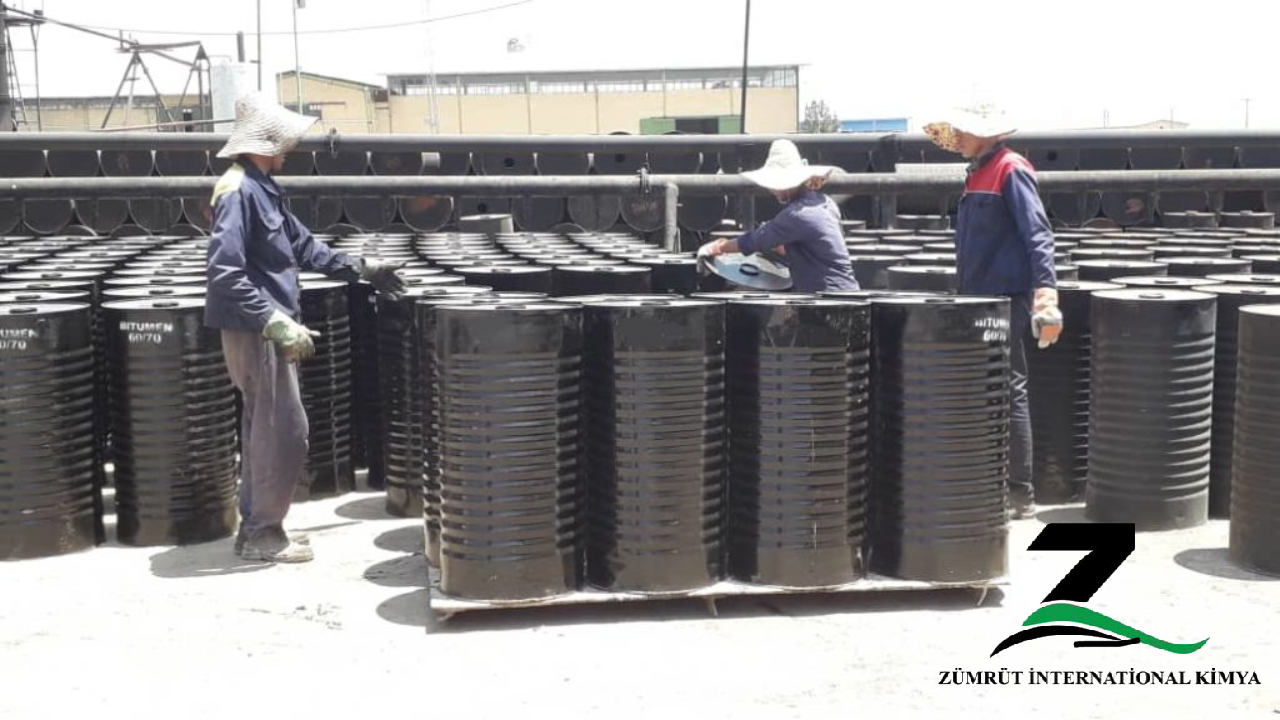
Packing of VG Bitumen 20
Bitumen VG 20 is typically packed and transported in a variety of ways Here are some common packing options for Bitumen VG 20:
- 180kg New Steel Drum: Loading 110 Drum in 20 ft
- 375Kg Bitubag : Loading 24 MT in 20 ft Container
- Bulk in vessel: Loading 2000 to 20,000 MT in Bitumen Carrier
- Bulk in Flexi Bag: Loading 20 MT in Bitumen Felexi Bag
- Bulk in Tunker : Loading 25 MT in Truk Tanker
Advantage of Viscosity Grade 20
Viscosity Grade 20 (VG-20) bitumen offers several distinct advantages, making it an optimal choice for various applications in road construction and maintenance. Here are the key advantages of VG-20 bitumen:
Key Advantages of VG-20 Bitumen
- Optimal Viscosity:
– VG-20’s viscosity is well-balanced, providing ease of handling and application. It is fluid enough to work with during mixing and laying but stiff enough to provide structural integrity once applied. - Enhanced Adhesion:
– VG-20 bitumen has excellent adhesive properties, ensuring a strong bond with aggregates. This leads to improved pavement integrity and durability, reducing the risk of surface wear and degradation over time. - Temperature Stability:
– VG-20 exhibits moderate sensitivity to temperature changes, maintaining consistent performance in varying temperatures. This makes it suitable for regions with moderate climates, where extreme temperatures are less common. - Durability and Aging Resistance:
– VG-20 demonstrates good resistance to aging and weathering. This enhances the longevity of pavements, reducing the frequency of maintenance and repair activities, thus lowering long-term costs. - Safety During Handling:
– VG-20 has a high flash point (typically above 220°C), making it safer to handle and apply at elevated temperatures. This reduces the risk of fire hazards during the heating and application process. - Versatility:
– VG-20 is versatile and can be used in various applications, including base and wearing courses, tack coats, surface dressing, and bitumen emulsions. Its flexibility in application makes it a preferred choice for many road construction and maintenance projects. - Improved Performance:
– The balanced hardness of VG-20 provides a good mix of flexibility and load-bearing capacity. This ensures that pavements can withstand moderate traffic loads without significant deformation or cracking. - Environmental Adaptability:
– VG-20 performs well in environments with moderate temperature fluctuations. It does not become too brittle in colder conditions or too soft in warmer conditions, making it suitable for diverse climates. - Ease of Modification:
– VG-20 can be easily modified with polymers or other additives to enhance its properties for specific needs. This adaptability allows for customization to meet the demands of high-stress areas or unique environmental conditions. - Compliance with Standards:
– VG-20 is produced to meet stringent industry standards (such as IS and ASTM), ensuring consistent quality and performance. Compliance with these standards ensures reliability and efficacy in road construction and maintenance.
VG-20 Specification
| PROPERTIES | SPECIFICATIONS |
|---|---|
| Absolute Viscosity, 60°C, poises, min | 1600 |
| Kinematic Viscosity, 135°C, CST, min | 300 |
| Flash point, C, min | 220 |
| Solubility in trichloroethylene, %, min | 99.0 |
| Penetration at 25°C | 60-80 |
| Softening point, C, min | 45 |
| Viscosity ratio at 60°C, max | 4.0 |
| Ductility at 25°C, cm, min, (after thin film over test) | 50 |