WHAT IS TEXAPON N70/ SLES ?
Until the last few decades, before the use of Texapon, one of the most popular raw materials for beauty, health and cosmetic products, especially among cosmetics from the group of detergents, was sodium lauryl sulfate (SLS). This substance had little irritation to the skin, was relatively soluble in water and caused a slight thickness in the texture of cosmetic detergent products. Gradually, the adverse effects of this type of sulfate salt were identified and another compound was used instead. Today, the SLS compound has been replaced by ethoxylated derivatives including the chemical compound sodium lauryl ether sulfate (SLES). Texapon, sodium laureth sulfate, or SLES, is found in many household detergents and hygiene and cleaning products. There are still concerns about the safety of SLES from scientists and research groups; However, this industrial raw material is used in many products.
TEXAPON N70 – SODIUM LAYURL ETHER SULFATE (SLES)
TEXAPON N70/ SLES With the scientific name of sodium lauryl ether sulfate, and the NaC12H25SO4 molecular formula, it is a semi-transparent white or thick yellow paste with a mild odor. SLES 70 is synthesized industrially by ethoxylation of dodecyl from palm alcohol oil or Coconut ol. The resulting ethoxylate is converted to a half sulfuric ACID ester which is neutralized by conversion to the sodium salt. This active surface Sodium Lauryl Sulfate (also known as sodium dosyl or SDS) is produced in the same way, ethoxylation is synthesized. Texapon dissolves easily and in any proportion in water and has a high stability compared to hard water. Sodium lauryl ether sulfate is known by the brand name Texapon which is an anionic surfactant and is one of the most common chemical compounds. Texapon is available in both N70 and oyster shell forms. Texapon oysters have less purity than N70 and are used in the production of oyster and opaque detergents such as shampoos. Texapon N70 is a high-viscosity paste used in the production of clear detergents. It contains a small amount of salt, which when diluted in water at normal concentrations shows low viscosity, and when sodium chloride and alkanolamide surfactant are added to it, its viscosity will be adjusted. The softness of Texapon is more when mixed with betaine, than the softness of each alone.
WHAT ARE THE METHODS OF PRODUCING TEXAPON
Texapon is prepared from the ethoxylation reaction of dodecyl alcohol, which is industrially obtained from palm kernel oil or coconut oil. The resulting ethoxylate is converted into half ester of sulfuric acid, which is neutralized by converting to sodium salt. Surfactant with sodium lauryl sulfate structure (= known as sodium dodecyl sulfate or SDS) is produced similarly, but without the ethoxylation step. SLS and ammonium lauryl sulfate (ALS) are commonly used as substitutes for SLES in consumer products.
Texapon is an anionic surfactant that is widely used as a starting material in detergent products. In addition to strong cleaning properties, it also has very good emulsifying and foaming properties. Sodium lauryl ether sulfate is also considered as the main part of industrial cleaning products. This chemical composition is compatible with all surfactants, except cationic compounds. Sodium lauryl ether sulfate is available in concentrations of 28% and 70%. For export purposes, Texapon 70% has the most demand.
WHAT IS THE STRUCTURE OF TEXAPON
TEXAPON N70/ SLES, which is Sodium Lauryl Ether Sulfate (SLES), has a specific chemical structure characterized by its surfactant properties. Here's a breakdown of its structure:
Structure of Sodium Lauryl Ether Sulfate (SLES)
- Hydrophobic Tail:
– Lauryl Group: The hydrophobic tail of SLES is derived from lauryl alcohol, which consists of a 12-carbon chain (dodecyl group). This long hydrocarbon chain is nonpolar and repels water. - Ethoxylated Group:
– Ethylene Oxide Units: The lauryl alcohol undergoes ethoxylation, where ethylene oxide units (–CH₂CH₂O–) are added. Typically, 2 to 3 ethylene oxide units are added to each lauryl alcohol molecule, forming a hydrophilic (water-attracting) polyether chain. - Hydrophilic Head Group:
– Sulfate Group: The sulfate ester group (–SO₃Na) is attached to the end of the ethoxylated chain. This is the negatively charged hydrophilic head of the molecule that interacts with water.
Chemical Formula
- General Formula: C₁₂H₂₅O(C₂H₄O)ₓSO₃Na
- C₁₂H₂₅: Represents the lauryl group.
- O(C₂H₄O)ₓ: Represents the ethoxylated chain, where ( x ) is typically 2-3.
- SO₃Na: Represents the sulfate group with a sodium counterion.
Chemical Structure Representation
A simplified structure of SLES can be represented as follows:
- Hydrophobic Tail: [ text3(text_2)text_2 ]
- Ethoxylated Chain: [ text_2text_2text text ]
- Hydrophilic Head: [ text_3text ]
Putting it all together, the structure looks like this:
[ text3(text_2)text_2(text_2text)_ntext_3text ]
Where ( n ) represents the number of ethylene oxide units (typically 2-3).
USAGES OF SLES SODIUM LAURYL ETHER SULFATE
Sodium Lauryl Ether Sulfate (SLES) is widely used due to its excellent surfactant properties. Here are the primary usages of SLES:
- Personal Care Products
– Shampoos: SLES is extensively used for its foaming and cleansing properties, helping to remove oil and dirt from hair.
– Body Washes and Shower Gels: Provides rich lather and effective cleaning.
– Facial Cleansers: Included in formulations for its mildness and ability to cleanse the skin without excessive irritation.
– Toothpaste: Used as a foaming agent to help distribute the product evenly in the mouth. - Household Cleaning Products
– Dishwashing Liquids: Effective at cutting through grease and generating a rich foam, making it ideal for manual dishwashing.
– Laundry Detergents: Provides excellent cleaning power for removing dirt and stains from fabrics.
– All-Purpose Cleaners: Used in general household cleaners for its ability to break down oils and grime on various surfaces. - Industrial and Institutional Cleaning
– Car Wash Detergents: Utilized for its foaming and cleaning performance in automotive cleaning products.
– Heavy-Duty Cleaners: Included in formulations for industrial and institutional cleaning applications where strong detergency is required. - Cosmetics and Toiletries
– Creams and Lotions: Sometimes used in small amounts to improve the texture, spreadability, and foaming characteristics of cosmetic products.
– Bath Products: Added to bubble baths and other bathing products for its foaming properties. - Agriculture
– Pesticide Formulations: Used as a surfactant to improve the spreading and wetting properties of pesticide sprays, ensuring better coverage and effectiveness. - Textile and Leather Industry
– Textile Processing: Employed in the washing and scouring stages to remove natural oils and waxes from fibers.
– Leather Processing: Used in the cleaning and degreasing stages of leather production. - Construction Industry
– Concrete Additives: Occasionally used in formulations to improve the workability and stability of concrete mixes. - Oil and Gas Industry
– Oil Field Chemicals: Utilized in enhanced oil recovery processes and drilling fluids to improve the emulsification and foaming properties.
WHAT ARE THE USES OF TEXAPON N70/ SLES
TEXAPON N70/ SLES, specifically Texapon N70 (Sodium Lauryl Ether Sulfate or SLES), is a versatile surfactant with a wide range of applications across various industries. Here are the primary uses of Texapon:
- Personal Care Products
- Household Cleaning Products
- Industrial and Institutional Cleaning
- Cosmetics and Toiletries
- Agriculture
- Textile and Leather Industry
- Construction Industry
- Oil and Gas Industry
TEXAPON N70/ SLES APPLICATION
It is used as a common detergent in most head and body health products. It has good foaming properties, it has good foaming properties, but its foam is not light and creamy, and it disappears in the presence of fats, and it dissolves easily in hard and ordinary water with a lot of foam and is compatible with other additives. Using this material, it is possible to achieve the desired result easily and without the need for heating and stirring at high speed by adding other items depending on the formulation. It has a skin irritating nature and damages the structure of the two layers of fat in the skin, increasing the subtle evaporation of the skin and its dryness. Therefore, if it is combined with other anionic, amphoteric and non-ionic surfactants, the quality and amount of foaming and washing will be provided at the desired level. It also can be diluted with triethanolamine, if needed. It is used in most commercial detergents such as dishwashing liquid and industrial cleaners (floor cleaner, carwash liquid, oil remover) and in more than 90% of sanitary and cleansing materials such as toothpaste, soap, shampoo, cream and Lotion is a foaming and cleansing liquid and is one of the raw materials for cosmetics.
MAIN ADVANTAGE OF TEXAPON / SLES
This product has good resistance to hard water and high biological decomposition. It also facilitates the formulation and production of detergent and hygiene products.
Additionally, sodium lauryl ether sulfate imparts a degree of texture thickness to the final product
HOW IS SODIUM LAURYL ETHER SULFATE MANUFACTURED
- Ethoxylation: Reaction of lauryl alcohol with ethylene oxide.
- Sulfation: Addition of sulfate groups to the ethoxylated alcohol.
- Neutralization: Reaction of the sulfate ester with sodium hydroxide.
- Purification and Concentration: Removal of impurities and concentration of the product.
- Formulation (if needed): Adding other ingredients to improve product characteristics.
COMPARISON OF SLS AND SLES
Sodium Lauryl Sulfate (SLS) and Sodium Lauryl Ether Sulfate (SLES) are both anionic surfactants used in personal care and cleaning products. While they share similarities, they also have distinct differences. Here's a comparison:
1. Chemical Structure
– SLS (Sodium Lauryl Sulfate):
– Structure: Consists of a lauryl (12-carbon) chain with a sulfate group attached directly to the end.
– Formula: C₁₂H₂₅OSO₃Na
– SLES (Sodium Lauryl Ether Sulfate):
– Structure: Has a lauryl chain with an ethoxylated (ethylene oxide) group before the sulfate group. This means the sulfate group is attached after a chain of ethylene oxide units.
– Formula: C₁₂H₂₅O(C₂H₄O)ₓSO₃Na (where ( x ) is typically 2-3)
2. Mildness and Irritation
– SLS:
– Irritation: More likely to cause skin and eye irritation compared to SLES. It can be harsh, especially in higher concentrations.
– Use: Often used in products that are not intended for prolonged skin contact or in more diluted formulations.
– SLES:
– Irritation: Generally considered milder and less irritating than SLS due to the presence of the ethoxylated chain, which makes it more gentle on the skin.
– Use: Preferred for personal care products like shampoos and body washes where milder skin contact is desired.
3. Foaming and Cleaning Properties
– SLS:
– Foaming: Produces a high lather and foam, which is effective in creating rich and thick bubbles.
– Cleaning: Effective at removing oils and dirt but can be more aggressive in its cleaning action.
– SLES:
– Foaming: Also produces a good lather but is often less aggressive than SLS, leading to a milder feel.
– Cleaning: Effective at cleaning but with less irritation, making it suitable for use in personal care products.
4. Environmental and Safety Considerations
– SLS:
– Environmental Impact: SLS can be less biodegradable, depending on the formulation, leading to a potentially higher environmental impact.
– Safety: Higher potential for irritation and sensitivity reactions.
– SLES:
– Environmental Impact: Generally more biodegradable, making it a more environmentally friendly option.
– Safety: Considered safer and less irritating, with better skin compatibility.
5. Applications
– SLS:
– Common Uses: Found in cleaning products, some personal care products, industrial applications, and even in some food products as an emulsifier.
– SLES:
– Common Uses: Widely used in personal care products like shampoos, body washes, and facial cleansers. Also found in household cleaning products due to its milder nature.
Texapon Packing
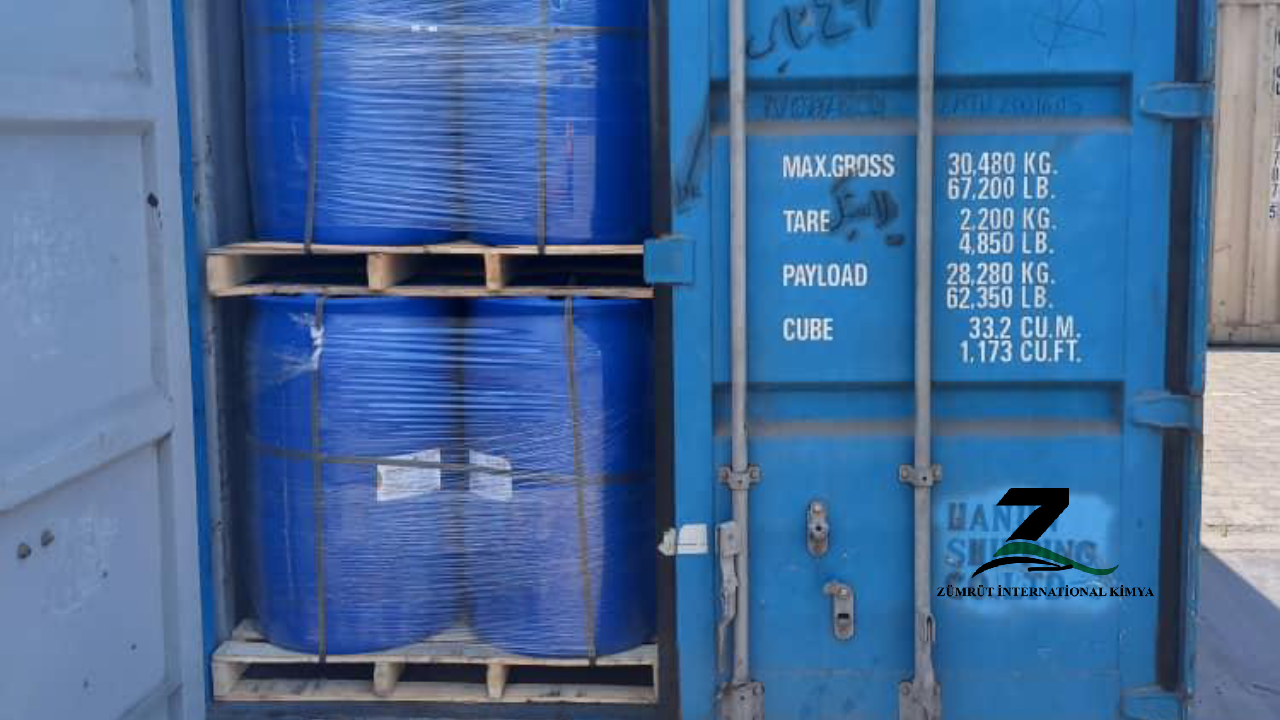
Texapon packages are in the form of barrels and in quantities of 200 kg, 170 kg or 220 kg. It is possible to carry this material in bulk. Barrels or tanks of this liquid composition must be made of plastic (polymer)
Technical Data Sheet of Sodium Lauryl Ether Sulfate (SLES)
| Analysis Methods | Specification Limits |
| Molecular Weight (g/mol) | 384 |
| Sodium Lauryl Ether Sulfate %w/w | 70±2 |
| Non-Detergent Organic Matter %w/w | Max 2.5 |
| Sodium Sulfate %w/w | Max 1.5 |
| Color (10% in water) Hazen | Max 30 |
| Dioxane (ppm) | Max 50 |
| pH(5% in water) | 9-Jul |
| Oxidizing Agents ppm (as H2O2) | 0 |