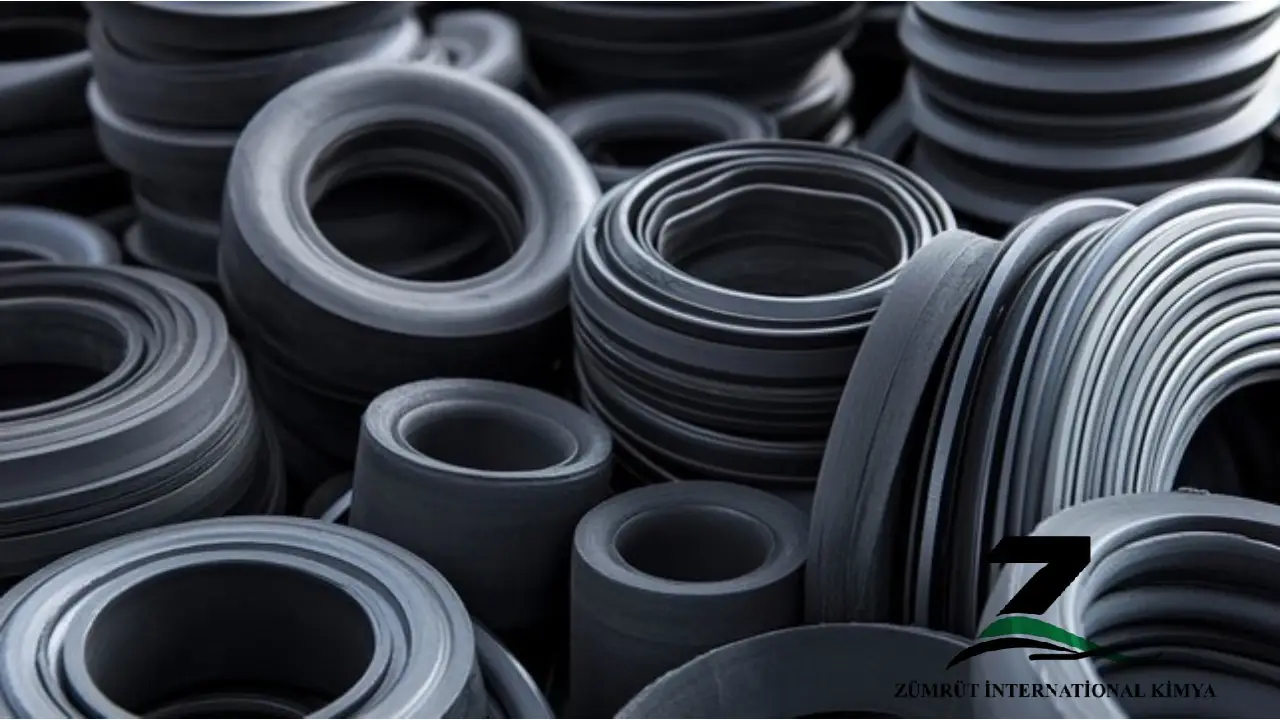
- Liquid Paraffin for Rubber Industry
- Liquid Paraffin for Rubber Production
- Physical and Chemical Properties
- Applications Beyond Rubber
- Key Applications in Rubber Industry:
- Key Benefits of Using Liquid Paraffin in Rubber:
- The Role of Liquid Paraffin in the Rubber Industry
- Comparing White Oil with Other Rubber Additives
Liquid Paraffin for Rubber Industry
Liquid paraffin, also known as white oil or mineral oil, plays a crucial role in the rubber industry due to its excellent lubricating, softening, and processing properties. It is a highly refined, colorless, and odorless oil derived from petroleum, widely used as a plasticizer, extender, and processing aid in rubber compounding.
Liquid Paraffin for Rubber Production
Liquid paraffin for rubber has ushered in a new era in rubber production. Acting as a catalyst, it has redefined processing efficiency, product quality, and environmental compliance. As we embark on this journey, we will explore how liquid paraffin shapes the present and future of rubber manufacturing.
Introduction to Liquid Paraffin: Understanding its Basics
White Oil, commonly referred to as mineral oil or white oil, is a transparent, colorless oil composed of saturated hydrocarbons derived from petroleum. This non-volatile and non-flammable oil has been utilized in various industries for decades due to its versatile properties.
In the world of chemistry, Liquid Paraffin falls under the category of “alkanes”, which are hydrocarbons with only single bonds between the carbon atoms. Its molecular structure lends it certain unique characteristics that make it invaluable in several applications, notably in the rubber industry.
Origin and Extraction
White Oil is derived from crude oil through a refining process. The process involves distillation, where crude oil is heated and separated into its various components. The heavier components settle at the bottom, while lighter ones rise to the top. Liquid paraffin is one of these lighter fractions and undergoes further purification to remove any impurities.
Physical and Chemical Properties
- Density: Liquid paraffin has a low density, which makes it lighter than water.
- Viscosity: It boasts a high viscosity, ensuring it flows smoothly.
- Solubility: Liquid paraffin is insoluble in water and alcohol but can dissolve in some organic solvents.
- Stability: It is chemically stable and doesn’t easily react with other substances, making it ideal for various applications.
Applications Beyond Rubber
While this article primarily focuses on the application of Liquid Paraffin in the rubber industry, it’s worth noting that its uses are vast and varied. It’s used in the cosmetic industry as a base for creams, lotions, and ointments, owing to its moisturizing properties. In the pharmaceutical sector, it acts as a laxative and as a base for various medications. Moreover, it’s used in the food industry as a lubricant and protective coating for fruits and grains.
Why It Matters to the Rubber Industry
Liquid Paraffin plays a pivotal role in the rubber industry. Its intrinsic properties, such as its lubricating nature and stability, make it an essential additive in rubber production. Whether it’s for improving the processing of rubber, acting as a softener, or being a part of the compounding process, Liquid Paraffin’s presence is significant.
In the following sections, we will delve deeper into the intricacies of how White Oil is integrated into rubber processing, its advantages, the products that incorporate it, and much more. Through a comprehensive exploration, we’ll establish why Liquid Paraffin is not just a substance but a cornerstone in the world of rubber manufacturing.
Key Applications in Rubber Industry:
- Plasticizer & Softener:
Improves the elasticity, flexibility, and workability of rubber compounds.
Helps in reducing the brittleness of rubber products. - Processing Aid:
Facilitates smooth mixing of rubber with fillers and other ingredients.
Reduces the viscosity of rubber compounds, making processing easier. - Extender Oil:
Replaces part of the expensive polymer content, making the formulation cost-effective.
Provides better dispersion of fillers and additives. - Improved Surface Finish:
Enhances the gloss and texture of finished rubber products.
Reduces stickiness and improves mold release properties. - Heat & Oxidation Resistance:
Protects rubber compounds from premature degradation due to heat and oxidation.
Common Rubber Applications of Liquid Paraffin:
- Tire manufacturing
- Rubber seals & gaskets
- Footwear industry
- Industrial hoses & belts
- Automotive rubber parts
Key Benefits of Using Liquid Paraffin in Rubber:
- Enhances flexibility and durability
- Reduces processing costs
- Improves mold release properties
- Prevents oxidation & hardening

The Role of Liquid Paraffin in the Rubber Industry
Rubber, both natural and synthetic, is renowned for its elasticity, durability, and resilience. However, the raw rubber material is typically stiff and challenging to process. This is where additives like Liquid Paraffin come into play, enhancing the rubber’s properties and making it more adaptable to various applications. In this section, we’ll delve into the pivotal role Liquid Paraffin plays in the rubber industry.
- Rubber Processing Aid
The rubber manufacturing process can be strenuous, often requiring the raw material to undergo several mechanical processes, including mixing, molding, and vulcanization. Liquid Paraffin acts as a lubricant, reducing friction between the rubber and machinery, facilitating smoother processing, and prolonging the machinery’s lifespan. - Softening Agent
Rubber products, especially those requiring flexibility like hoses and belts, benefit from the addition of Liquid Paraffin. It serves as a softening agent, enhancing rubber’s elasticity. This is especially crucial in products that need to withstand various environmental conditions without becoming brittle. - Enhancing Rubber’s Appearance
Liquid Paraffin imparts a glossy finish to rubber products. This is not only aesthetically pleasing but also provides a smoother surface, reducing the adhesion of dust and dirt. - Improving Dispersion of Fillers
In rubber compounding, various fillers and additives are used to enhance rubber’s properties. Liquid Paraffin aids in the even dispersion of these fillers, ensuring a consistent product quality. - Temperature Resistance
White Oil helps rubber maintain its properties under varying temperature conditions. Whether exposed to cold temperatures, where rubber can become rigid, or hot conditions, where it can soften excessively, Liquid Paraffin helps in maintaining rubber’s integrity. - Cost-Effective Solution
Incorporating Liquid Paraffin in rubber production can lead to cost savings. It reduces the wear and tear of machinery and can sometimes serve as a more affordable alternative to more expensive additives without compromising on quality. - Compatibility with Various Rubber Types
Whether it’s natural rubber, styrene-butadiene rubber (SBR), or nitrile rubber (NBR), Liquid Paraffin is compatible with various rubber types, making it a versatile additive in the rubber industry. - Extending Product Shelf Life
Liquid Paraffin aids in enhancing the shelf life of rubber products. Its protective nature keeps the rubber from degrading prematurely, ensuring the products last longer and perform efficiently throughout their life cycle. - Environmental Impact
In today’s eco-conscious world, the environmental impact of products and processes is a significant concern. Liquid Paraffin is non-toxic and doesn’t produce harmful emissions when incorporated into rubber, making it an environmentally friendly choice. - Influence on Vulcanization
Vulcanization is a process that gives rubber its elasticity and strength. The presence of Liquid Paraffin can influence vulcanization kinetics, ensuring that the rubber cures optimally, achieving the desired properties.
Liquid Paraffin’s role in the rubber industry is multifaceted. From facilitating processing to enhancing the end product’s properties, its contribution is undeniable. As rubber finds its application in myriad products that touch our daily lives, from car tires to shoe soles, it’s imperative to recognize the silent workhorse – White Oil – that plays a significant part in bringing quality and durability to these products.
Comparing White Oil with Other Rubber Additives
The rubber industry is teeming with diverse additives, each tailored to specific manufacturing needs. White Oil, a renowned additive, often stands side by side with other key components in discussions of efficiency and application. Here’s an in-depth comparison of Liquid Paraffin with other primary rubber additives.
- Nature and Origin
– Liquid Paraffin: A derivative of mineral oil, it’s renowned for its clear, colorless appearance and consistent quality.
– Other Additives: Organic-based additives can show variation due to natural sources. - Plasticizing Effects
– Liquid Paraffin: An effective plasticizing agent that hasn’t been linked to health concerns.
– Other Additives: Phthalates, while also acting as plasticizers, have faced health-related scrutiny. - Lubricating Qualities
– Liquid Paraffin: Prominent in reducing rubber processing friction.
– Other Additives: Additives like stearic acid offer lubrication but might alter rubber’s aging characteristics. - Compatibility with Rubber Varieties
– Liquid Paraffin: Versatile with a broad compatibility range.
– Other Additives: Some cater to specific rubber types, limiting their adaptability. - Environmental Footprint
– Liquid Paraffin: Eco-friendly and non-toxic.
– Other Additives: Synthetic additives can present environmental challenges due to their non-biodegradable nature. - Economic Considerations
– Liquid Paraffin: Cost-effective in both purchase and operational realms.
– Other Additives: Specialized additives might command higher pricing. - Thermal Resilience
– Liquid Paraffin: Offers thermal resistance to a degree.
– Other Additives: Additives like antioxidants provide reinforced protection against heat. - Longevity and Aging
– Liquid Paraffin: Counters rubber aging effectively.
– Other Additives: Specific additives like antiozonants fend off ozone-induced wear. - Final Surface Quality
– Liquid Paraffin: Imparts a smooth finish to rubber.
– Other Additives: Certain additives like pigments might alter rubber’s texture and appearance. - Safety Profile
– Liquid Paraffin: Known for its safety across applications.
– Other Additives: Some might necessitate precautionary measures during usage due to potential risks.